Channel Letter Signs in New York
Velement fabricates and installs custom channel letter signs across New York City. Face-lit letters built from aluminum returns and acrylic faces, lit with LEDs, mounted flush to your fascia or on a raceway, made in our own workshop and fitted by our own crews.
Storefronts, restaurants, retail chains and building identification. Survey, design, permit coordination, fabrication and installation from one team.
The sign most people picture when they picture a storefront
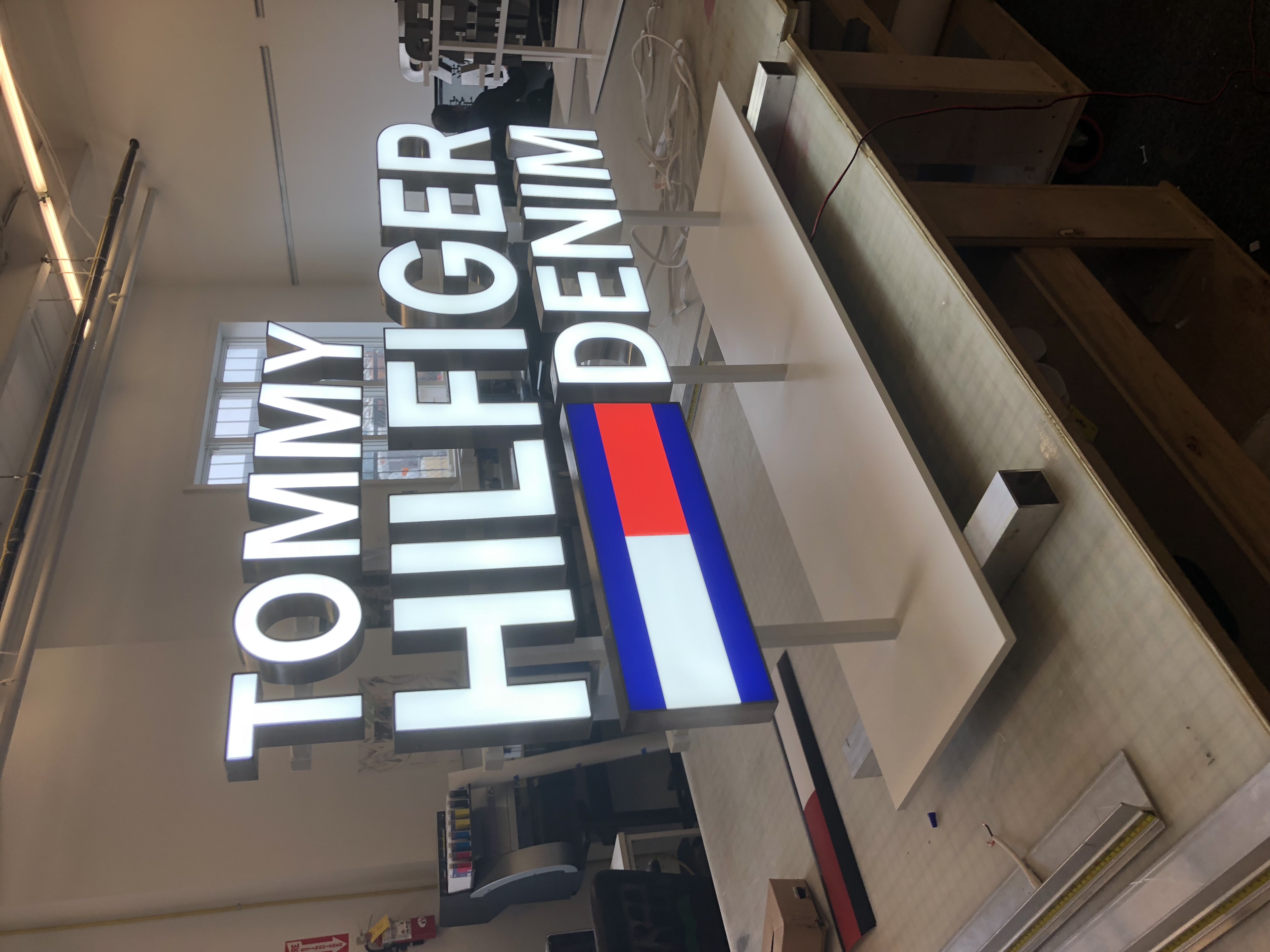
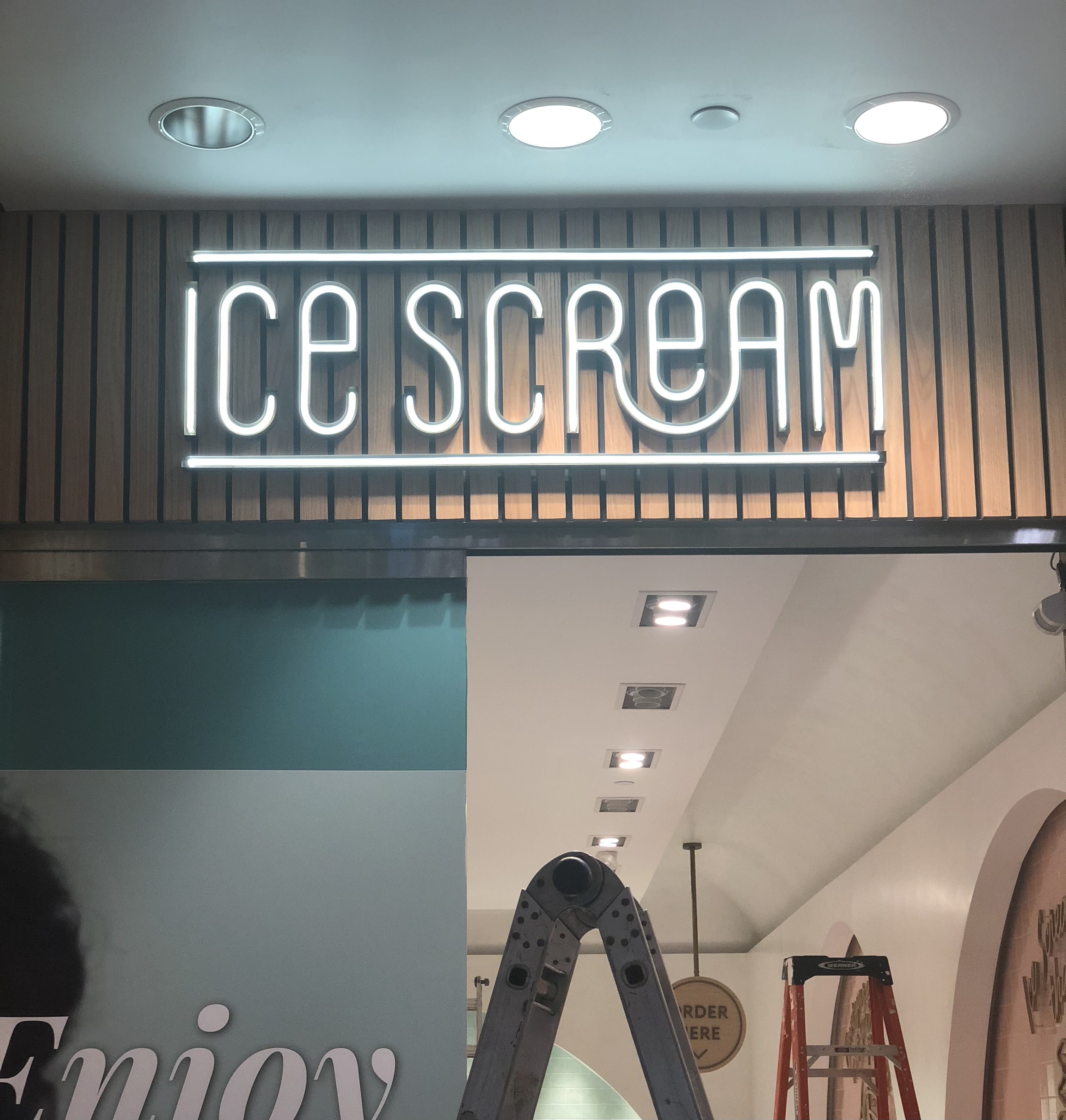
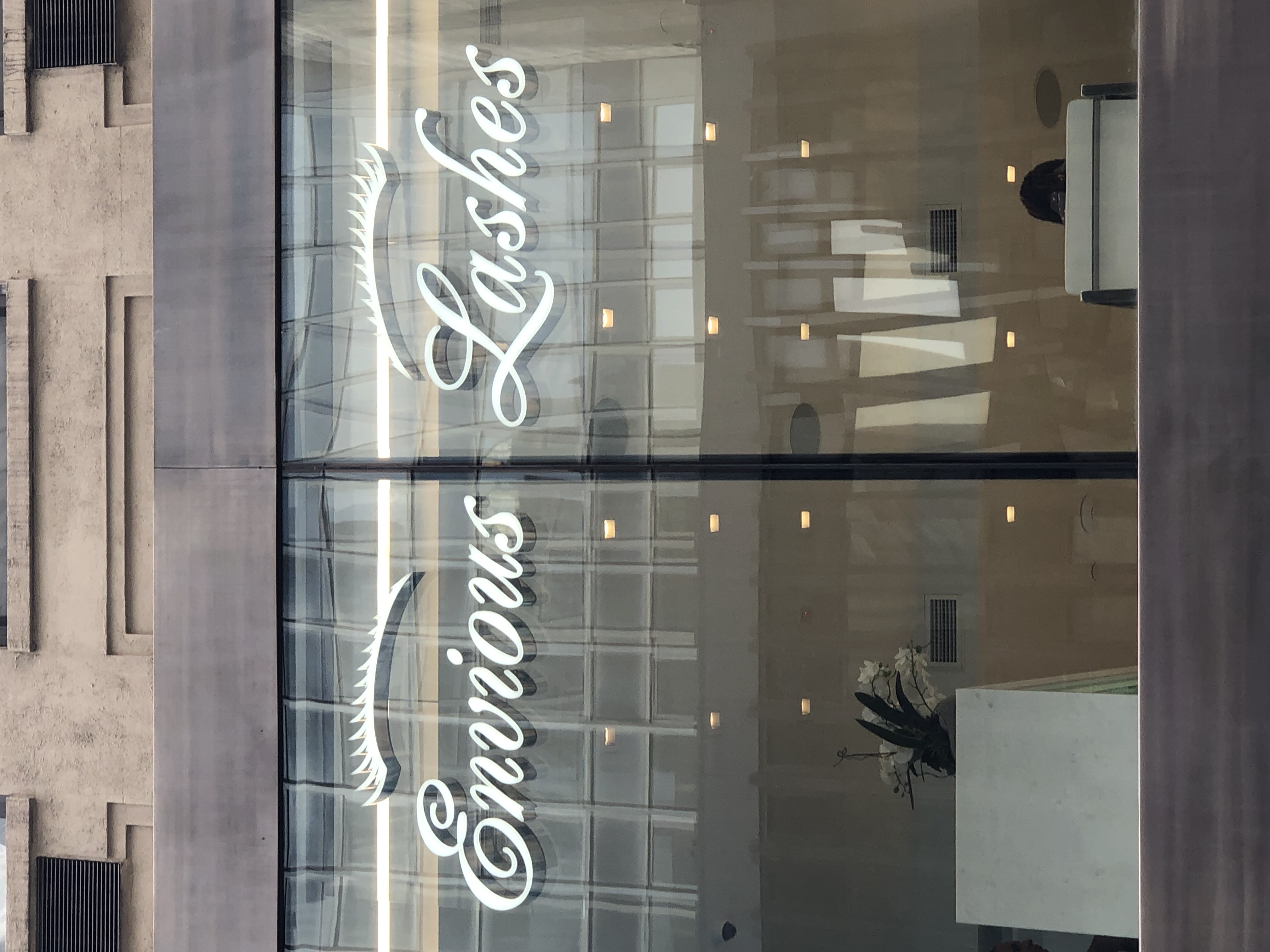
Channel letters are individual three-dimensional letters, each one a fabricated shell with its own light inside, mounted in a row to make a name. They are the default storefront sign in American retail for a reason: they read cleanly from across the street, they read at night, and because each letter is a separate object they follow a logo shape that a flat panel sign has to compromise.
They are also the sign type with the widest quality range. Two sets of channel letters can look identical on the day they are switched on and be completely different five years later, because almost everything that determines how a channel letter ages is invisible from the street: the gauge of the aluminum, whether the returns are properly welded, whether there are drain holes in the bottom of each letter, which LEDs went in, and whether the power supply is somewhere a technician can reach.
Velement fabricates channel letters in its own workshop. That means the specification is a decision rather than whatever arrived in the box, and the people who made the letters are the ones who come back if a module fails.
What is actually inside the letter
| Part | What it is | What to specify |
|---|---|---|
| Returns | The sides of the letter, formed from aluminum and welded or riveted into shape. | Aluminum gauge and the joining method. Welded returns hold their shape; the alternative separates over time at the corners. |
| Face | The front of the letter, in translucent acrylic on a face-lit letter. | Acrylic thickness and whether the color is in the acrylic or applied as a translucent vinyl overlay. See Section 6. |
| Back | The rear panel that closes the letter and carries the mounting. | Aluminum, with the wiring exit sealed. |
| Trim cap | The edge that holds the face to the returns, and the visible outline of the letter. | Color, and whether you want it at all. A trimless letter looks cleaner and costs more. |
| LEDs | Modules inside the letter, spaced so the face lights evenly. | Module spacing and color temperature. Both are covered in Section 6 because both are usually ignored. |
| Power supply | Low-voltage transformer, usually remote from the letters. | Where it lives. A power supply that cannot be reached is a service call that becomes a scaffold hire. |
| Drain holes | Small holes in the bottom of each letter. | That they exist. A sealed channel letter collects condensation, and water inside an electrical sign is how letters die. |
The decision that is usually made by your landlord, not your designer
How the letters attach to the building is the biggest single decision on a channel letter project, and it is more often settled by the lease, the landlord or the building than by how it looks. Worth understanding before you fall in love with a drawing.
| Method | What it is | Why you would | Why you would not |
|---|---|---|---|
| Flush mounted | Each letter fixed directly to the fascia, wiring routed through the wall to a power supply inside. | The cleanest look. Nothing visible but the letters. | One wall penetration per letter, plus access inside. Many landlords and most landmarked facades will not allow it. |
| Raceway mounted | The letters are fixed to a horizontal enclosure that houses the wiring and power supplies, and the enclosure is fixed to the building. | One penetration instead of many, far easier to get approved, and the whole sign can be removed in one piece at the end of a lease. | The raceway is visible. It can be painted to match the fascia, which helps, but it is still a bar behind the letters. |
| Backer panel | The letters are mounted on a decorative panel which is then fixed to the building. | Gives the sign a defined field, hides an uneven or unattractive fascia, and can be a brand element in itself. | More material, more weight and more wind load than a raceway. |
Tell us the building and whether you own or lease it, and we will tell you which of these is realistic before the design goes any further.
Why your brand red does not always come out as your brand red
Two technical decisions determine whether an illuminated letter matches your brand, and both are routinely left to the fabricator by default.
Color in the acrylic, or vinyl over white
| Approach | How it works | When to use it |
|---|---|---|
| Colored acrylic face | The face is cut from acrylic that is already the color you want. | Where the brand color is close to a standard acrylic color. Fewer layers, nothing to fail. |
| Translucent vinyl over white acrylic | A white acrylic face with a translucent colored film applied over it. | Where the brand color has to be exact. This is how most specific brand colors are actually achieved, and it is worth knowing it is an option rather than being told the color is unavailable. |
The color temperature of the LEDs
White LEDs are not one color. A cool white and a warm white behind the same acrylic face produce visibly different results, and the difference is obvious when two locations of the same brand are seen in the same week. If you have more than one site, or expect to, the color temperature belongs in the specification rather than in the fabricator’s stock.
We specify both, show you the intended result before fabrication, and record the specification so a sign made for you in three years matches the one made today.
Five failures, and what prevents each one
| What happens | Why | What prevents it |
|---|---|---|
| One letter goes dark | A failed LED module or a break in the low-voltage run. A word with one dead letter looks worse than a sign with no light at all. | Modules wired so a single failure does not take the letter out, and letters built so a module can be replaced without removing the letter from the wall. |
| Water inside the letter | No drain holes, or drain holes that were sealed when the sign was painted. Condensation forms in every letter; it has to be able to leave. | Drain holes at the low point of every letter, checked at installation rather than assumed. |
| The whole sign goes dark | A single power supply failed, or was undersized for the run. | Correct sizing, and supplies located where they can actually be reached for service. |
| Faces fade or yellow | Ultraviolet exposure on the acrylic and on any applied vinyl. | UV-stable acrylic and cast vinyl specified for the orientation of the frontage. |
| Corners open up | Returns joined weakly, then moved by thermal expansion through a few New York summers and winters. | Welded returns and a construction that tolerates the movement rather than resisting it. |
What has to be approved before the letters go up
A channel letter sign is an electrical sign fixed to the outside of a building, which puts it in front of more than one approval process in New York City. What applies depends on the sign, the building and the zoning district, and buildings in historic districts have an additional layer.
- Permits. Most permanent exterior signage needs approval before installation, and the raceway-versus-flush decision in Section 5 often follows from what will be approved rather than what was drawn.
- Electrical listing. An illuminated sign is a piece of electrical equipment. Listing and installation standards apply to electric signs, and a sign that does not meet them can fail inspection after it is on the wall.
- The lease. Most New York storefronts are leased, and the lease usually has more to say about signage than the city does. It is worth reading before the design stage rather than after it.
Velement establishes what your address and your building require before the design is finalized.
From logo to switch-on
- Artwork review. You send the logo. We tell you whether it builds cleanly at the size you want, where the thin strokes will cause problems, and what the realistic minimum letter height is. This is usually a same-day answer and it costs you nothing.
- Site survey. We photograph the frontage by day and after dark, measure the fascia, check what is behind it and identify the power route.
- Mounting and approvals. What the building and the lease will allow, established before the design is fixed.
- Design and visuals. You see the letters on a photograph of your own storefront, at size, by day and lit.
- Fabrication. Returns formed and welded, faces cut, LEDs fitted, letters assembled, wired and lit in the workshop before they leave.
- Installation. Our crews install, connect and commission, and we hand over photographs and the specification.
Fabricated here, serviced here
| Capability | What it means for the project |
|---|---|
| We fabricate | Returns formed, welded and finished in our own workshop. The specification is a decision rather than whatever arrived in the box. |
| We light and test before shipping | Every letter is wired and lit in the workshop. Nothing goes to site untested. |
| We install | Our own crews mount, connect and commission, and work to whatever access the building allows. |
| We are still here afterwards | A channel letter sign will need service at some point. The people who built it are the people who come back to it. |
| We handle approvals | Permits and building requirements are part of the project rather than handed back to you halfway through. |
Frequently Asked Questions About Channel Letter Signs
What are channel letters?
Channel letters are individual three-dimensional letters, each fabricated as a shell with its own lighting inside, mounted in a row to spell a name. Face-lit channel letters have a translucent acrylic face with LEDs behind it, so the letter glows. They are the standard illuminated storefront sign in the United States.
How much do channel letter signs cost in NYC?
Price is driven by letter height, the number of letters, the mounting method and the access needed to install them. A short word at modest height on a ground-floor fascia is a different project from a long name at height requiring a lift and a raceway. The three things that move the number most are size, how high the sign sits and whether the building allows flush mounting. We survey before quoting so the figure reflects your building.
What is the difference between channel letters and backlit letters?
Face-lit channel letters have a translucent face and the light comes through the letter, so the letter itself glows. Backlit or halo-lit letters have a solid metal face and are mounted off the wall so the light spills out behind them and throws a halo. Face-lit reads better at distance; halo-lit reads better close up and looks more considered. Both are channel letters technically; they are different products commercially. See our backlit letters page for the halo-lit version.
How long do channel letters last?
A properly built set should give you well over a decade, with LED modules replaced as they fail. What shortens that is almost always construction rather than age: no drain holes, weakly joined returns, non-UV-stable faces, or a power supply nobody can reach to service.
Do I need a permit for channel letters in New York City?
In most cases yes. What applies depends on the sign, the building and the zoning district, and buildings in historic districts have an additional approval step. We establish what your address requires before the design is finalized and coordinate the approvals as part of the project.
What is a raceway, and do I need one?
A raceway is a horizontal enclosure that carries the letters and houses the wiring and power supplies, so the building takes one penetration instead of one per letter. Many landlords and most landmarked facades require it. It also means the whole sign can be removed in one piece at the end of a lease. It is visible, but it can be painted to match the fascia.
How small can channel letters be?
It depends on the letterform more than the height. A bold, simple typeface builds much smaller than one with thin strokes or tight counters, because each letter still has to house LEDs and wiring. Send us the logo and we will tell you the realistic minimum before you commit to a size.
Can you match letters across several locations?
Yes, and this is where the specification matters. We record the acrylic, the vinyl, the LED color temperature and the return finish, so a sign made for your fifth site matches the one at your first rather than nearly matching it.
View Our Projects