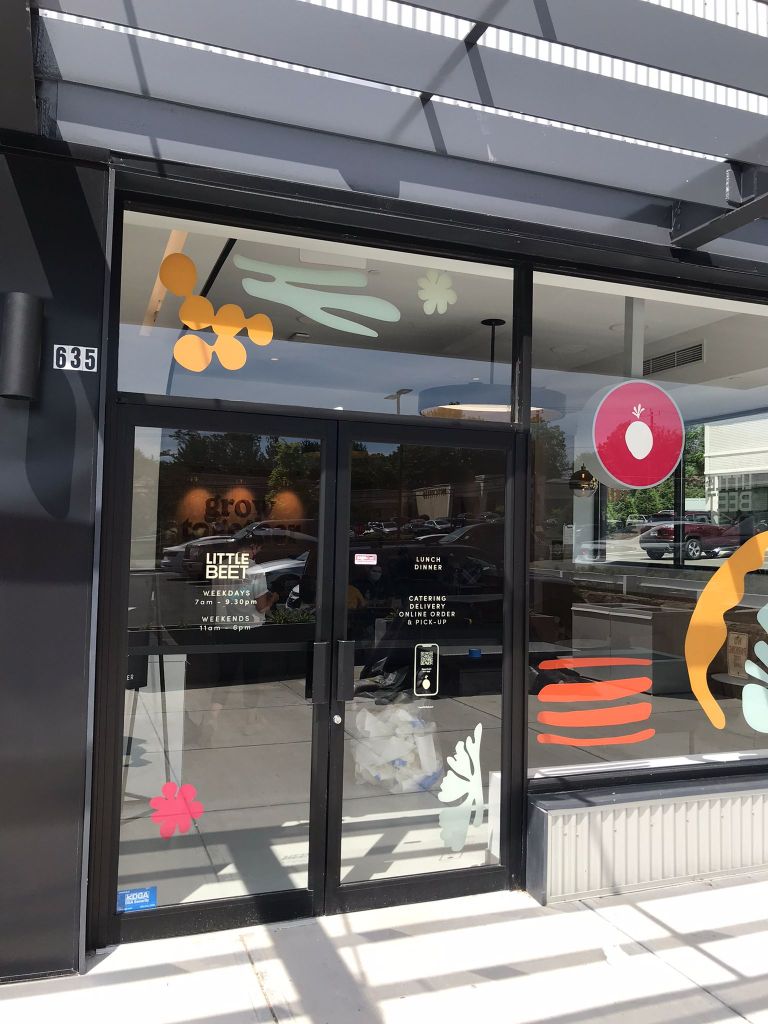
Store Window Graphics in NYC
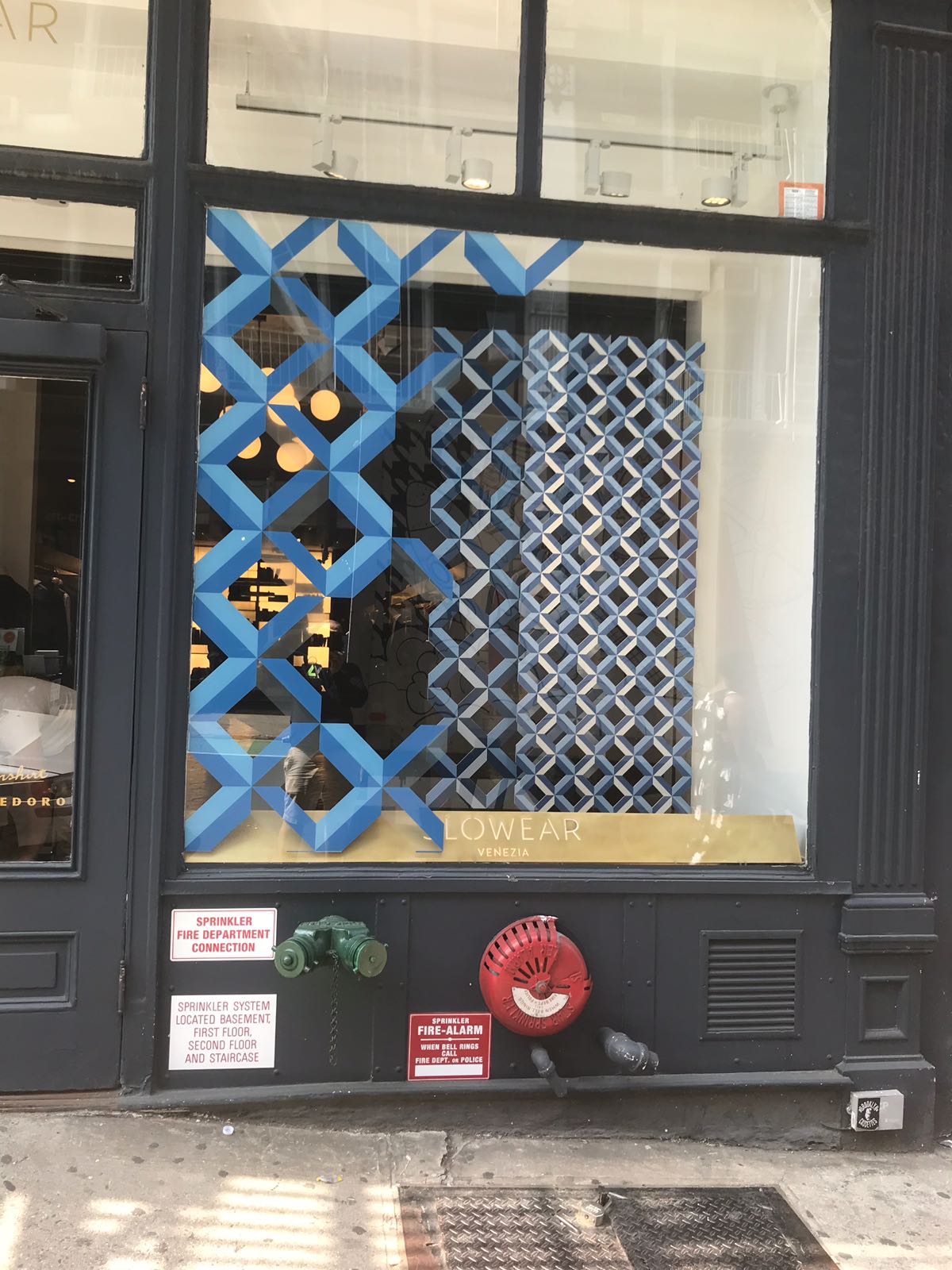
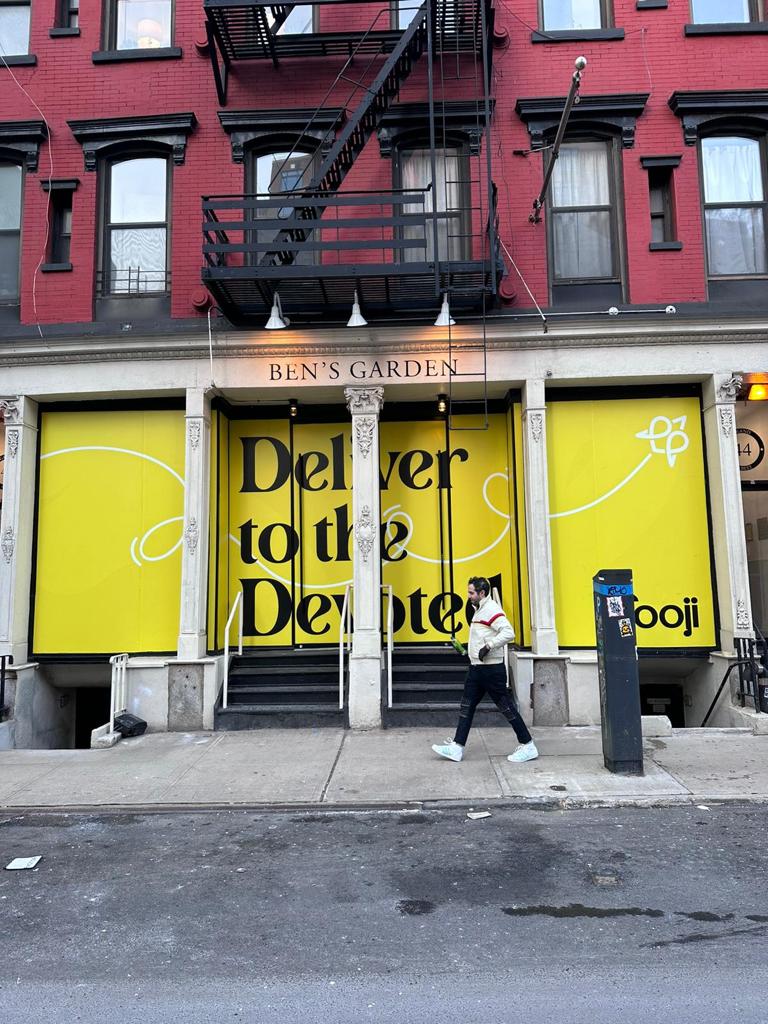
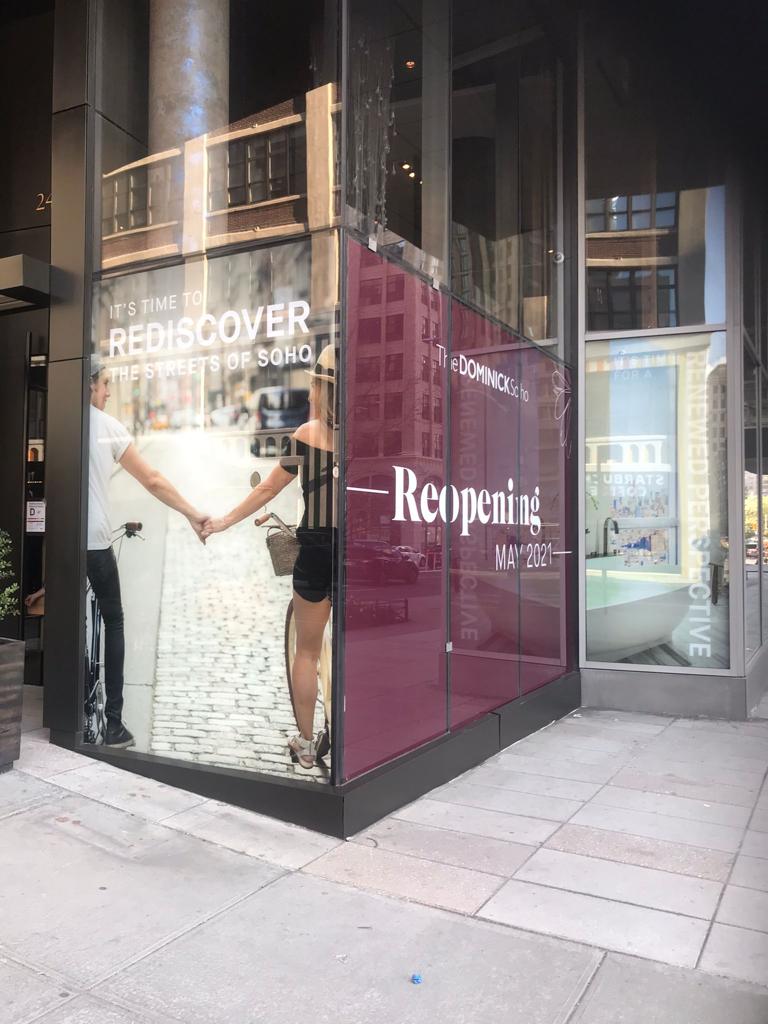
Velement prints and installs store window graphics across New York. Full window coverage, cut lettering, one-way vision film and seasonal campaign graphics, specified for how much of the glass you can afford to cover and installed outside trading hours.
Storefront window graphics for retail, restaurants, salons, gyms, showrooms and pop-ups across the five boroughs and the tri-state area.
Your Windows Are Advertising Space You Already Pay For
That line is taken almost directly from the live page, because it is the single best sentence currently on this website. A storefront on a busy New York block is passed by thousands of people a day and most retailers use it to display a security grille and a hand-written sale sign. It is rent they are already paying.
The part the live page does not address is the trade-off, and it is the only question that actually matters on this product. Every square foot of glass you cover sells to the street, and every square foot you cover also hides your store, darkens the interior and stops passers-by seeing the thing you are trying to sell them. Get that balance wrong and a window graphic reduces footfall rather than increasing it.
Velement brings 30 years of signage and graphics experience to store window graphics in NYC. We look at the storefront, work out how much coverage the window can take and where it should sit, and then print and install it. We also flag the two things that catch retailers out: what the lease allows, and whether the storefront sits in a district with glass transparency requirements.
Our Store Window Graphics Services
Full Window Coverage Graphics
Edge-to-edge printed graphics across the whole pane, for campaigns and for storefronts where the interior is not the selling point.
One-Way Vision Window Film
Perforated film that reads as a solid graphic from the sidewalk while your team still sees out. The most useful product on this page and the one buyers most often have not heard of.
Cut Vinyl Lettering and Logos
Store name, opening hours, phone, web address and logo cut from solid film and applied directly to the glass. No background, no visible edge.
Seasonal and Campaign Graphics
Sale, launch and holiday windows changed out on a cycle, produced in matched batches when the campaign runs across several stores.
Partial and Banded Graphics
Graphics set at a specific height across the glass, so the window still works as a window above and below the band.
Window Clings and Removable Graphics
Non-permanent options for short promotions and leased space, designed to come off cleanly at the end of the run.
Frosted and Privacy Film on Storefronts
Where the requirement is obscuring rather than advertising, for back-of-house glass and street-level privacy.
Storefront Fascia and Sign Graphics
Printed and applied graphics on the fascia and bulkhead above the window, so the whole shopfront reads as one piece.
Multi-Store Window Programs
One window design produced, packed and installed store by store, with the same colors on the last location as the first.
One-Way Vision Window Film
One-way vision film is perforated with thousands of small holes. From outside, where the light is brighter, the printed surface dominates and the film reads as a solid graphic. From inside, your eye passes through the holes and you can see out to the street. So you get a full-coverage window graphic and your staff still see the sidewalk, which matters for security, for daylight and for spotting a customer at the door.
The honest limitation
It works while the outside is brighter than the inside. After dark, with the store lit and the street dark, the effect weakens and the film becomes more transparent from outside. That is worth knowing before it goes up rather than afterwards. For a store that trades mainly in daylight it is close to ideal. For a bar or a restaurant that trades at night, solid film or banded coverage is usually the better answer, and we will say so.
How Much of the Window Should You Cover?
The question every retailer asks and no competitor page answers. This section is the page’s differentiator and a strong featured-snippet candidate.
| Coverage | What it suits | The trade-off |
|---|---|---|
| Cut lettering only, roughly 10 to 20 percent | Established stores, premium retail, anywhere the product in the window is the draw | Minimal impact on light and visibility. Lowest impact from the street. |
| Banded graphic at eye or knee height, 20 to 40 percent | Most retail. Messaging at sightline, glass clear above and below | The best general compromise. Keeps the store visible and readable. |
| One-way vision film, up to full coverage | Campaigns and stores wanting maximum impact without losing the view out | Reads solid by day, more transparent after dark. Costs more than plain film. |
| Solid partial coverage, 40 to 70 percent | Promotions, launches, stores with back-of-house or stock visible | Strong from the street, but the interior goes noticeably darker |
| Full solid coverage, near 100 percent | Pop-ups, fit-out hoarding, closed or refitting stores | Maximum impact, zero visibility in or out. Usually temporary, and most likely to hit a transparency or lease restriction. |
Two things that can limit your options
- Your lease. Many commercial leases and landlord handbooks limit how much of a shopfront can be covered, and some require approval of anything applied to the glass. Worth checking before ordering, not after.
- Local rules on storefront transparency. Some New York City zoning districts set requirements for ground-floor storefronts to remain visually transparent, which can restrict how much window signage or graphic coverage is permitted. What applies depends on the district and the building, so confirm for your specific address.
Window Graphic Materials
- Printed self-adhesive vinyl: the standard for full and partial coverage, applied to the inside or outside face depending on access and exposure.
- One-way vision perforated film: see Section 4. Applied externally, and laminated because the perforations trap dirt otherwise.
- Cut solid-color film: for lettering and logos, with no background, so the glass stays glass.
- Window clings: non-adhesive static film for short promotions, repositionable and reusable, though less durable and not suited to large panes.
- Removable low-tack vinyl: for leased storefronts and campaign work that has to come off cleanly at a known end date.
- Frosted and etched-effect film: obscuring rather than advertising. Covered properly on the window film page.
Inside or outside the glass?
Applied inside, a graphic is protected from weather, vandalism and cleaning, and it lasts longer. Applied outside, colors read stronger and there is no reflection off the glass between the graphic and the viewer. Inside is the default for most retail. Outside is right for one-way vision film and for windows with an internal security grille or display in the way. We decide it on the survey rather than by habit.
Store Window Graphics by Sector
- Fashion and specialty retail. Seasonal windows and campaign graphics, changed on a merchandising cycle and usually installed overnight.
- Multi-store and chain retail. One window design rolled out across every location, matched and scheduled store by store.
- Restaurants, cafes and bars. Name, hours, menus and licensing notices, plus promotional windows. Night trade usually rules out one-way vision films.
- Salons, clinics and studios. Street-level privacy combined with branding on the same glass, which is the most common double requirement we get.
- Gyms and fitness. Full or banded coverage so members are not exercising in a shop window, with the brand carried on the outside.
- Showrooms and dealerships. Large glazed frontages where partial graphics frame the product rather than hide it.
- Pop-ups and short-term retail. Full coverage for a fixed run, removed cleanly at the end of the lease. There is already a pop-up storefront photograph on the site.
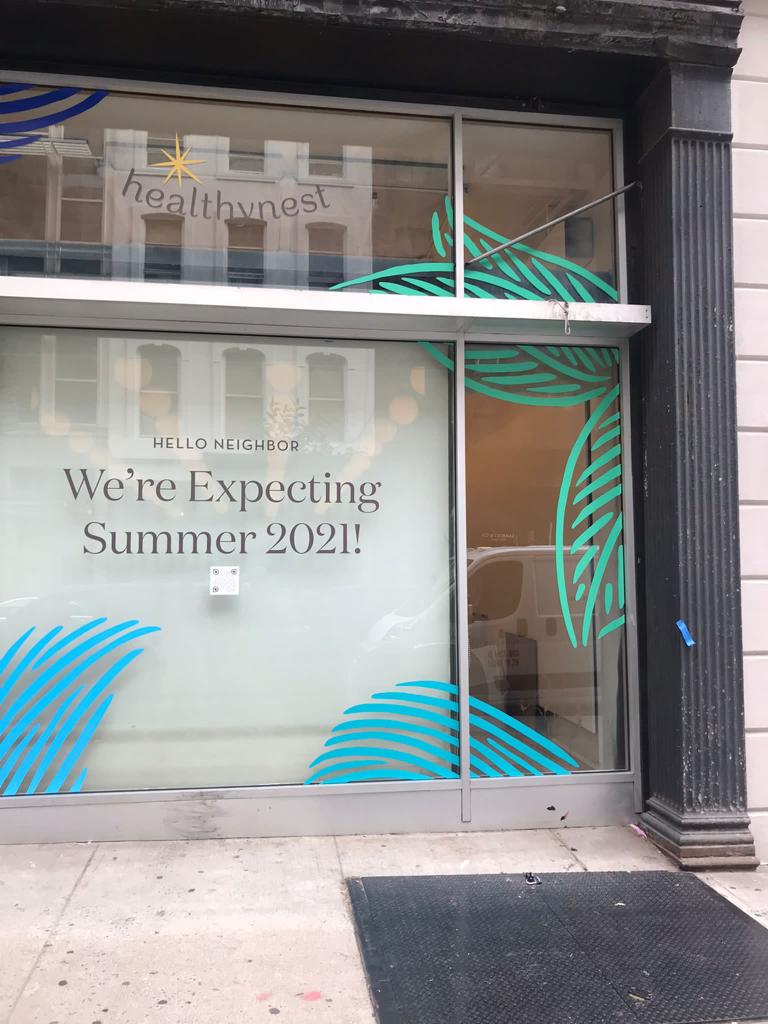
- Vacant and refitting units. Coming-soon and leasing graphics on empty stores, which is a real revenue line for landlords and agents and is currently marketed nowhere on this site.
From Storefront Survey to Installed Graphics
- Storefront survey or photograph. Glass dimensions, mullion and frame layout, which face we can work on, and what is behind the glass.
- Coverage decided. How much of the window to cover and at what height, with lease and transparency constraints raised at this point rather than later.
- Material specified. Solid, perforated, cut or removable, inside or outside face, laminated where the exposure needs it.
- Visual on your own storefront. The design shown back on the photograph of your actual window, so you approve what it will look like from the sidewalk.
- Printing and finishing. Printed in our own facility, paneled to the glass so seams fall on mullions wherever possible rather than across the artwork.
- Glass preparation and application. Glass cleaned properly, then applied by our own installers, outside trading hours where the store is open.
Why Retailers Choose Velement for Window Graphics
We work out the coverage first
How much glass you can afford to cover is the decision that makes or breaks a window graphic, and it is the one online printers never ask about.
We tell you when one-way vision is wrong
It is the best product on this page for a daytime store and the wrong one for a night-trade bar, and we say which you are.
Lease and transparency raised early
The two things that stop a window graphic going up, flagged at survey rather than discovered on install day.
Approval on your own storefront
You see the design on a photograph of your actual window before anything is printed.
Seams planned to the glass
Joins fall on mullions rather than across your artwork.
Installed outside trading hours
By our own teams, so the store opens on time with clean glass.
Frequently Asked Questions About Store Window Graphics:
How much of my store window should I cover?
It depends what the window is for. If the product in the window sells the store, cut lettering or a band at sightline height is usually right. If the interior is not the draw, or you are running a campaign, heavier coverage or one-way vision film works better. Covering everything maximizes impact from the street and eliminates visibility both ways. The table above sets out each option and its trade-off.
What is a one-way vision film?
Perforated film that reads as a solid printed graphic from outside while letting your staff see out through the holes. It gives you full-coverage advertising without blinding the store. It works while the outside is brighter than the inside, so it is ideal for daytime trade and less effective after dark with the lights on.
Will window graphics make my store dark inside?
Solid coverage will, noticeably. One-way vision film reduces light much less, and banded or partial coverage barely at all. If daylight matters to the space, tell us at survey and we will specify it.
Do window graphics go on the inside or outside of the glass?
Usually inside, where the graphic is protected from weather, cleaning and vandalism and lasts longer. Outside application gives stronger color and no reflection between the graphic and the viewer, and is standard for one-way vision film. We decide from the survey.
Can window graphics be removed?
Yes, when removable or low-tack media is specified from the start. For leased storefronts and short-term campaigns that is what we use, so the glass is handed back clean.
Am I allowed to cover my whole storefront?
Not always. Commercial leases often limit window coverage, and some New York City zoning districts set transparency requirements for ground-floor storefronts. What applies depends on your district and building, so check with your landlord and, where relevant, your architect or expediter. We will raise it with you at the survey.
How long do store window graphics last?
Indoors-applied graphics on a north-facing window last considerably longer than external film on glass in direct afternoon sun. Tell us the exposure and how long you need it and we will specify the media and lamination for that.
Can you match graphics across several stores?
Yes. We hold the artwork and color references, print in matched batches, pack by destination and schedule installs store by store.
Which areas do you cover?
All five boroughs of New York City, plus Long Island, Westchester, northern New Jersey and Connecticut, from our facility in Hicksville, NY.
View Our Projects