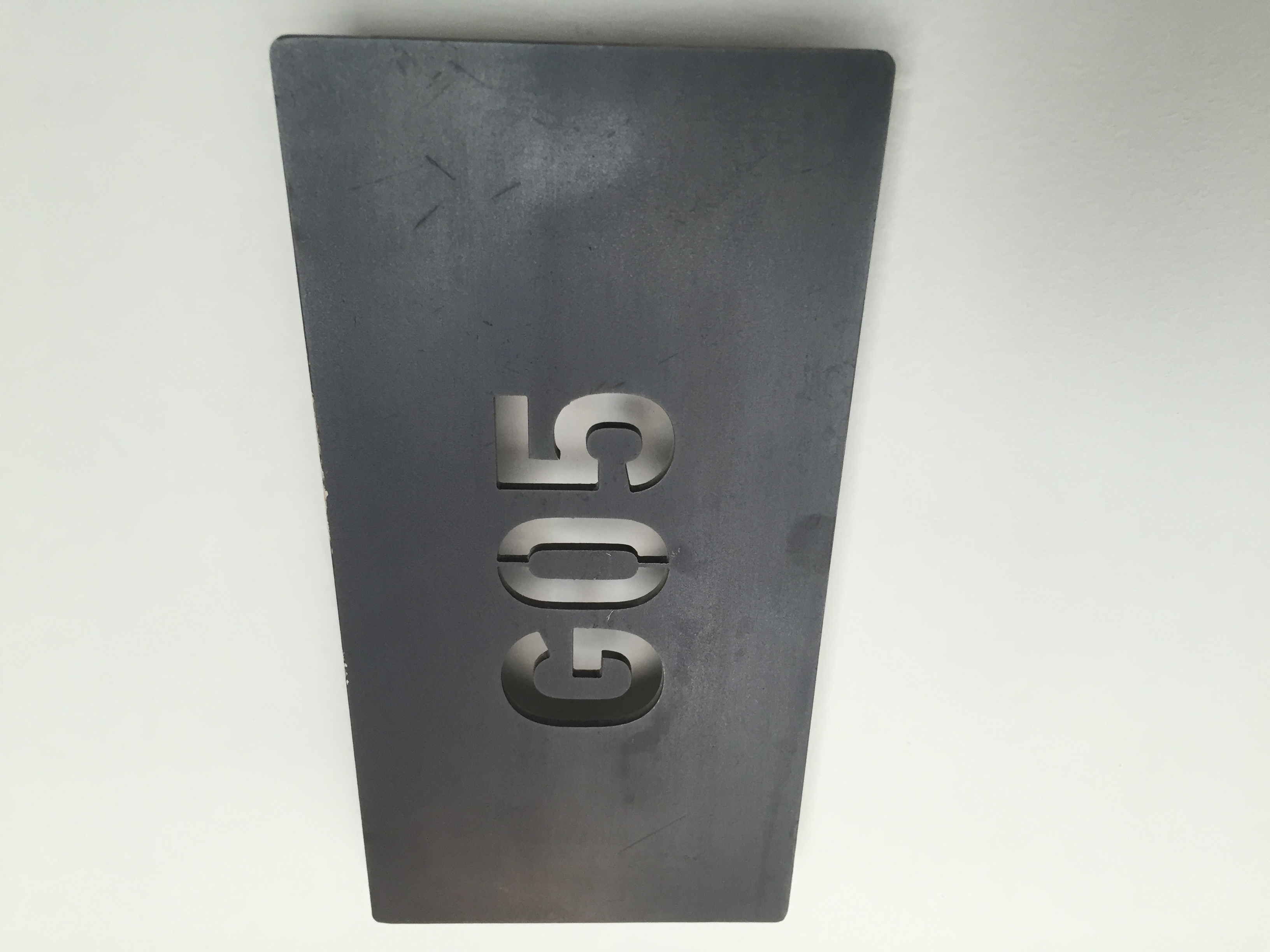
Custom Business Signs in New York
Custom signs for storefronts, reception areas, offices, restaurants and hotels. Metal, acrylic and glass, lit or unlit, made to your logo and your wall. We fabricate them in our New York shop and install them ourselves, one sign at a time or as a set for every location.
Start with where the sign is going. The right material usually follows from that.
Chosen for the look, judged by the weather
Most people choose a sign material from a photograph. Brushed steel looks serious, clear acrylic looks clean, glass looks expensive. All of that is true, and none of it tells you how the sign will behave where it is going.
Polished brass on a street-facing wall darkens unless it is sealed. Clear acrylic by a door that gets pushed all day picks up scratches. A glass panel is ordered and then someone asks for one more hole, which cannot be added once the glass has been tempered. A lit sign is designed before anyone checks where the power is.
So we ask four things before we talk about finishes: inside or outside, lit or unlit, handled or out of reach, and how long it is staying. Custom commercial signs that answer those four questions still look right years later.
Custom Business signs by material
| Material | What it gives you | Works best | Worth knowing |
|---|---|---|---|
| Aluminum | Light, rigid, painted or brushed, does not rust | Storefront panels, cut letters, exterior and interior signs | Painted or powder-coated finishes hold up best outdoors. |
| Stainless steel | Brushed or polished metal with real weight to it | Reception letters, plaques, exterior signs on quality facades | Polished faces show fingerprints. Brushed is more forgiving. |
| Brass and bronze | Warm metal, traditional and formal | Plaques, hospitality, heritage and professional offices | Tarnishes over time unless lacquered. Some clients want the patina. |
| Acrylic | Clear, colored, frosted or mirror; can be printed, cut and lit | Reception signs, suite and door signs, lit letters and panels | Scratches more easily than glass. |
| Glass | Depth, clarity and a hard, scratch-resistant face | Reception walls, directories, premium interiors | Heavier than acrylic. Holes and cutouts are made before tempering. |
| Combined | Metal letters on acrylic or glass, lit panels behind metal faces | Logo walls and reception signs with layers | Most of the best signs are more than one material. |
Custom metal signs
Metal is the default for signs that have to last outdoors and for interiors that want a sign to feel permanent. The metal matters, and so does what is done to its surface.
Aluminum
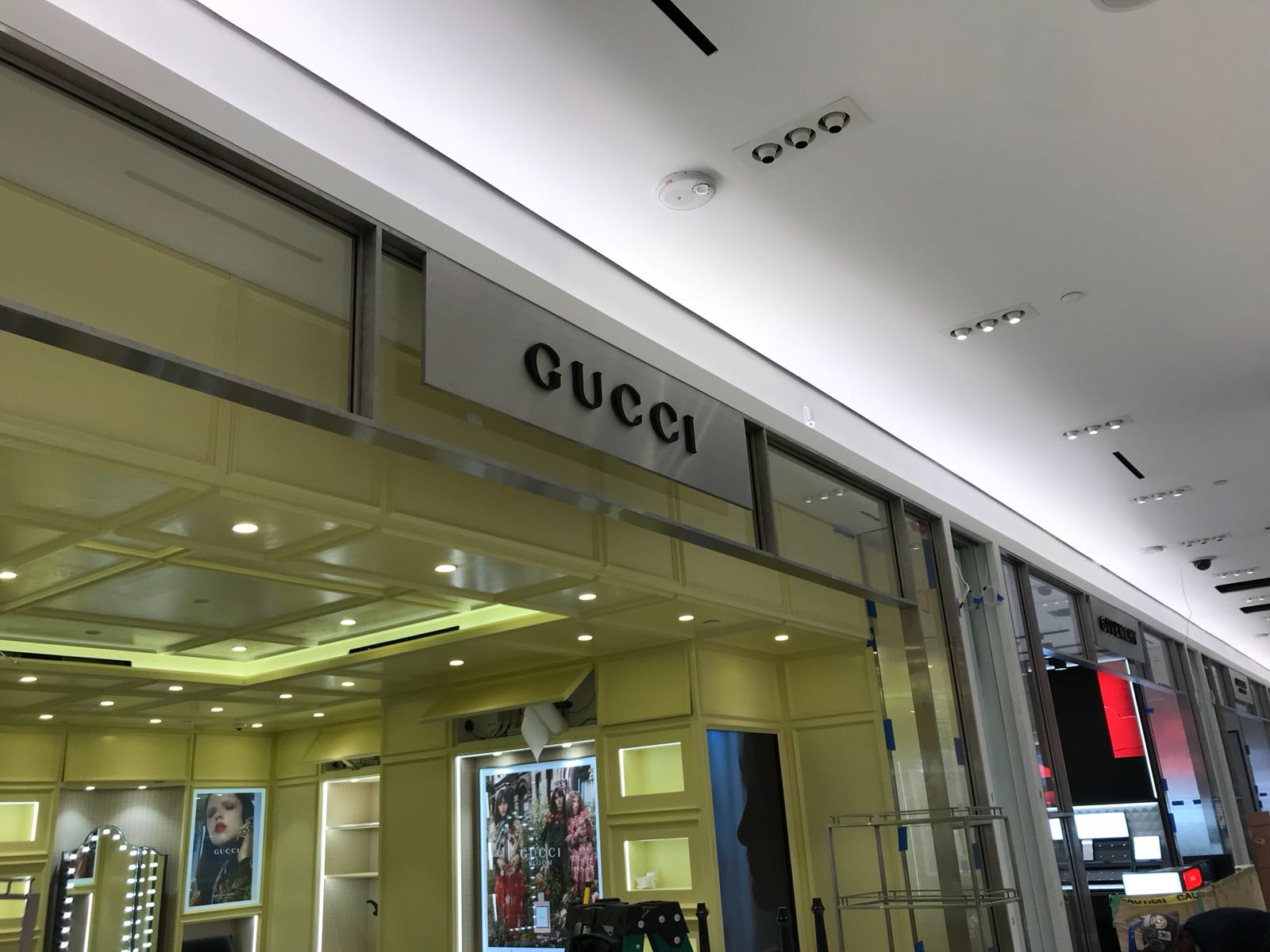
The workhorse. Aluminum is light enough to hang on most walls, does not rust and takes paint and powder coat well. We use it for flat sign panels, cut letters and fabricated letter faces and returns. Aluminum composite panel, a thin plastic core between two aluminum skins, makes large, flat storefront panels that stay flat.
Stainless steel
Heavier, harder and more expensive than aluminum, with a finish that reads as quality from across a lobby. Brushed stainless hides handling marks. Polished stainless looks like a mirror and shows every fingerprint, so it belongs where people cannot reach it.
Brass and bronze
The traditional choice for plaques and formal entrances. Left bare, both metals darken and develop a patina, faster outdoors. A clear lacquer slows that down. Decide early whether you want the metal to age or stay bright, because the finish is specified accordingly.
Finishes and details
- Brushed, polished or painted. Each changes the look and how much maintenance the sign needs.
- Powder coat. A baked finish, tougher than wet paint, and the usual choice for exterior aluminum.
- Etched and engraved. Text and logos cut into the metal, then left bare or filled with color. Common on plaques and directories.
- Fixings. Outdoors, mixing metals in contact can cause corrosion. Fixings are matched to the sign, not taken from whatever is in the drawer.
Custom acrylic signs
Acrylic is the most flexible material we work with. It comes clear, colored, frosted or mirrored, it cuts cleanly to almost any shape, and it carries light well. That makes it the usual choice for reception signs, suite and door signs, and anything lit from behind or through its edge.
- Printed on the back. Printing on the reverse of clear acrylic puts the ink behind the sheet. The face stays glossy and the print cannot be scratched off.
- Layered. A clear face over a colored or printed back panel, with standoffs between, gives depth without much cost.
- Edge-lit. Light fed into the edge of a panel picks out engraved lines and lettering, so the design glows while the rest stays clear.
- The trade-off. Acrylic is lighter and tougher than glass, but its surface marks more easily. Where a sign will be touched, cleaned often or brushed past, we say so and suggest where glass might suit better.
Flat acrylic panels and plaques on standoffs have their own page: see custom acrylic signage. For freestanding acrylic letters, see acrylic letters.
Custom glass signs
Glass has a depth and a hardness that acrylic does not quite match. It resists scratching, cleans without marking and looks right in lobbies, law firms, hotels and anywhere the interior is already stone, metal and glass.
- Back-painted. Color applied to the back of the glass, so the face stays smooth and the color looks rich through the thickness.
- Frosted and etched. Sandblasted or etched lettering and patterns, either as the design itself or as a soft background behind applied letters.
- Glass with metal. Brushed metal or dimensional letters mounted on a glass panel, stood off the wall so the glass casts a slight shadow.
- Made in the right order. Sign glass is usually tempered for safety, and tempered glass cannot be cut or drilled afterward. Every hole, cutout and edge detail is decided at the drawing stage.
- Weight. Glass is heavy. The wall and its fixings are part of the design, not an afterthought.
Graphics applied to a window or glass partition you already have are a different product; our window film and store window graphics pages cover those.
Custom illuminated signs
Light changes a sign more than any material does. It also brings power, permits and maintenance into the job, so it is worth deciding early whether a sign is lit and how.
| Lighting method | How it works | The effect |
|---|---|---|
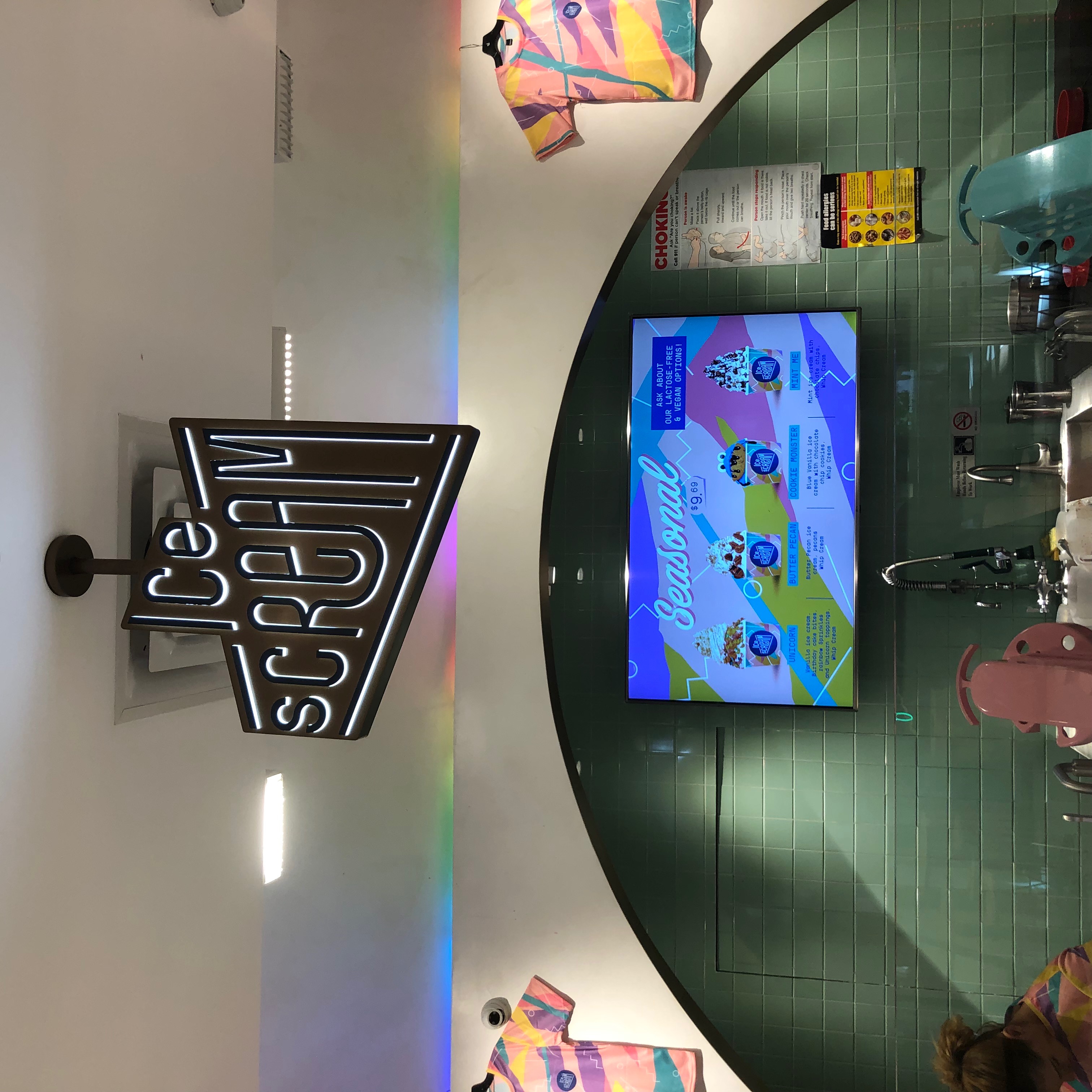
| Front-lit | LEDs inside a letter shine out through a translucent face. | The letters themselves glow. Bright and legible from a distance. |
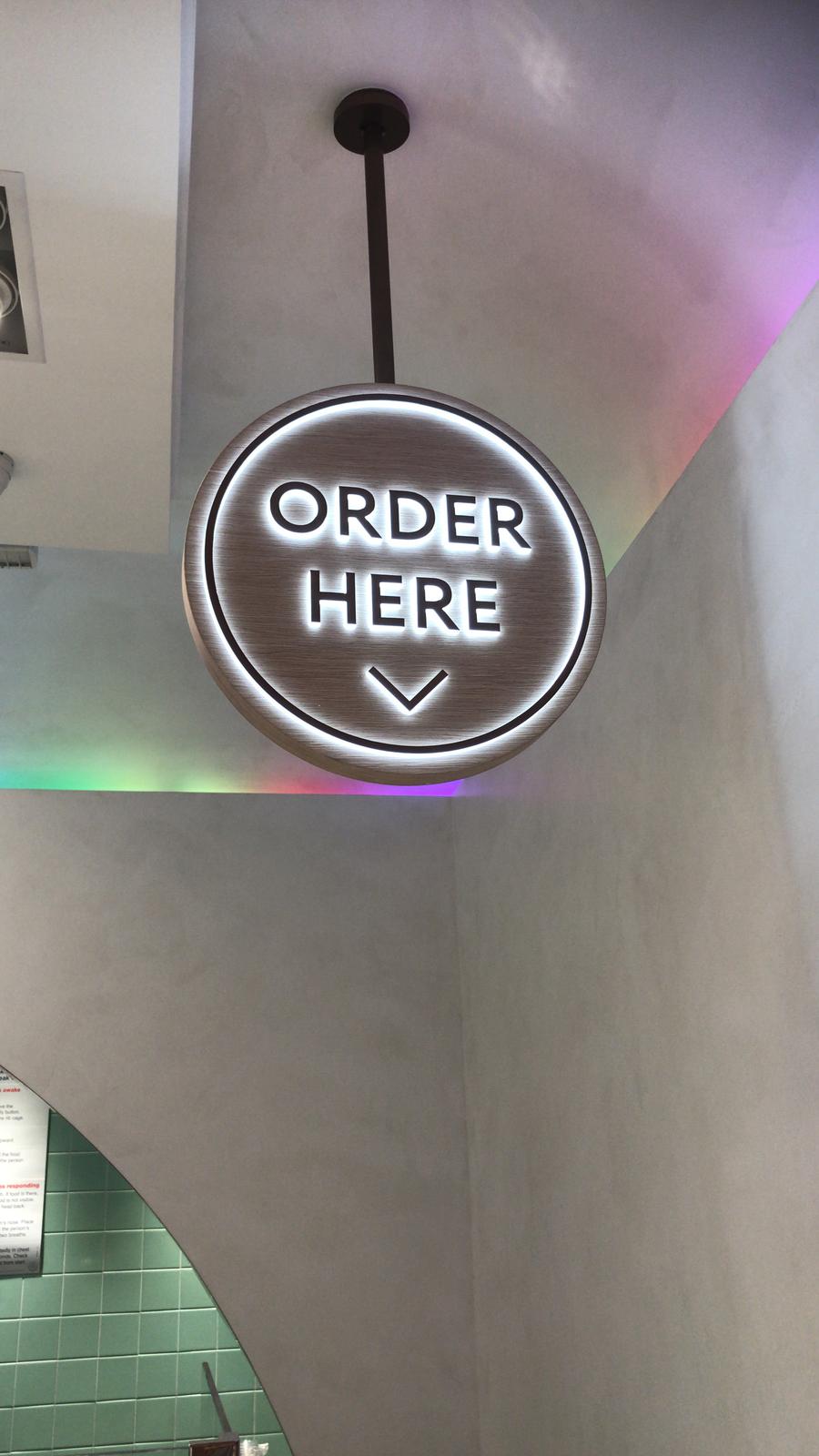
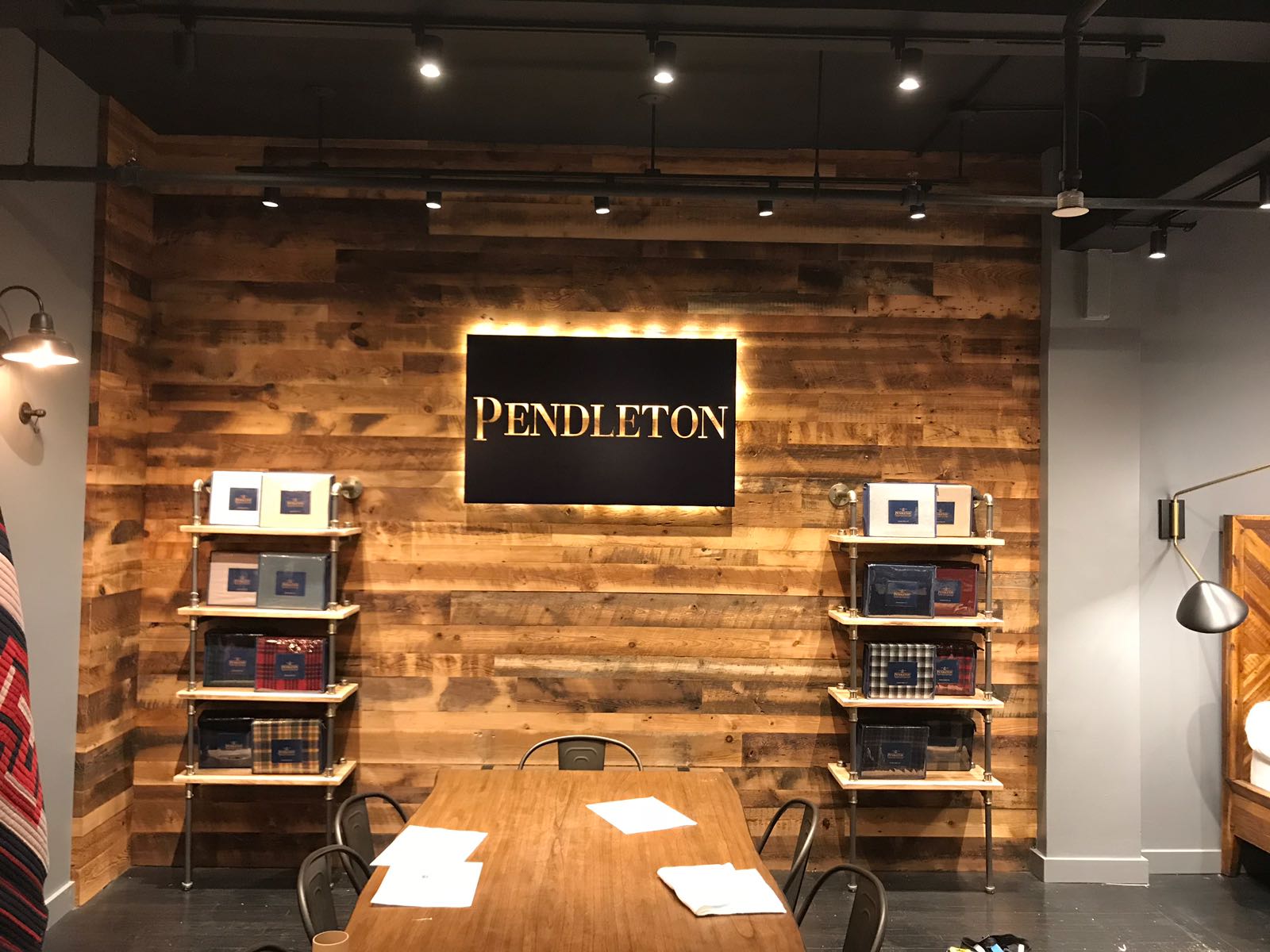
| Halo-lit | LEDs behind a solid letter light the wall around it. | A soft glow behind dark or metal letters. Quieter and more refined. |
| Front and halo | Both at once. | Glowing faces with a halo behind. |
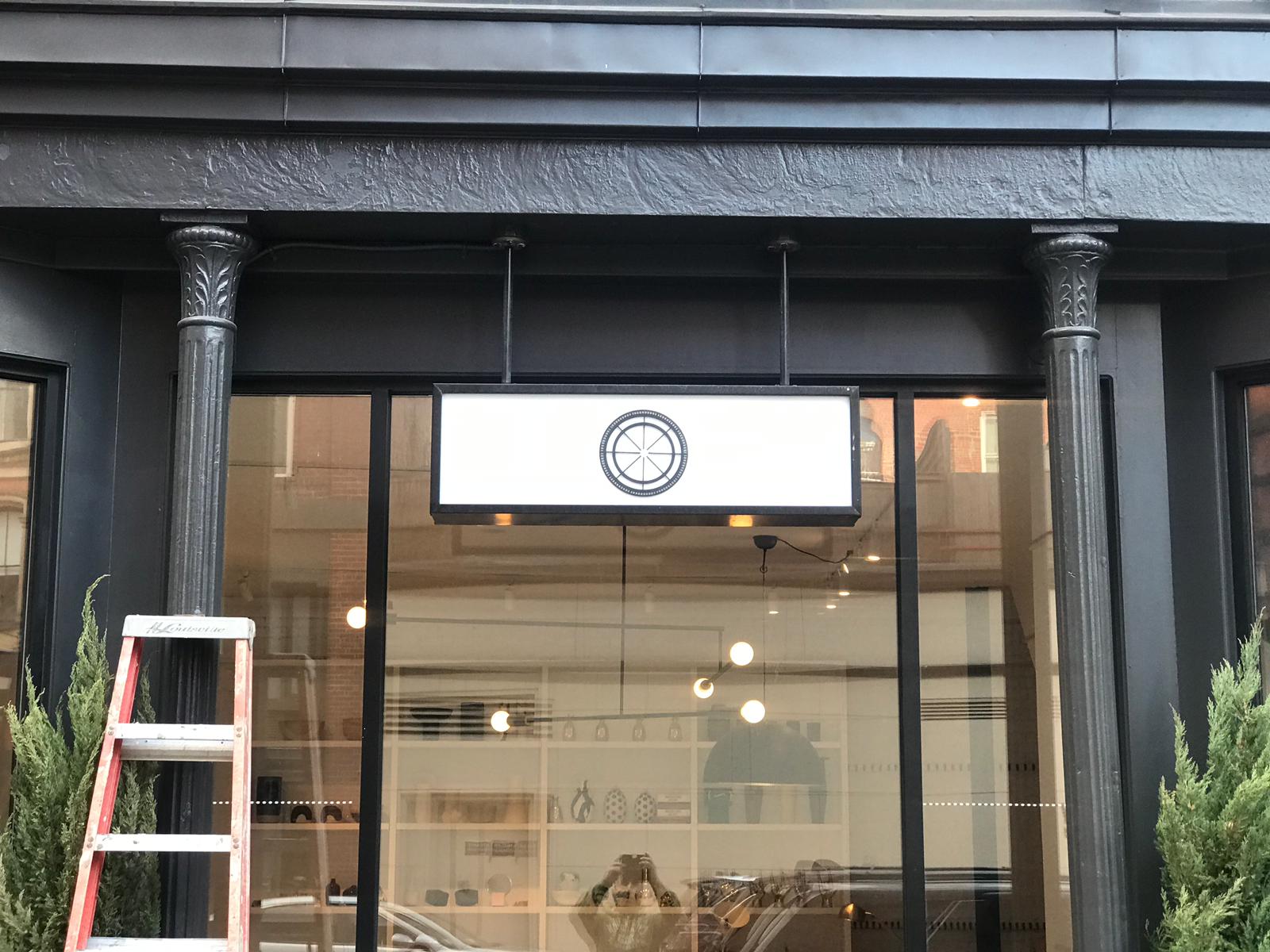
| Backlit panel or lightbox | A translucent panel lit evenly from behind. | A single glowing surface, often used for logos and projecting signs. |
| Edge-lit | Light fed into the edge of acrylic or glass. | Engraved or printed detail glows. Suited to interiors. |
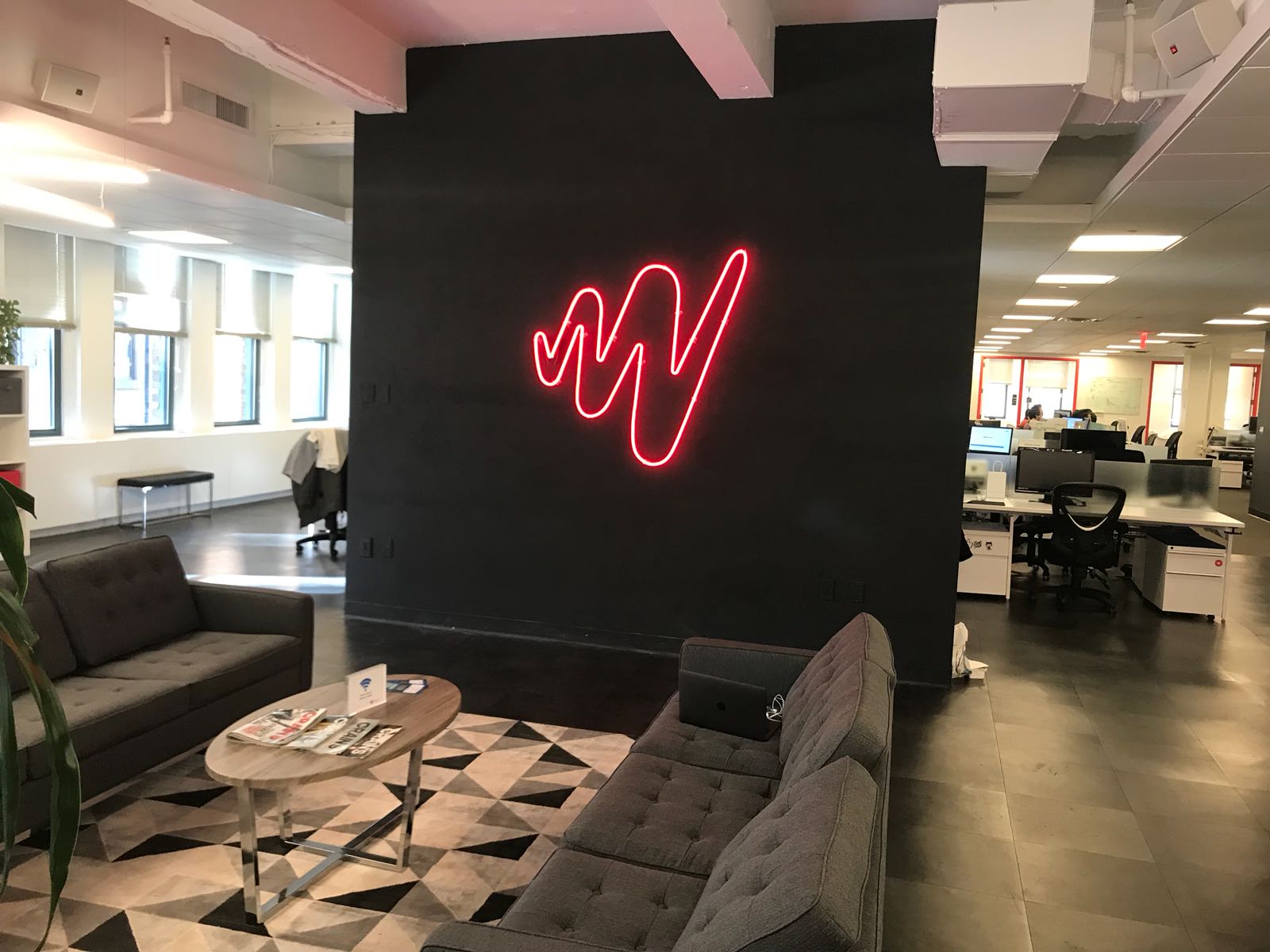
| LED neon-style | Flexible LED tube shaped to lettering or artwork. | The look of neon, usually used indoors. |
What a lit sign needs
- Power in the right place. A circuit near where the sign will go. Tell us where it is, or that there isn’t one yet.
- Even light. How evenly a letter glows depends on the LED spacing and the depth of the letter. Get it wrong and you see spots of light instead of a smooth face.
- Serviceable parts. LED power supplies can fail before the LEDs do. We place them where they can be reached without taking the sign off the wall.
- Approvals. Exterior lit signs in New York usually need an electrical permit and a sign permit, and zoning can restrict lighting. Our signage company page covers this in more detail.
Storefront signs and interior signs are different jobs
The same logo in the same material can be two very different signs, depending on which side of the door it hangs.
| Aspect | Custom storefront signs | Custom interior signs |
|---|---|---|
| Seen from | Across the street, often while moving | A few feet away, standing still |
| Up against | Rain, sun, cold, grime | Handling, cleaning, bumps |
| Approvals | Usually a city permit, often landlord criteria, sometimes landmarks | Usually the landlord or building only |
| Typical products | Channel letters, fascia panels, blade and projecting signs, lightboxes | Reception logos, suite and door signs, directories, wayfinding, plaques |
| Common materials | Aluminum, painted and powder-coated metal, acrylic faces | Acrylic, glass, stainless, brass, layered combinations |
Custom storefront signs
- Legibility first. Letter height, stroke weight and contrast decide whether the sign can be read from the far sidewalk. A thin, elegant logo sometimes needs adjusting for the street.
- Day and night. A sign that reads well in daylight can disappear after dark, and a lit one can glare. We look at both.
- The sign band. Storefronts often have a fixed area for the sign. Its size, and the landlord’s rules for it, set the limits.
- Built for weather. Sealed letters, drainage where water can collect, and finishes rated for exterior use.
Custom interior signs
- Reception and logo walls. The first thing a visitor reads, and usually the most detailed sign in the building.
- Suite, door and room signs. Many permanent room signs need raised characters and braille to meet ADA requirements. We make those to comply rather than retrofitting later.
- Wayfinding and directories. Designed as a system, so floor, suite and directional signs match.
- Close-up finish. Interior signs are seen from close range, so edges, fixings and joints have to be clean.
Logo to finished sign
- Send us the logo and the wall. A logo file and a photograph of where the sign will go, with rough dimensions. We will suggest materials and give you a rough price.
- Four questions. Inside or outside, lit or unlit, handled or out of reach, and how long it is staying.
- Drawing. The sign drawn to scale on your wall, with materials, finishes, lighting and fixings specified.
- Samples. Finish samples, color proofs, or a test letter for lit signs, so you approve the real thing rather than a render.
- Fabrication. Cut, formed, finished, wired and assembled in our New York shop.
- Installation. Mounted, connected and checked by our own team, outside business hours where needed.
Custom signs, made here
| Capability | What it means for your sign |
|---|---|
| We choose the material for the place | Metal, acrylic or glass picked for where the sign lives, not only for how it looks in a photo. |
| We sample before we make | You approve a real finish, color or lit letter, not a screen image. |
| We make it in New York | Cut, finished and assembled in our own shop, so a change is a conversation rather than a delay. |
| We design for maintenance | Power supplies you can reach, finishes you can clean, panels you can replace. |
| We install | The people who built the sign put it up. |
| We keep the drawings | A second location or a replacement matches the first. |
Frequently Asked Questions About Custom Business Signs
What is the best material for an outdoor sign?
There isn’t one best material; it depends on the sign. Aluminum with a powder-coated or exterior-grade painted finish is the most common choice because it is light and does not rust. Stainless steel suits premium facades. Acrylic works well as the face of lit letters and panels. Tell us where the sign is going and we will recommend a material.
Acrylic or glass for a reception sign?
Acrylic is lighter, less expensive, easier to shape and easier to light. Glass is harder to scratch and has more depth and weight to it. For a sign behind a desk that nobody touches, either works. For a sign by a door or in a busy corridor, glass wears better.
Will a metal sign rust or tarnish?
Aluminum and stainless steel do not rust in normal use. Brass and bronze tarnish and develop a patina over time, especially outdoors, unless they are lacquered. Some businesses want that aged look and some do not, so we agree the finish before fabrication.
How much does a custom sign cost?
It depends on size, material, finish, lighting, the wall it goes on and whether it needs permits. A small interior plaque and a lit storefront sign are very different jobs. Send us your logo, a photo and rough dimensions, and we will give you a realistic price range early.
Can you match our brand colors?
Yes. Paint, powder coat, printed acrylic and colored acrylic can all be matched to your brand standard, though each material reproduces color slightly differently. We provide samples for approval before making the sign.
Do your illuminated signs use LEDs?
Yes. LEDs are standard for front-lit, halo-lit, backlit and edge-lit signs. They use less power than older lighting, and the power supplies are placed where they can be reached for servicing.
Do you make ADA-compliant signs?
Yes. Permanent room and space identification signs typically need raised characters, braille, specific contrast and correct mounting height. We make them to those requirements and in the same materials and style as your other interior signs.
What file do you need?
A vector file of your logo, such as AI, EPS, SVG or a vector PDF, is best because it scales cleanly to any size. If you only have a JPG or PNG, send it anyway and we will tell you whether it can be used or needs redrawing.
View Our Projects