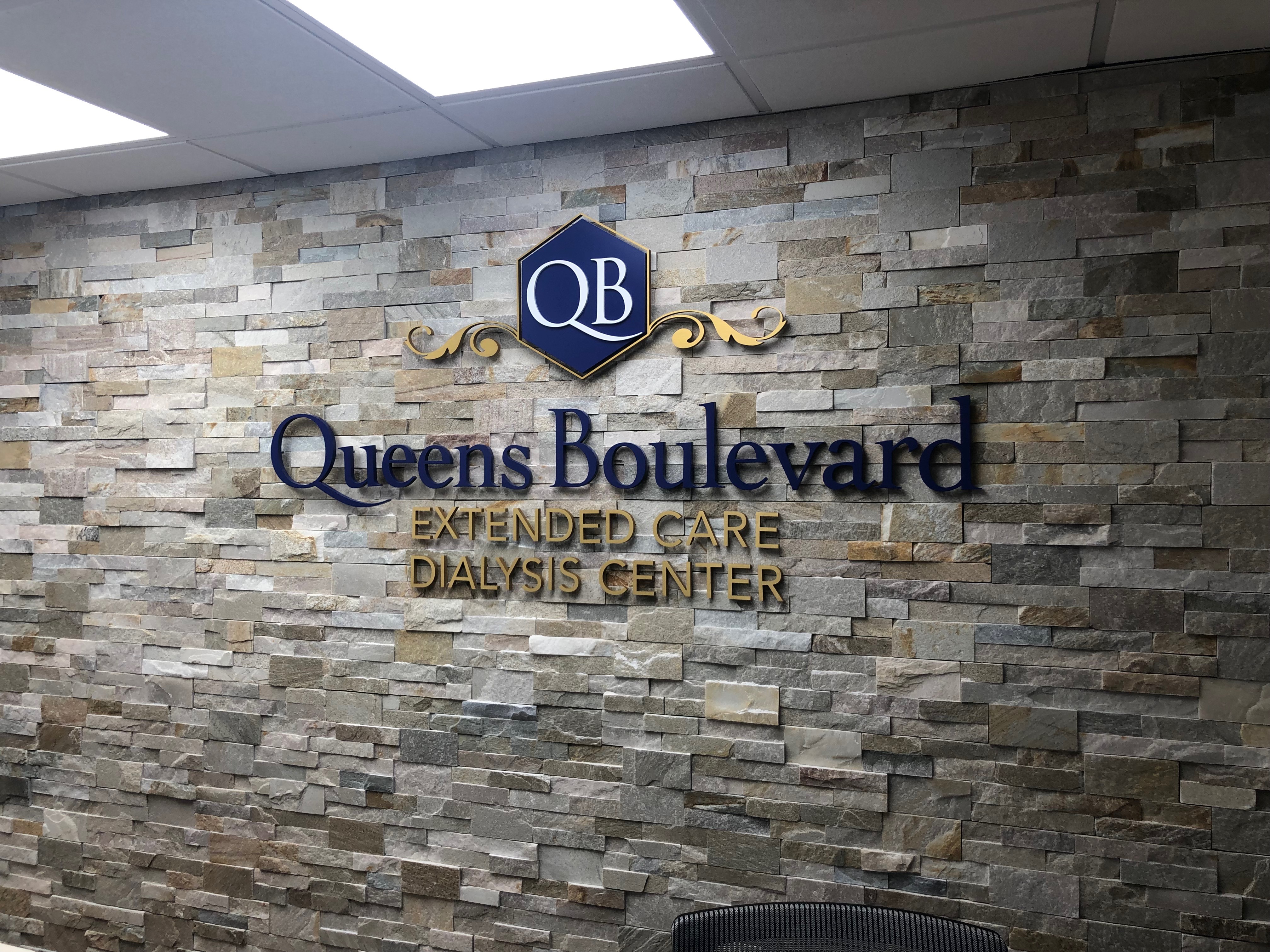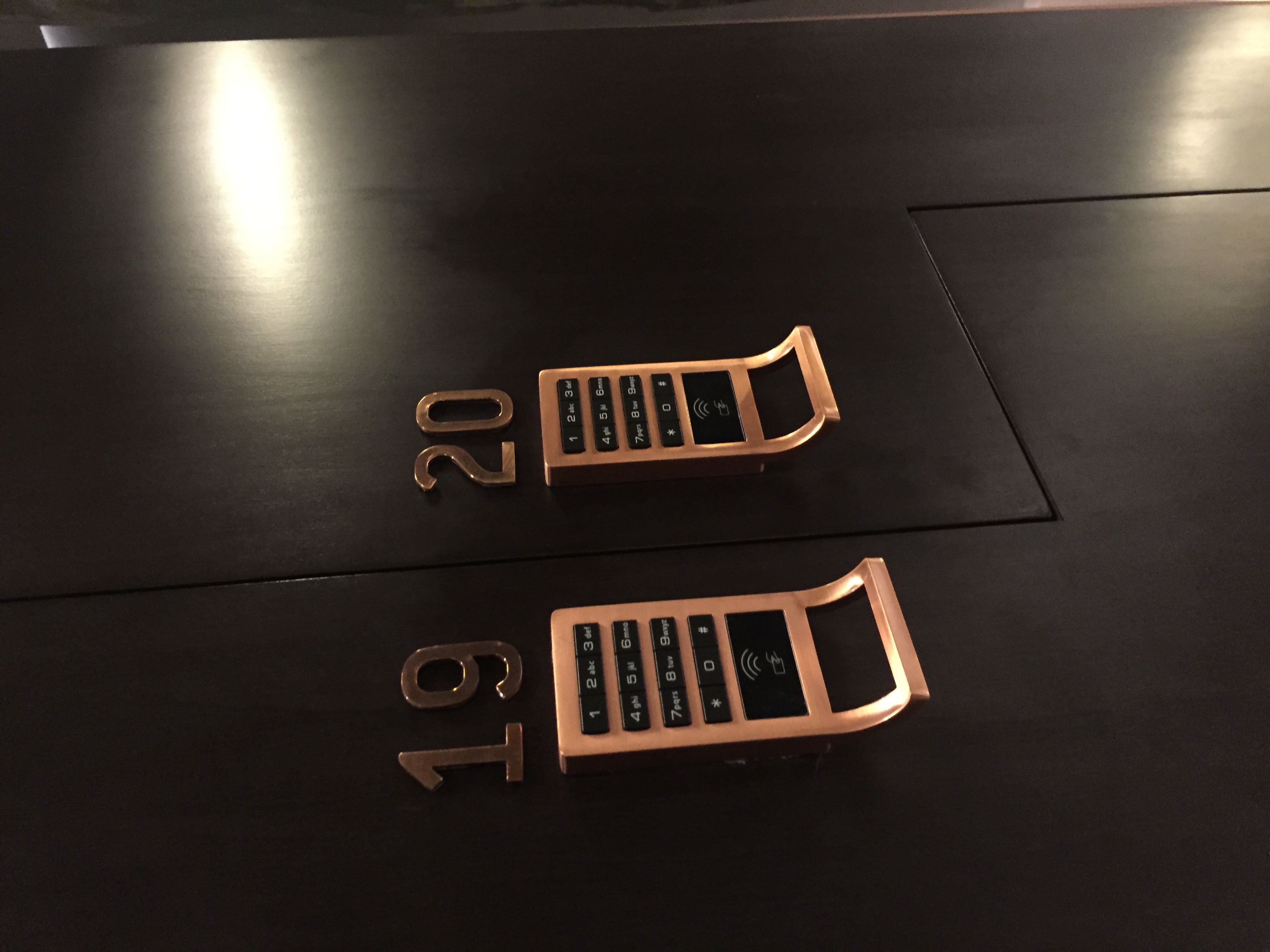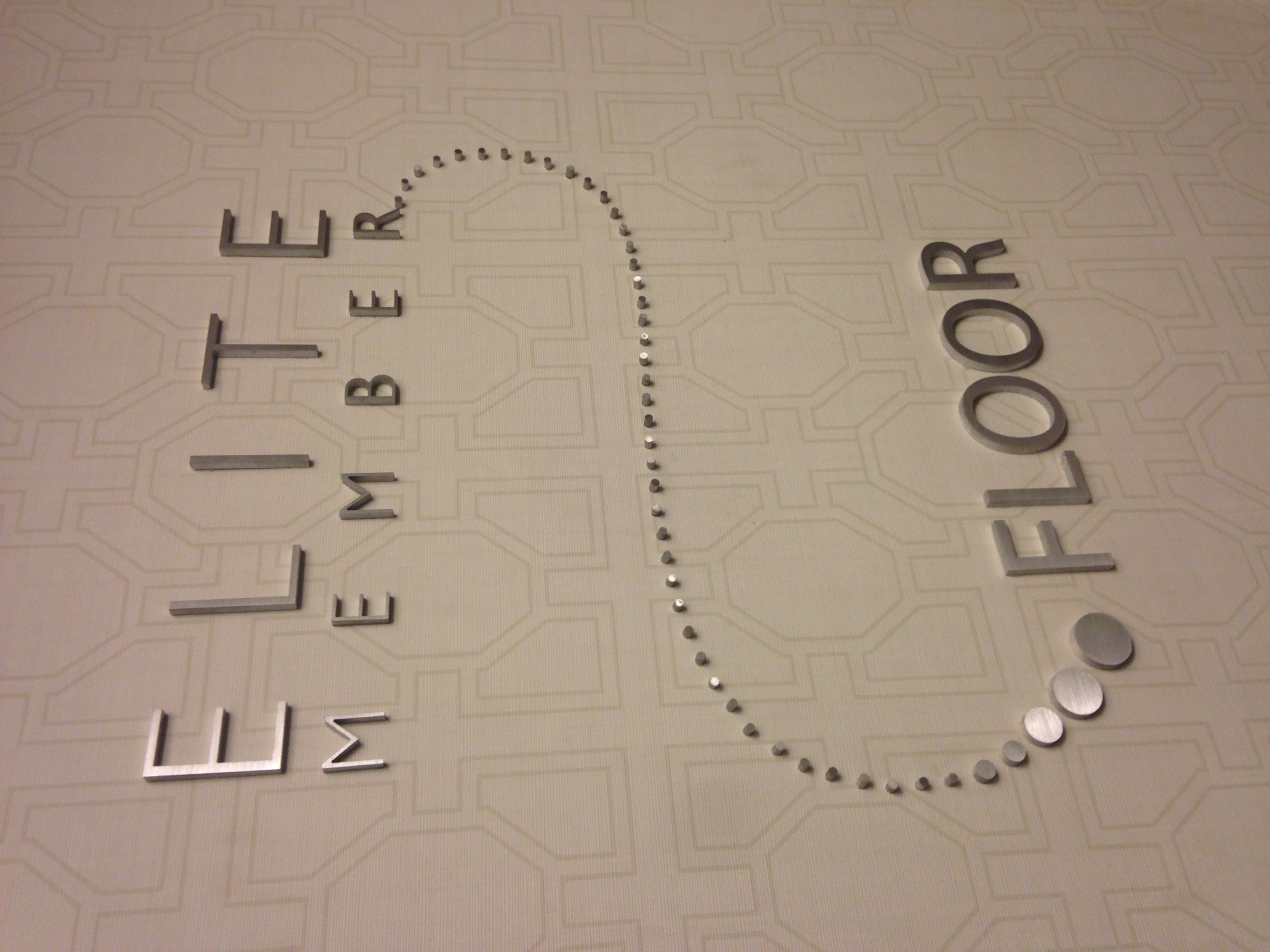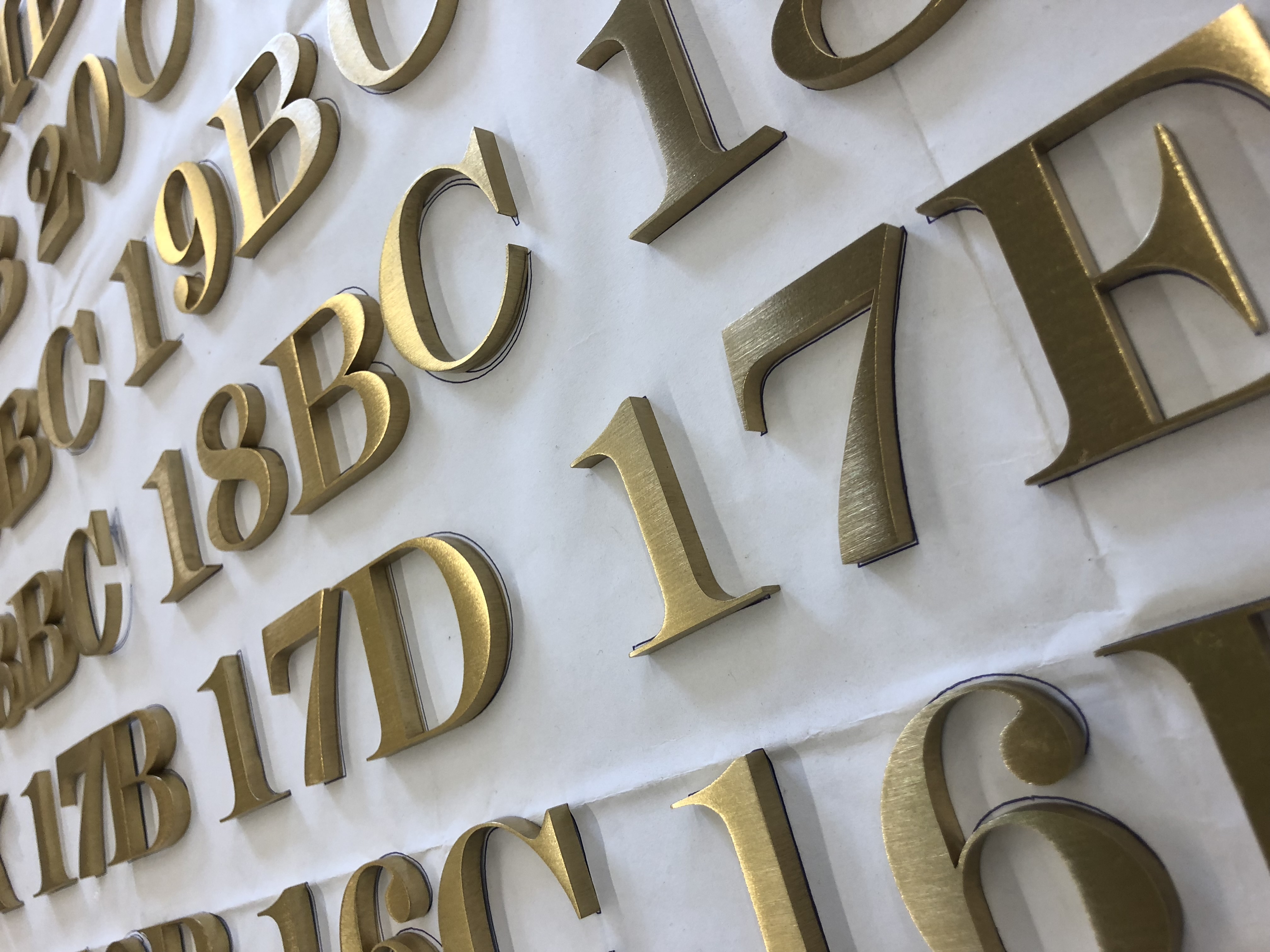
Metal Letter Signs in New York
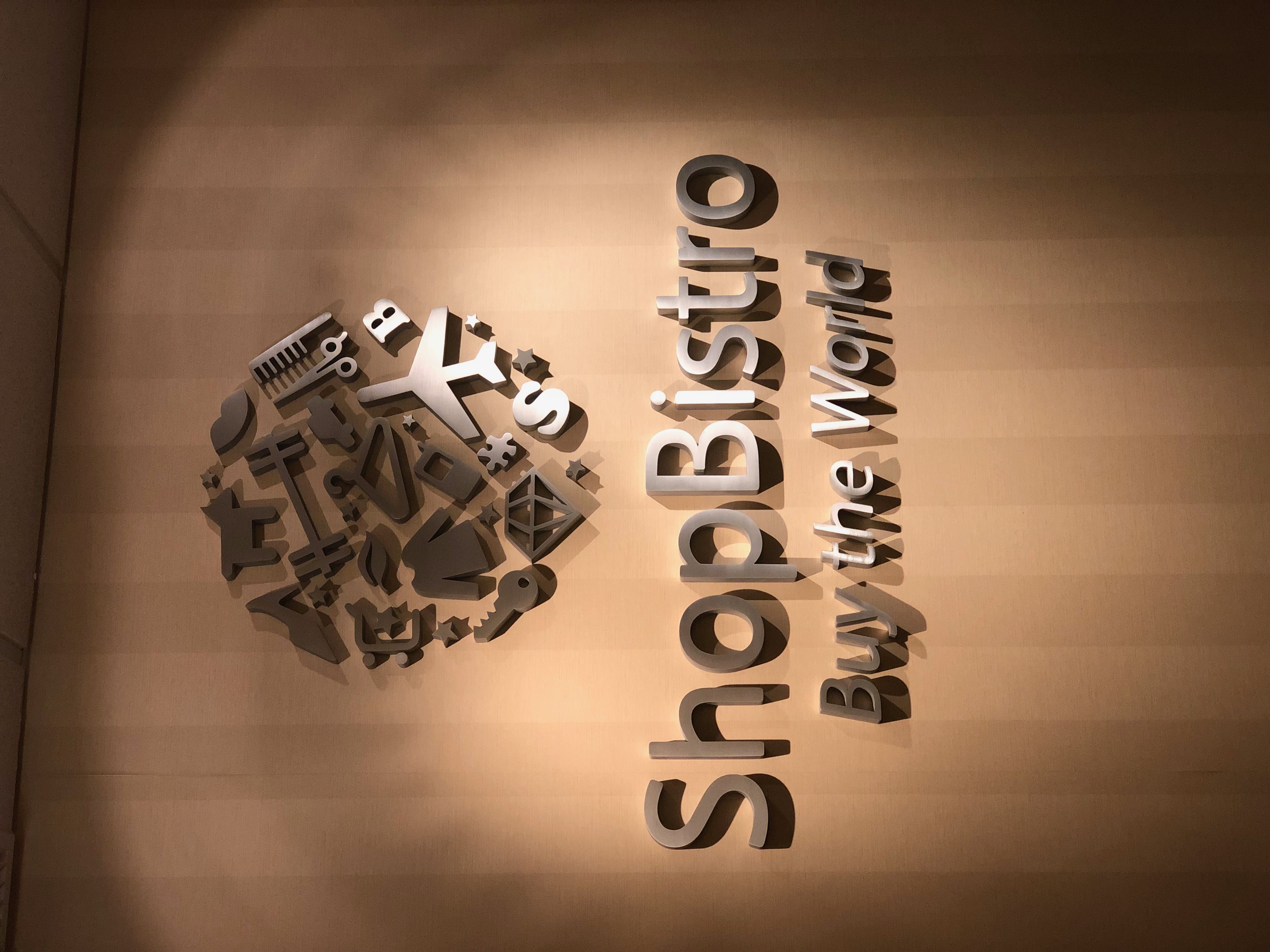
Velement fabricates custom metal letter signs in aluminum, brass, bronze, copper and stainless steel. Cut, formed, finished and plated in our own workshop, for reception walls, building entrances, wayfinding and corporate identification, interior and exterior.
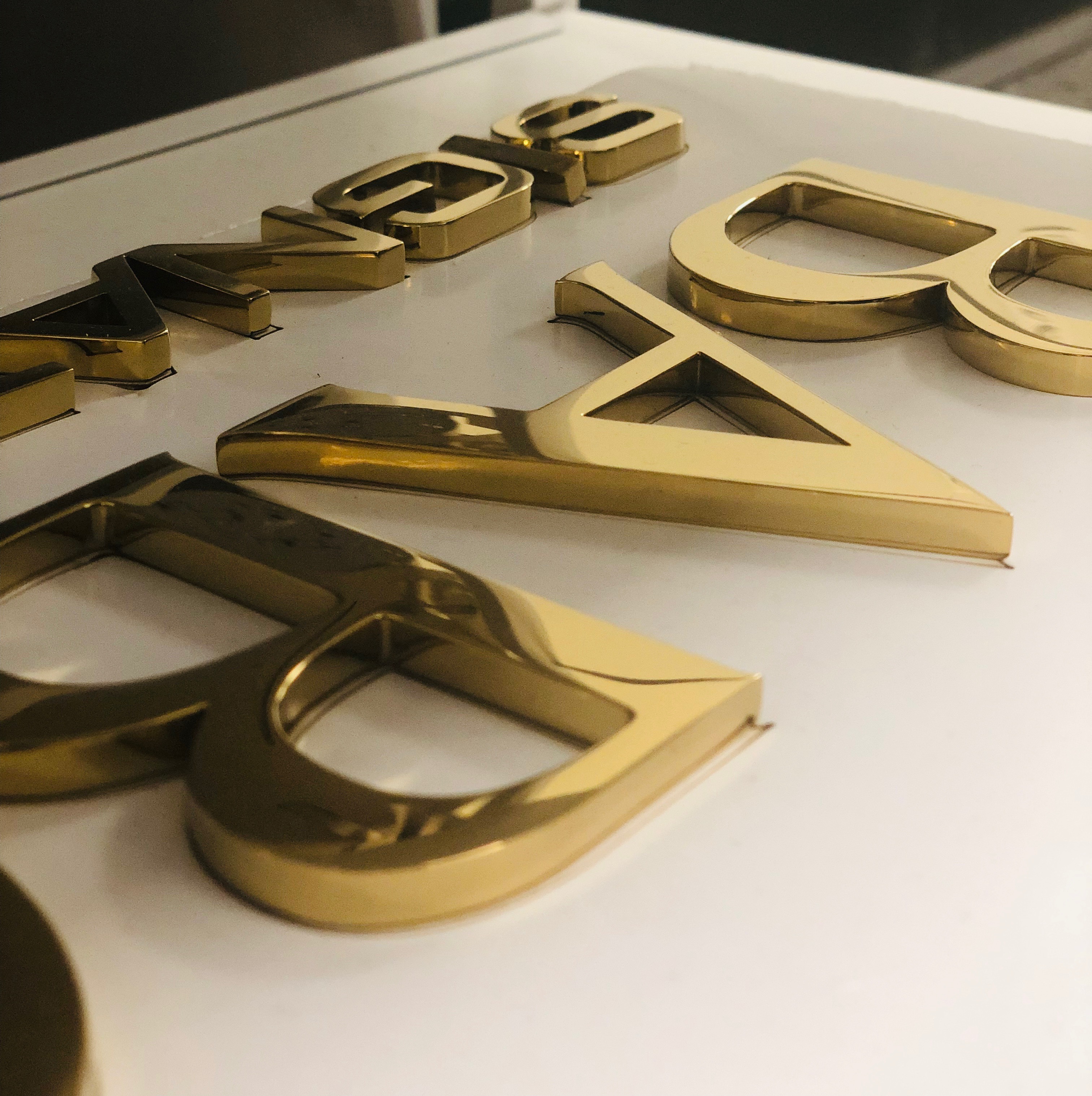
Flat cut, fabricated and cast letters from a single name to a full building scheme. In-house plating means a stainless letter can take a brass, bronze or copper finish.
A metal letter is the one sign nobody has to maintain
Metal letters do a job no other sign type does as well: they say permanent. A printed sign says current. A vinyl sign says temporary. An illuminated sign says open. A brass letter on a stone wall says this organization was here before you arrived and expects to be here after you leave, and it says it without power, without a switch and without anything that can fail.
That is also why they are the least forgiving sign type to buy badly. There is no light to distract from the workmanship, and a metal letter is usually read from a few feet away, where the cut edge, the grain of the finish and the alignment of the row are all visible. Everything that is wrong with a metal letter is visible in daylight, permanently.
Velement cuts, forms, finishes and plates metal letters in its own workshop in New York. The material, the depth, the finish, the mounting and the fixing pattern are specified as decisions rather than inherited from a catalog.
Flat cut, fabricated or cast
The manufacturing method determines the look, the depth, the weight and most of the cost. It is the first decision and it is usually made for you by the supplier without being explained.
| Method | How it is made | What it gives you | Best for |
|---|---|---|---|
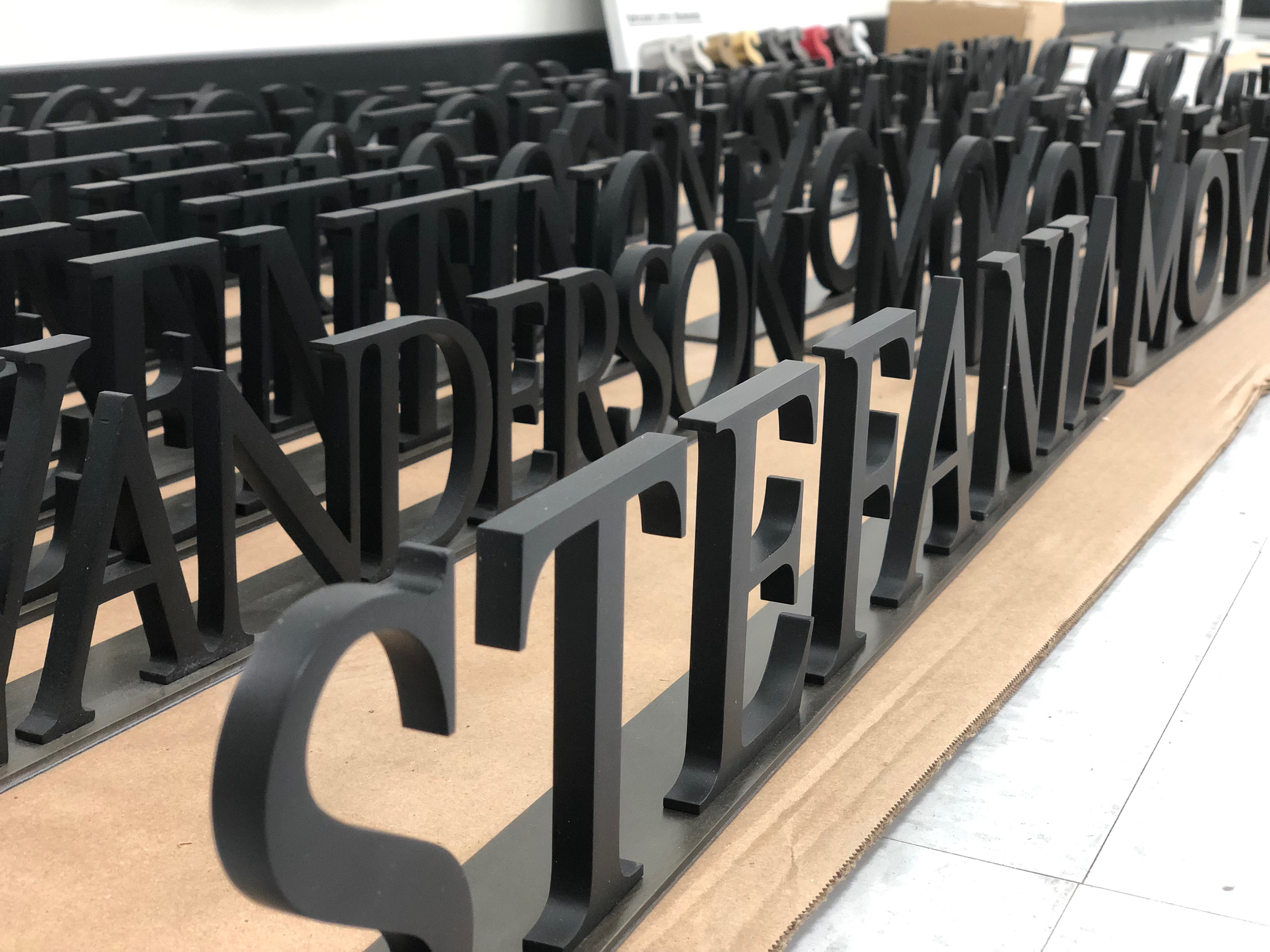
| Flat cut | Cut from solid metal plate, so the letter is one piece of material of a single thickness. | The crispest edge available and a completely solid object. Depth is limited to what plate thicknesses allow. | Reception walls, interiors, plaques, anywhere the letter is read close up and depth is modest. |
| Fabricated | A face with formed sides, called returns, welded to it. The letter is hollow. | Any depth you want, at a fraction of the weight of solid metal at the same size. | Larger letters, exterior building identification, anywhere solid plate would be too heavy or too expensive. |
| Cast | Molten metal poured into a mold taken from the letterform. | Depth, softness of edge and the look of a traditional cast plaque. Heavy. | Dedications, heritage buildings, institutional identification and anywhere the sign should look like it has always been there. |
The rule of thumb: flat cut for close viewing and modest depth, fabricated for size and exterior, cast when the character of the casting is the point. We will tell you which the job wants, and why, before you are quoted.
What each metal actually does over time
| Metal | Character | How it ages | Where it belongs |
|---|---|---|---|
| Aluminum | Light, stable, takes paint and anodizing well, the least expensive of the five. | Does not rust. A painted finish is as durable as the paint specified. | The workhorse. Exterior letters, large sizes, painted schemes and anywhere weight matters. |
| Stainless steel | Hard, heavy, holds a brushed or mirror finish under close inspection. | Does not corrode in normal use. Brushed finishes clean up; mirror finishes show every fingerprint. | Reception walls, corporate identification and exteriors where a metallic finish must stay metallic. |
| Brass | Warm yellow, traditional, unmistakable at close range. | Darkens over time unless lacquered. Lacquer eventually fails and the patina resumes, unevenly. | Interiors, professional practices, hospitality and heritage work. Decide about lacquer before fabrication, not after. |
| Bronze | Darker and browner than brass, the traditional material of cast plaques. | Develops a deep patina that most clients want. Can be chemically patinated to get there immediately. | Dedications, institutional and civic identification, and anywhere a sign should look established. |
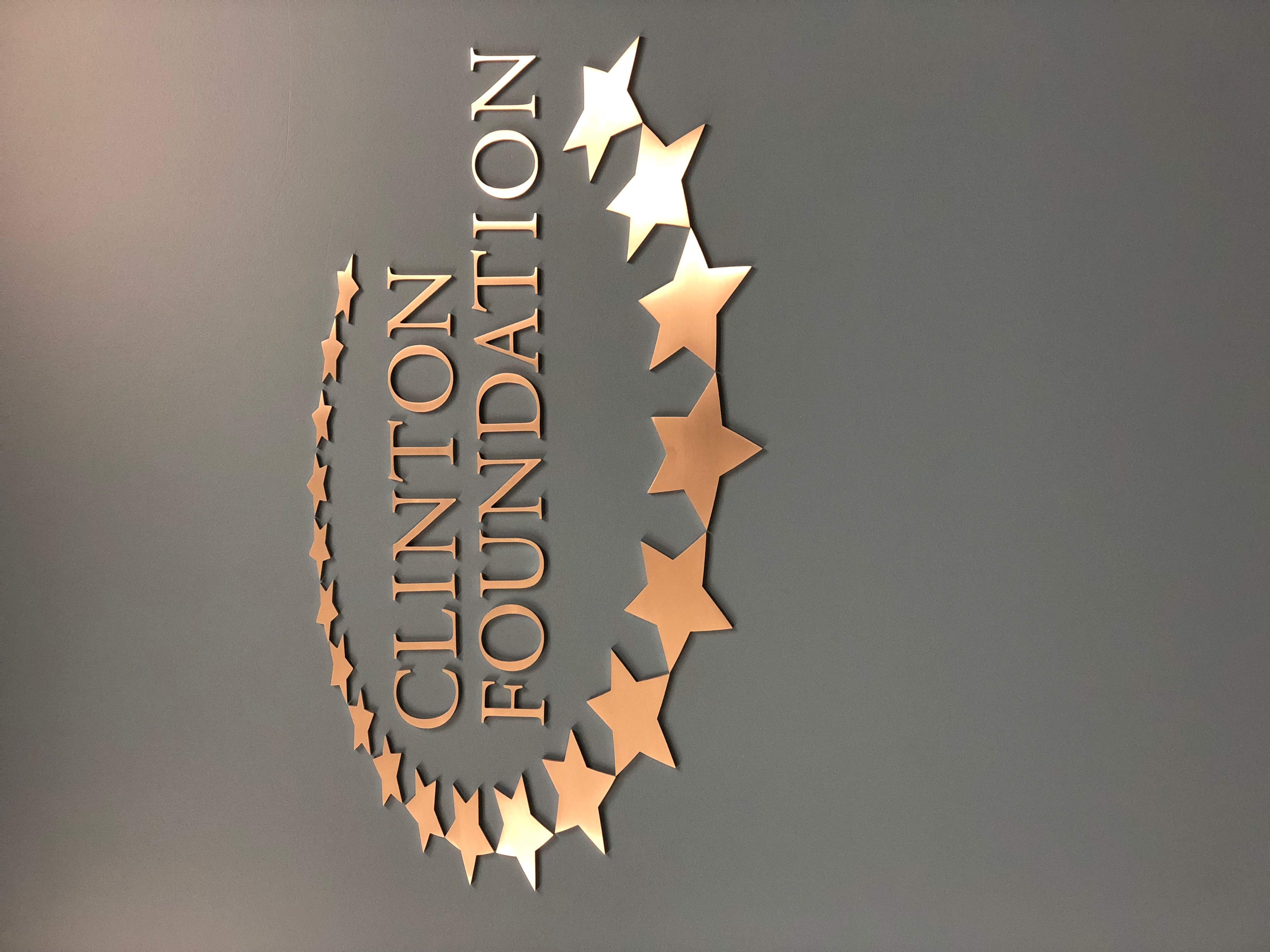
| Copper | Bright when new, the most active of the five. | Darkens quickly and eventually turns green. This is either the whole point or a surprise, depending on whether anyone said so. | Feature work and hospitality interiors, usually where the patina is part of the design. |
The finish matters more than the metal
| Finish | What it looks like | Worth knowing |
|---|---|---|
| Brushed | A directional grain across the face. | The most forgiving finish on stainless and the standard for reception work. The grain direction should be specified, because letters brushed in different directions do not match. |
| Mirror polished | Reflective, almost liquid. | Spectacular and unforgiving. Shows fingerprints, dust and every imperfection in the surface behind it. Best above hand height. |
| Satin or bead blasted | An even, non-directional matte. | Hides handling better than mirror and has no grain to match. Good on large runs of letters. |
| Painted | Any color, on aluminum or steel. | The most flexible and the most specifiable. A painted metal letter can match a brand color exactly where a raw metal cannot. |
| Anodized | A colored, integral finish on aluminum. | Harder than paint and part of the metal rather than on top of it. A limited palette. |
| Patinated | A chemically accelerated aged finish on brass, bronze or copper. | Gets you in one week to where nature would take ten years, and lets the whole run age evenly rather than at different rates. |
A stainless letter that looks like brass, and behaves like stainless
This is the capability that separates Velement from most metal letter suppliers, and it is already on the live page in a single unexplained sentence. It deserves a section.
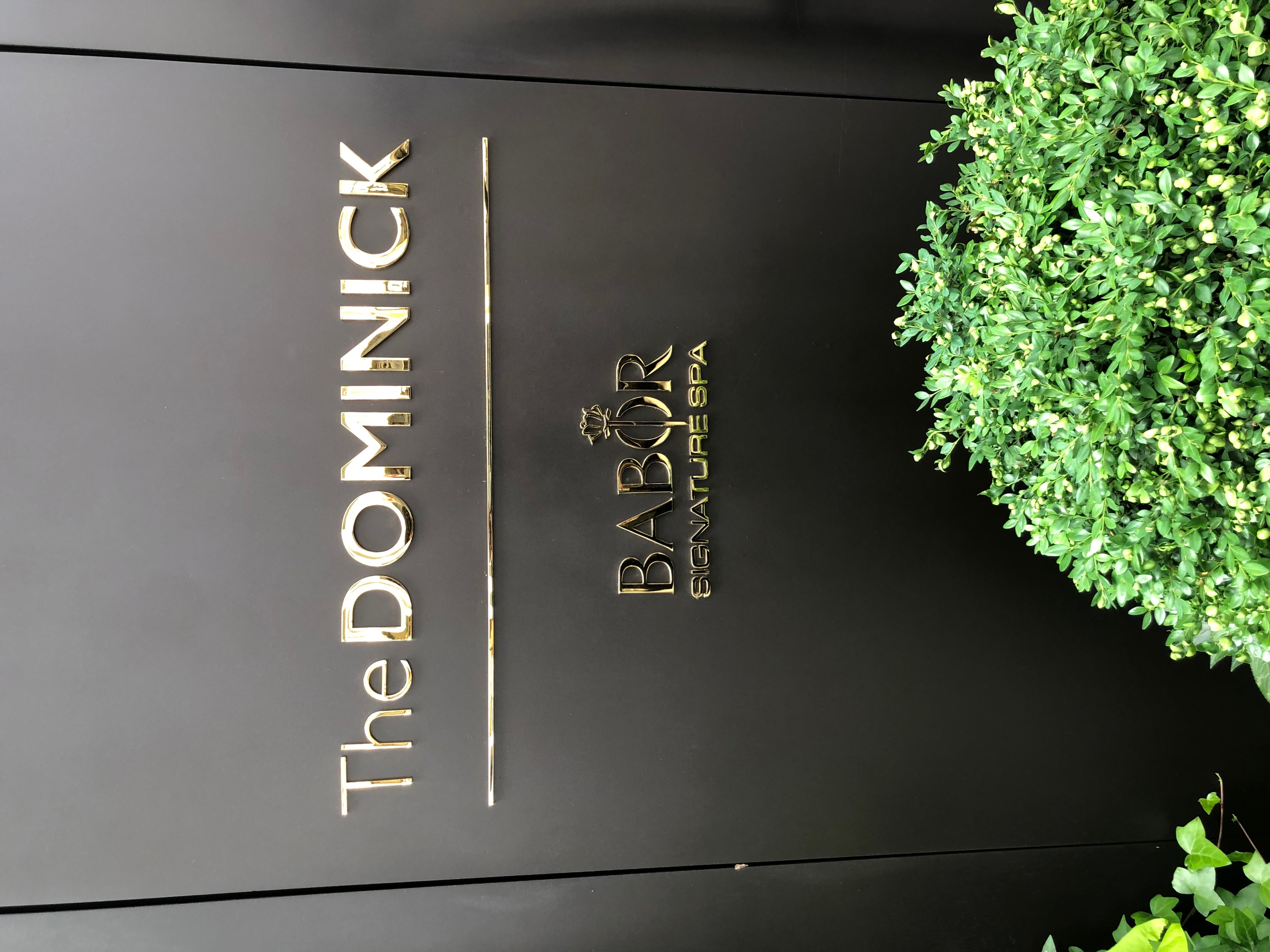
Plating deposits a thin layer of one metal onto another. A letter fabricated from stainless steel can be plated to read as brass, bronze or copper, in a range of finish variations. What you get is the appearance of the softer metal on a substrate that behaves like stainless.
| Aspect | Solid brass or bronze | Plated stainless |
|---|---|---|
| Appearance | The real thing. | Matched to the real thing, with the finish variation specified. |
| Cost | Solid brass and bronze are expensive, and the price moves with the metals market. | Materially lower, and more predictable. |
| Weight | Heavy. Large solid letters need serious fixings and a wall that can take them. | Lighter, which widens where the letters can go. |
| Aging | Patinates. Either the point, or a maintenance commitment. | Holds the finish it was given. |
| Matching | Two batches from different stock can differ. | Matched to a specification we hold, so a later addition matches the original. |
It is not always the right answer. Where the client specifically wants solid brass, or wants the patina that only solid metal gives, we make it in solid metal. The point is that it is a choice, and on most projects nobody is offered it.
Flush, stud-mounted or projected off the wall
Mounting changes how a metal letter reads more than most people expect, and it has to be decided before the letters are made, because the fixings are built into them.
| Method | What it is | How it reads | Watch for |
|---|---|---|---|
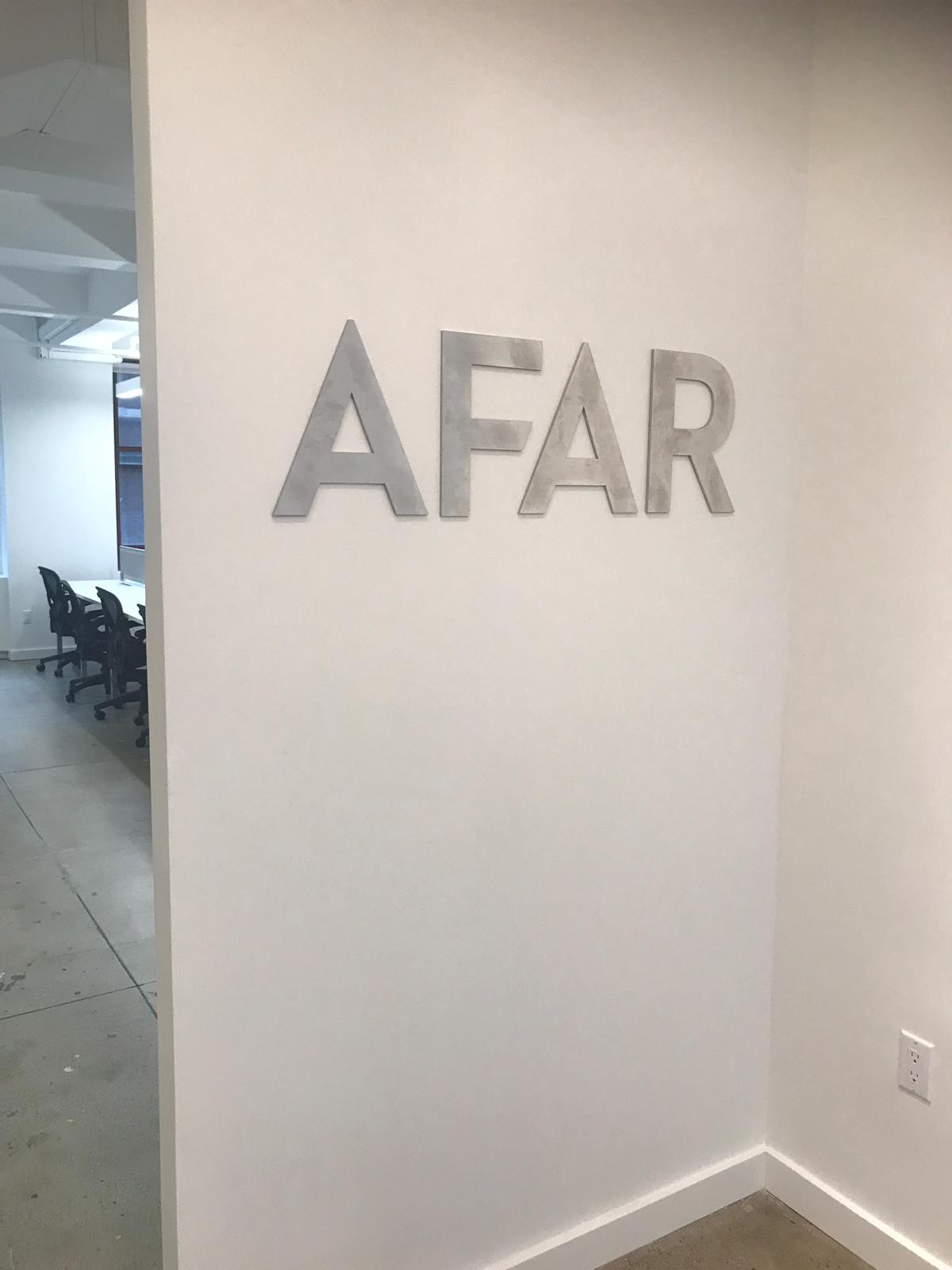
| Flush mounted | Threaded studs on the back of the letter are set into holes in the wall, so the letter sits directly on the surface. | Clean and quiet. The letter is part of the wall. | The wall has to be flat. Any undulation shows as a gap under the letter. |
| Stud mounted with spacers | The same studs, with barrel spacers holding the letter a set distance off the wall. | The letter floats and casts a shadow, which adds depth and makes the sign read as considered. | The shadow depends on the light. Worth deciding the spacer depth with the actual lighting in mind. |
| Rosette or standoff mounted | Visible decorative standoffs hold the letter clear of the surface. | Deliberately industrial or architectural. The fixing is part of the design. | Only works when the standoffs suit the interior. They are not invisible. |
| Panel mounted | The letters are mounted on a plate or panel which is then fixed to the wall. | Gives the sign a defined field and hides an uneven or unsuitable wall surface. | Adds weight and cost, but solves a wall that cannot take individual fixings. |
The mounting template
Every set of letters we make ships with a full-size template marking every fixing position. It is the difference between a row of letters that is level and evenly spaced and a row that is nearly both. If a supplier does not provide one, the installer is measuring on a ladder, and it shows.
What metal letters are usually asked to do
| Application | Typical specification | Why metal rather than anything else |
|---|---|---|
| Reception and lobby | Flat cut stainless or plated stainless, stud mounted with spacers | It is the first surface a visitor reads at close range, and it is the one sign that will still be right in ten years. |
| Building entrance | Fabricated aluminum or plated stainless, flush or panel mounted | Permanent identification that does not need power and does not date. |
| Corporate identification | Matched letters across floors or sites, single specification | Consistency. A specification held by the fabricator is what makes site five match site one. |
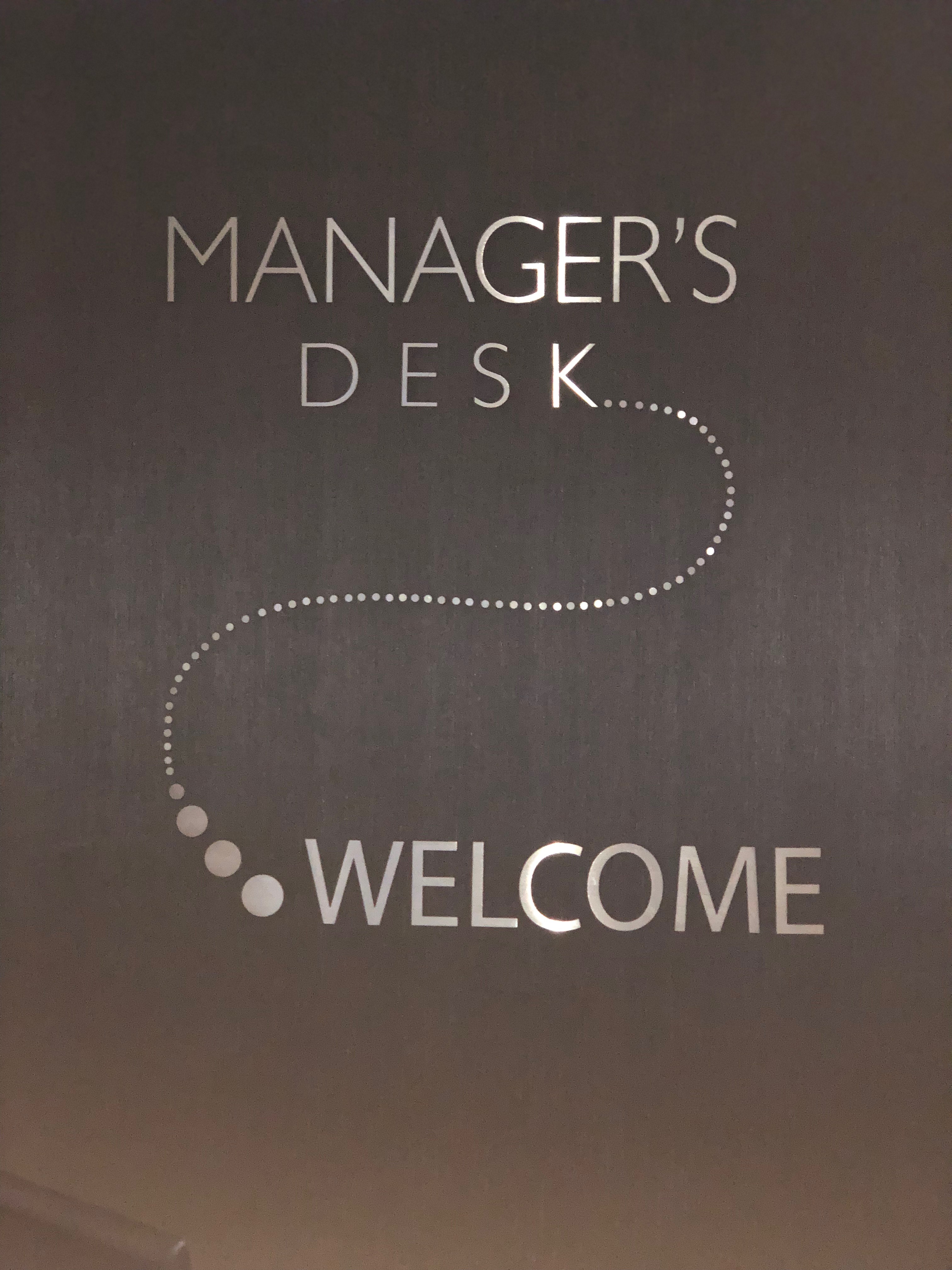
| Wayfinding and room identification | Smaller flat cut letters and numerals, often with plaques | Durability at hand height, where printed and applied signage wears out. |
| Dedications and recognition | Cast bronze, or etched and engraved plates | The occasion calls for a material with weight to it. See our plaques pages. |
| Heritage and institutional | Cast or fabricated bronze, patinated | Matches a building that predates every other option. |
From artwork to installed
- Artwork review. You send the logo or the wording. We tell you how it behaves in metal: where thin strokes become a problem, what the realistic minimum size is, and which fabrication method suits it.
- Specification. Metal, method, depth, finish and mounting, decided together because each one constrains the others. Where the finish matters, we produce a sample.
- Visual. You see the letters on a photograph of the actual wall, at size, with the mounting and shadow shown.
- Fabrication. Cut or formed, welded where relevant, finished, plated where specified, and checked as a set rather than as individual letters.
- Template and delivery. Letters, fixings and a full-size mounting template, delivered together.
- Installation. Our crews set out, fix and clean down. We hand over the specification so a later addition matches.
Cut, finished and plated under one roof
| Capability | What it means for the project |
|---|---|
| We fabricate | Cutting, forming, welding and finishing happen in our own workshop, so the specification is a decision rather than whatever a supplier had in stock. |
| We plate in house | Stainless can take a brass, bronze or copper finish without the cost, weight or maintenance of solid metal. Very few sign makers can offer this at all. |
| We finish as a set | Letters are matched across the run before they leave, not assembled from whatever was made on which day. |
| We supply the template | Full-size mounting templates ship with every set, so the row goes up level and evenly spaced. |
| We hold the specification | A letter added in three years matches the ones installed today. |
Frequently Asked Questions About Metal Letter Signs:
What are metal letter signs?
Metal letter signs are individual dimensional letters made from solid or fabricated metal, usually aluminum, stainless steel, brass, bronze or copper, mounted to a wall or facade. They are non-illuminated, which is what distinguishes them from channel letters and backlit letters, and they are used where a sign needs to be permanent rather than current.
How much do metal letters cost?
Price is driven by the metal, the fabrication method, the size and the finish, roughly in that order. Aluminum is the least expensive and solid brass or bronze the most. A flat cut letter is priced on the material it is cut from, so cost rises steeply with thickness; a fabricated letter is hollow, so large sizes are far less expensive than they would be solid. Plated stainless sits between the two and is usually the answer when the budget will not carry solid brass.
What is the difference between flat cut and fabricated letters?
A flat cut letter is cut from a single sheet of solid metal, so its depth is the thickness of that sheet. A fabricated letter has a face with formed sides welded to it and is hollow, so it can be made to any depth without the weight or cost of solid metal. Flat cut gives the crispest edge; fabricated gives depth and size.
Will brass or copper letters change color?
Yes, unless they are lacquered, and eventually even then. Brass darkens, bronze deepens, copper darkens and then turns green. For many projects that is the intention. Where it is not, the options are lacquering, which delays it and will need redoing, or plated stainless, which holds the finish it was given. This is worth deciding before fabrication rather than after.
Can a stainless letter look like brass?
Yes. We plate stainless steel in house so it reads as brass, bronze or copper, in a range of finishes. You get the appearance of the softer metal at lower cost and weight, on a substrate that does not patinate and does not need maintaining.
Can metal letters go outside?
Yes, and most metals are suitable, but the specification changes. Aluminum and stainless are the usual exterior choices. Fixings, the wall construction and the way dissimilar metals meet all matter more outdoors than in, which is why the exterior spec is not simply the interior one moved outside.
Can you illuminate metal letters?
Yes, and that is a different product. A metal letter lit from behind and mounted off the wall is a halo-lit or reverse channel letter. See our backlit letters page for that, and this page for letters read by daylight and building light.
How are metal letters fixed to the wall?
Usually on threaded studs set into the wall, either flush to the surface or held off it on spacers so the letter casts a shadow. Heavier letters and unsuitable wall surfaces are handled with a backing panel. Every set ships with a full-size template marking the fixing positions.
View Our Projects