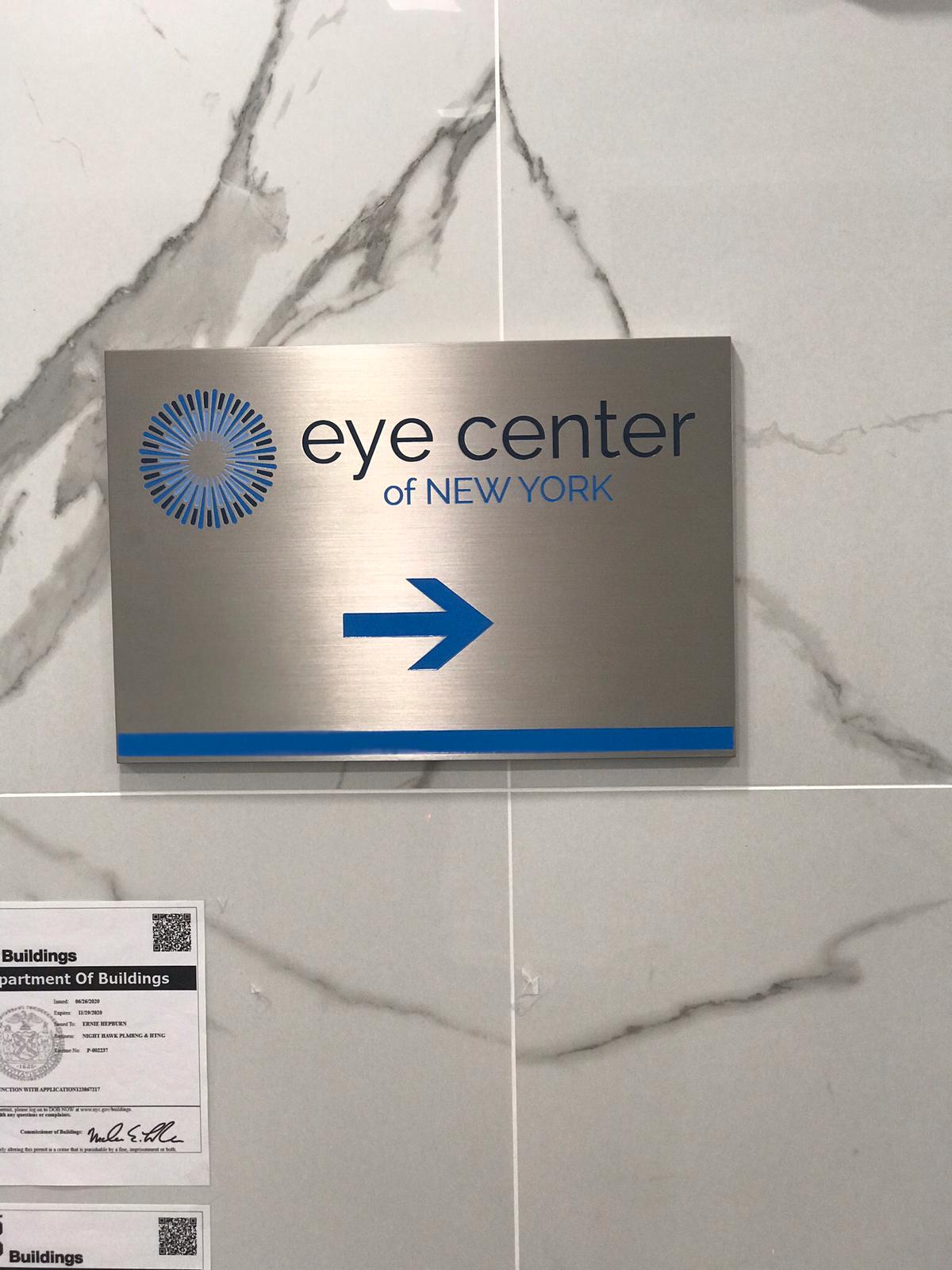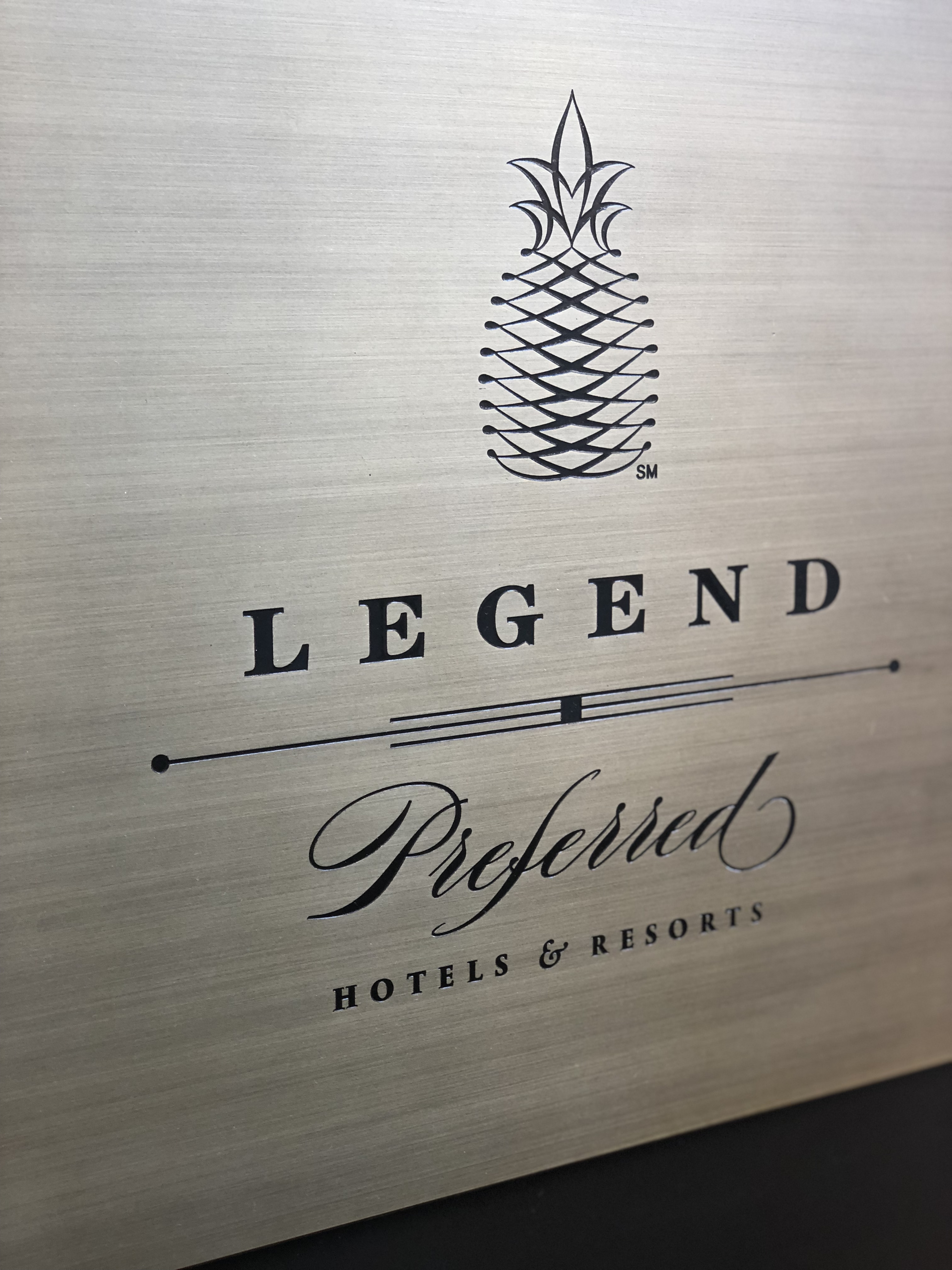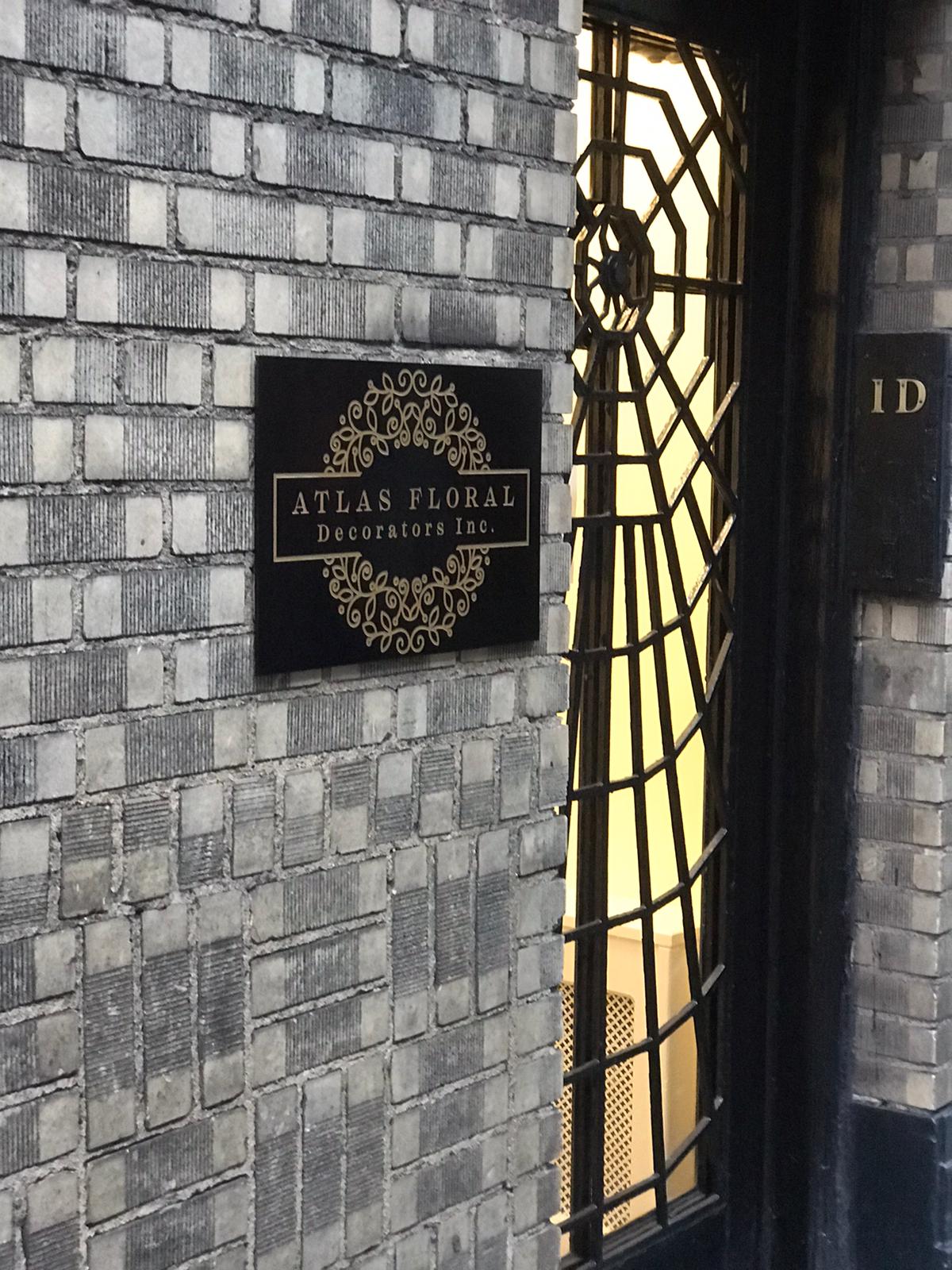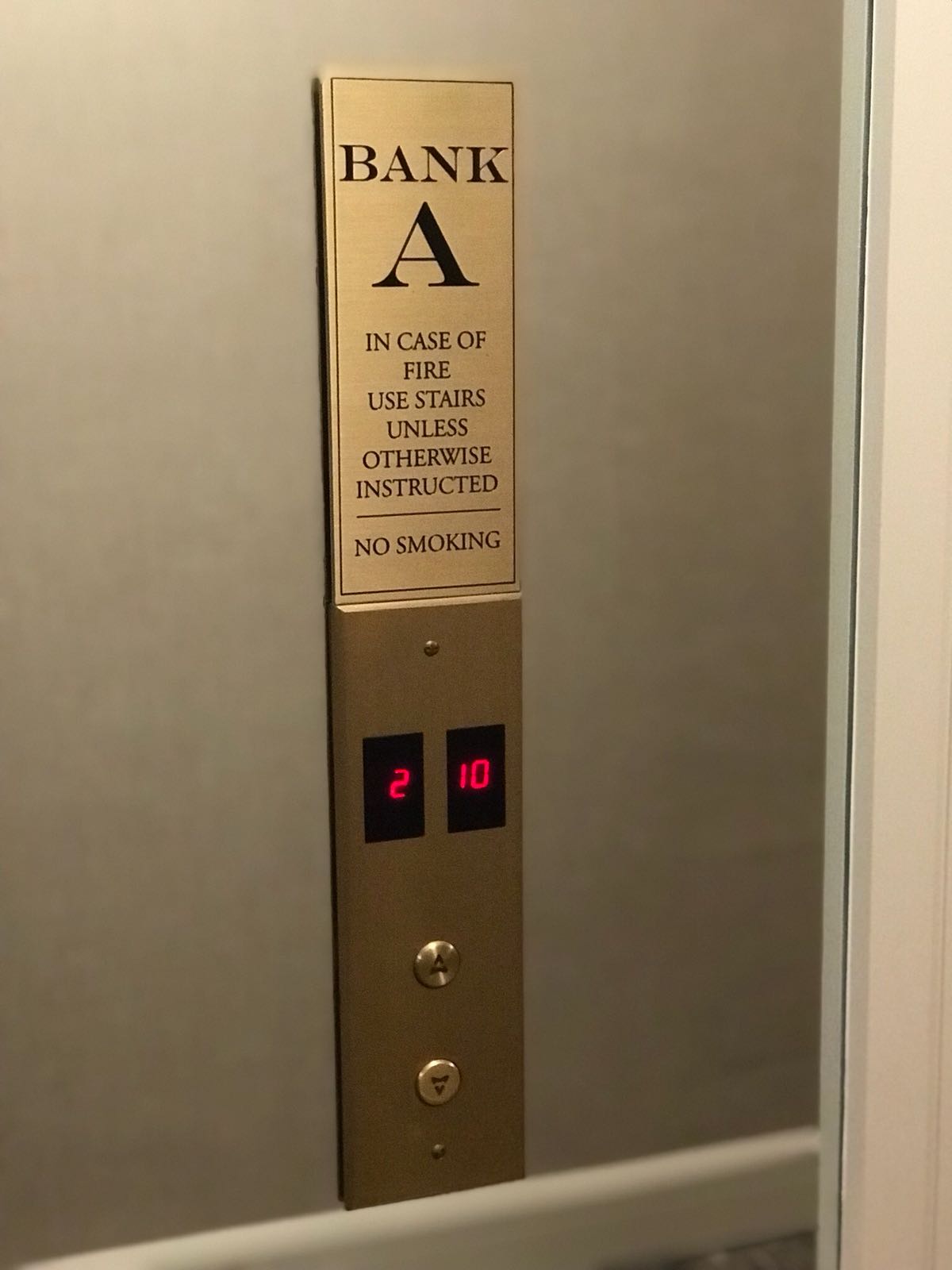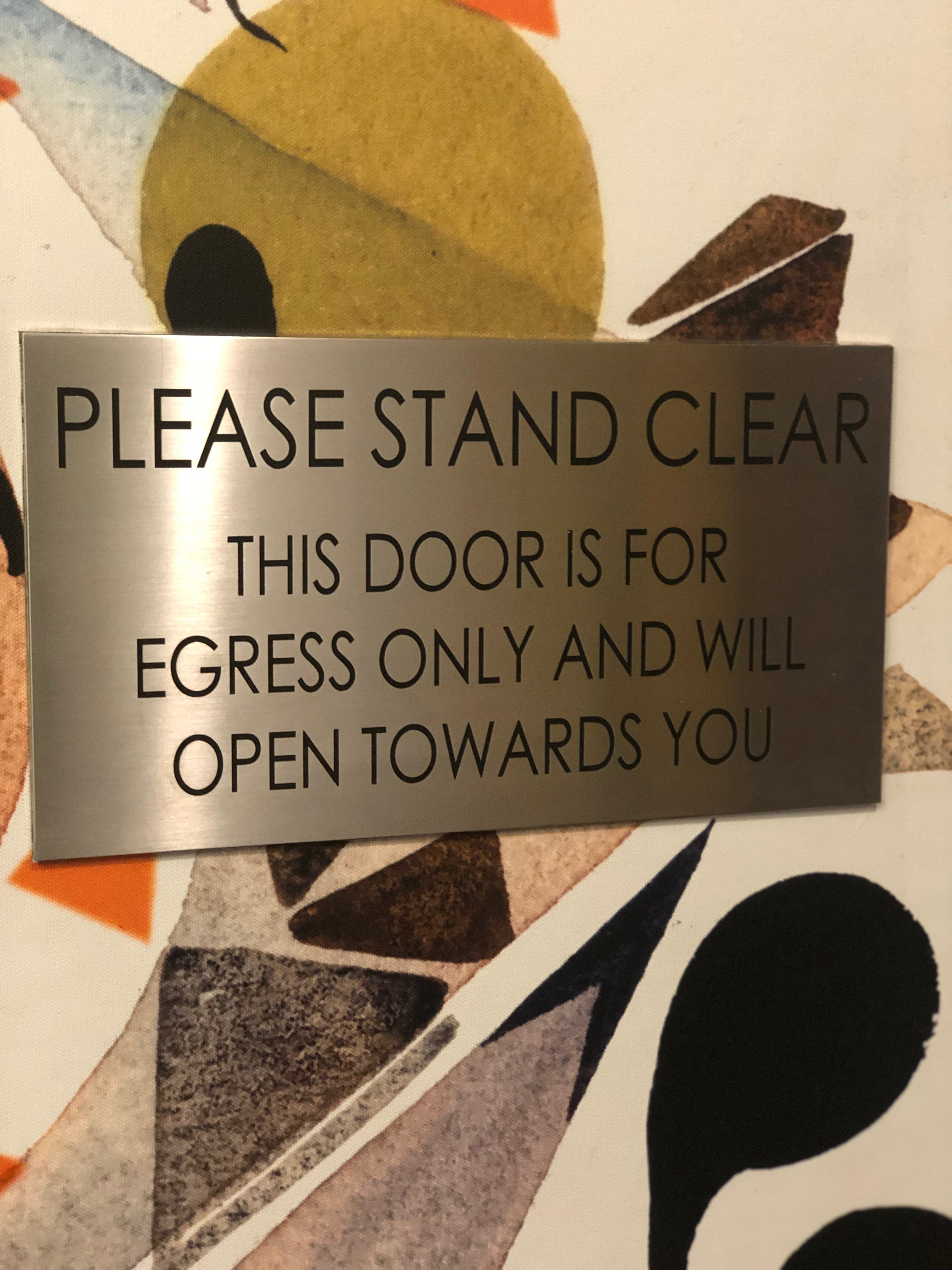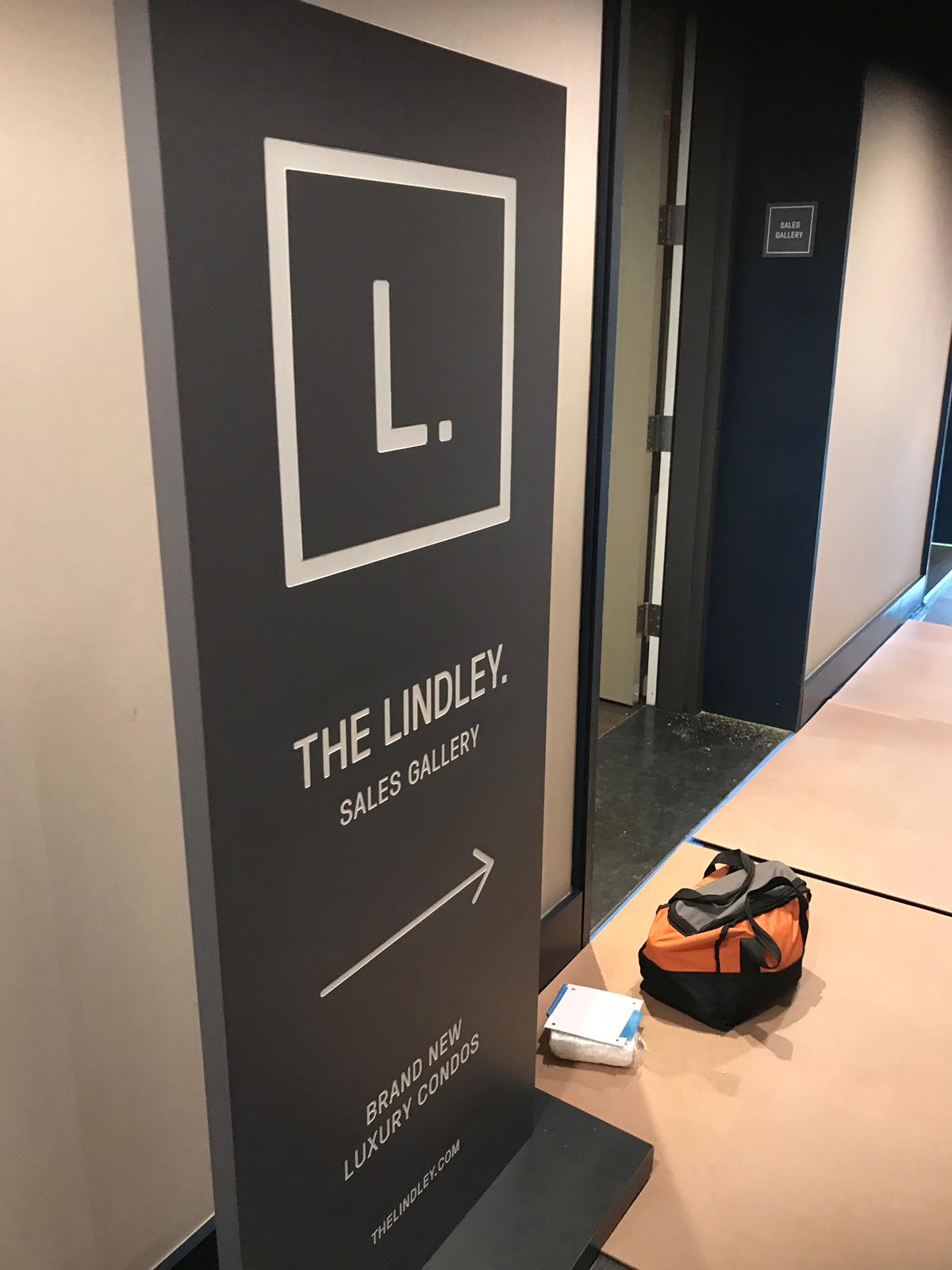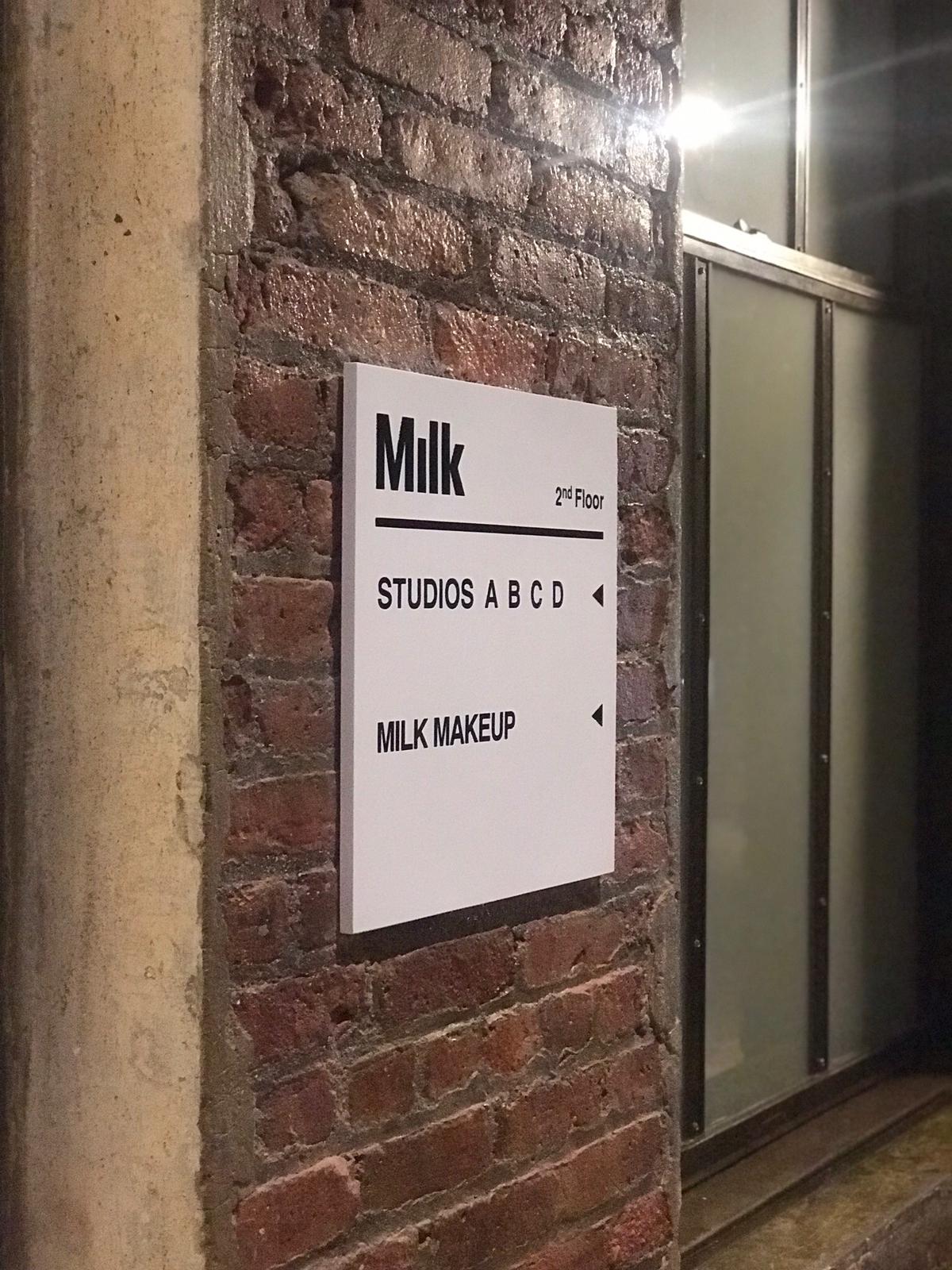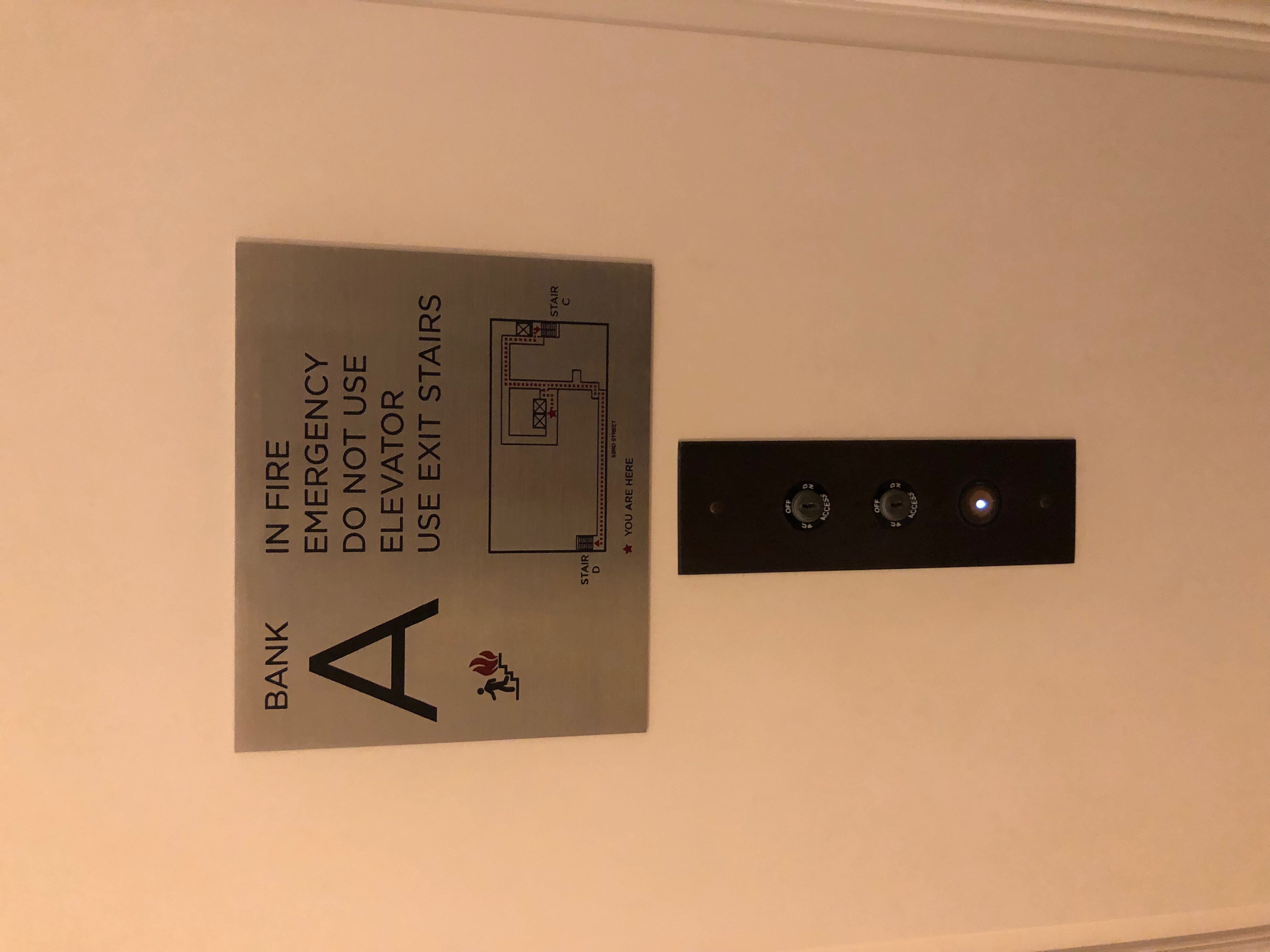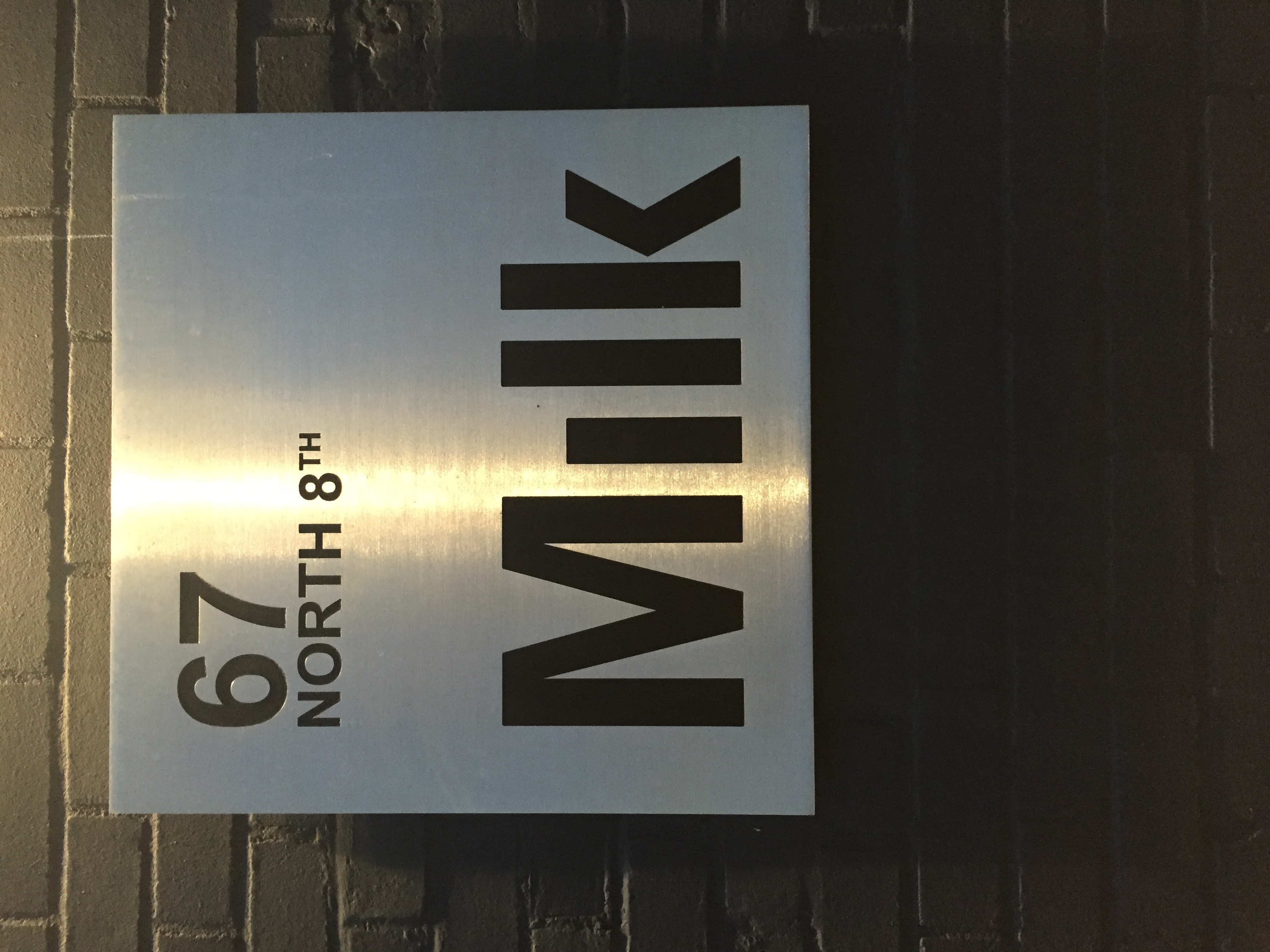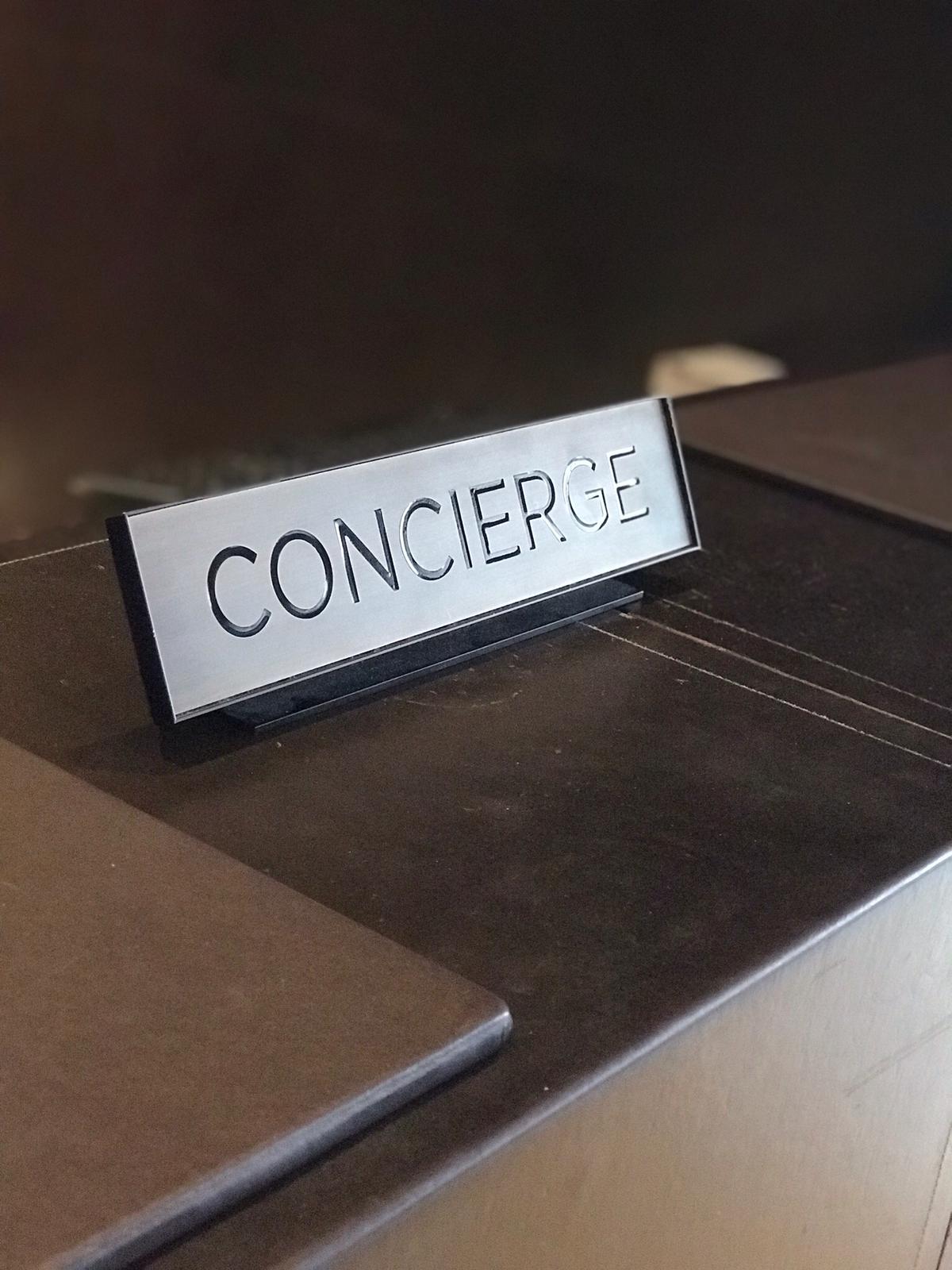
Etched Metal Signs in New York
Custom etched signs in brass, aluminum and stainless steel, plus etched glass and acrylic. Logo and branding signs, identification and directional signs, and large architectural panels for lobbies, offices, hotels, retail and building exteriors. The design is set into the material itself, so it does not peel, fade off or wear through with cleaning.
A single etched logo panel or a building-wide sign family.
Part of the surface, not stuck on top of it
Most signs carry their message on the surface: printed ink, applied vinyl, a painted layer. In a busy lobby or corridor, that surface gets touched, cleaned and scuffed, and over time the message wears with it.
Etched signs work differently. The design is cut into the metal, glass or acrylic, so the lettering is part of the material. There is nothing to peel at the corners or rub away with a cleaning cloth. That is why etched signage is often chosen for high-traffic interiors, for architectural finishes meant to last as long as the fit-out, and for signs that need to look as good in ten years as on the day they went up.
It also looks different. An etched sign reads as part of the building’s finishes: a brushed steel panel, a frosted glass wall, a brass door plate. That makes it a natural fit for architectural signage.
Etching across materials
“Etched” means something slightly different on each material. The result is the same idea: a design set into the surface rather than applied to it.
| Material | How it is etched | What it looks like | Typical uses |
|---|---|---|---|
| Metal | Chemically etched to a shallow recess, then color-filled. | Crisp colored lettering on bare metal, or the reverse. | Identification, branding, directional and architectural signs. |
| Glass | Sandblasted or acid-etched to a frosted finish. | Soft white frosted lettering or patterns on clear glass. | Doors, partitions, reception walls, directories. |
| Acrylic | Laser-etched or engraved to a frosted mark. | Frosted detail on clear acrylic, which can glow when lit from the edge. | Office signs, reception panels, lit displays. |
Etched metal signs
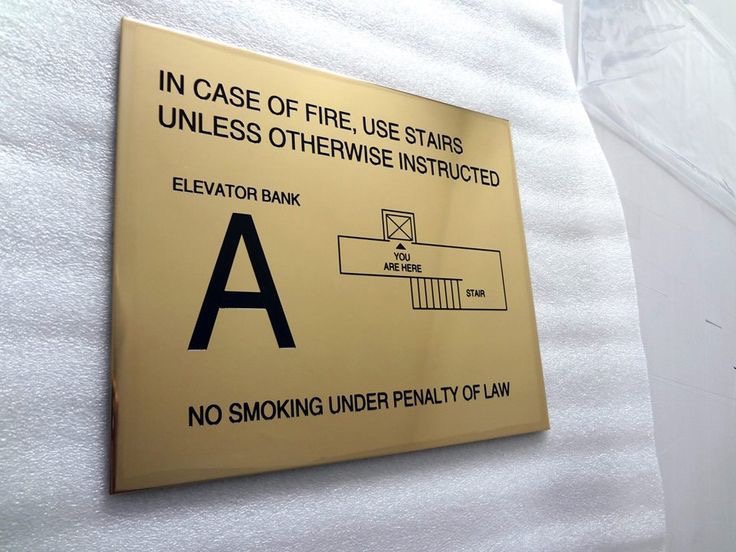
Etched metal signage keeps fine detail sharp: small text, thin lines and complex logos all reproduce cleanly. The recessed areas are filled with color, so the design is protected inside the metal.
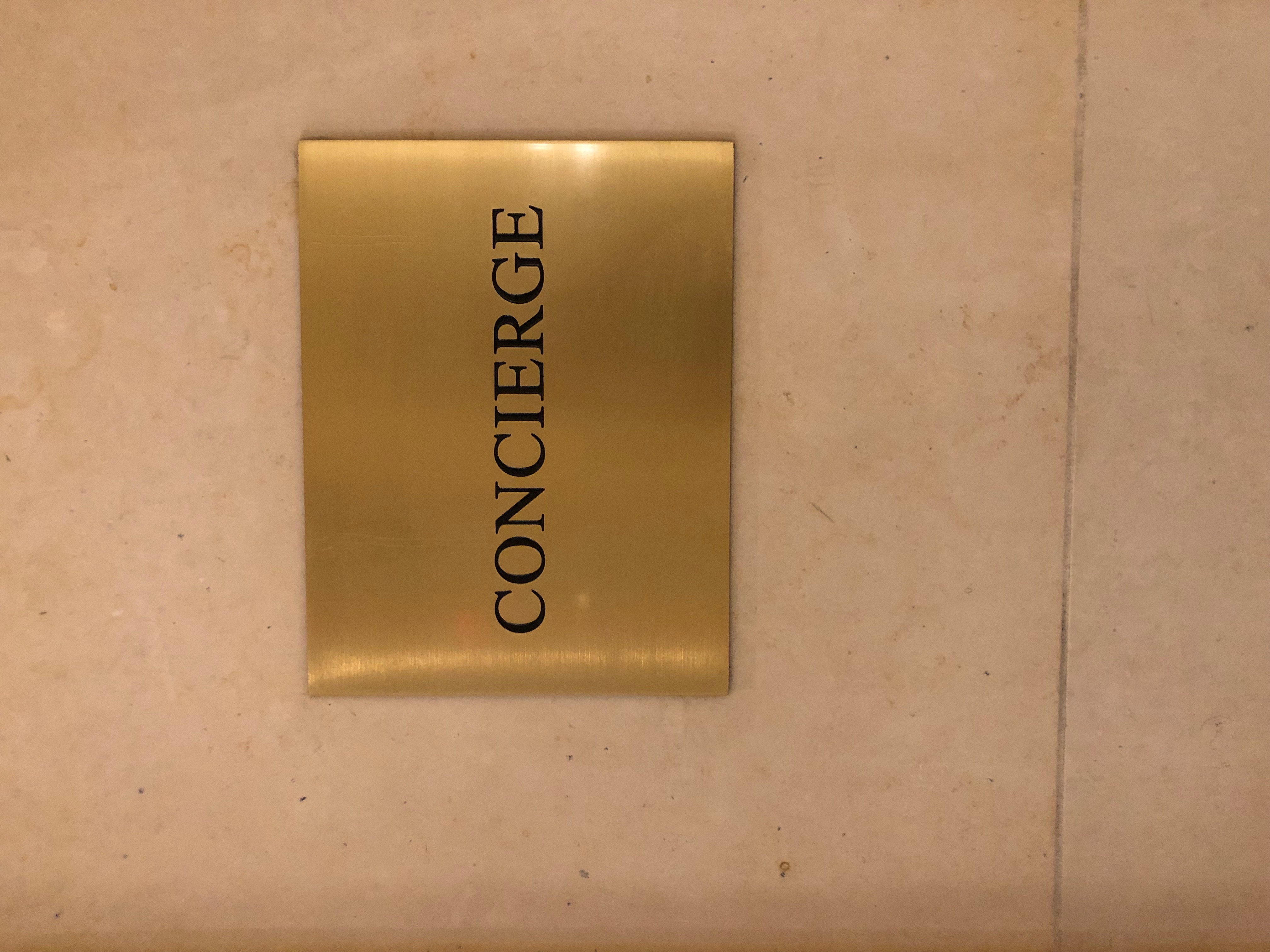
- Etched brass signs. Warm and traditional, polished or satin. Suited to professional offices, hotels and heritage buildings. Lacquered to slow tarnishing.
- Etched stainless steel signs. Cool and contemporary, brushed or polished. Highly corrosion-resistant, so well suited to exteriors, kitchens and high-traffic areas.
- Etched aluminum signs. Light and economical, often anodized. Good for large sign families and interior identification.
- Etched bronze signs. Deeper and warmer than brass, and very durable outdoors.
Standard or reverse etched signs
- Standard etched. The lettering and graphics are recessed and color-filled, and the background stays bare metal. Dark letters on bright metal read clearly at close range.
- Reverse etched. The background is recessed and filled, and the lettering stays bare metal. Bright metal letters on a dark field give a bolder look for branding and entrances.
For etched plaques and nameplates, see our etched plaques page.
Etched glass and etched acrylic signs
Etched glass signs
Etching gives glass a soft, frosted finish that looks like part of the glass itself. It suits reception walls, glass doors, partitions, directories and feature panels.
- Permanent frosting. Unlike frosted film, etched glass cannot peel, bubble or lift at the edges.
- Privacy and branding together. Etched bands, patterns and logos can add privacy while carrying the company name.
- Layered with metal. Etched glass panels pair well with brushed metal letters or standoffs for reception signs.
- Planned in advance. Etched glass is made as a panel before installation, so it is coordinated with the glazing or joinery supplier where needed.
Etched acrylic signs
Laser etching creates a frosted mark on clear acrylic. On its own, that gives a clean, modern sign. Lit from the edge, the etched areas catch the light and glow while the rest of the panel stays clear.
- Lightweight. Much lighter than glass, so it is easier to mount and suits larger panels.
- Edge-lit options. Etched lettering and logos that glow for reception and feature signs.
- Layered panels. Etched clear panels over colored or printed backers add depth.
Where etched signs are used
| Application | Examples | Often made from |
|---|---|---|
| Branding | Logo panels, reception signs, brand walls | Brushed stainless, brass, etched glass, edge-lit acrylic. |
| Identification | Suite and door signs, room names, building names | Etched brass, stainless or aluminum. |
| Directional | Corridor signs, elevator landing signs, floor directories | Etched metal to match the rest of the sign family. |
| Architectural | Wall panels, column wraps, elevator surrounds, feature panels | Large etched metal or glass panels. |
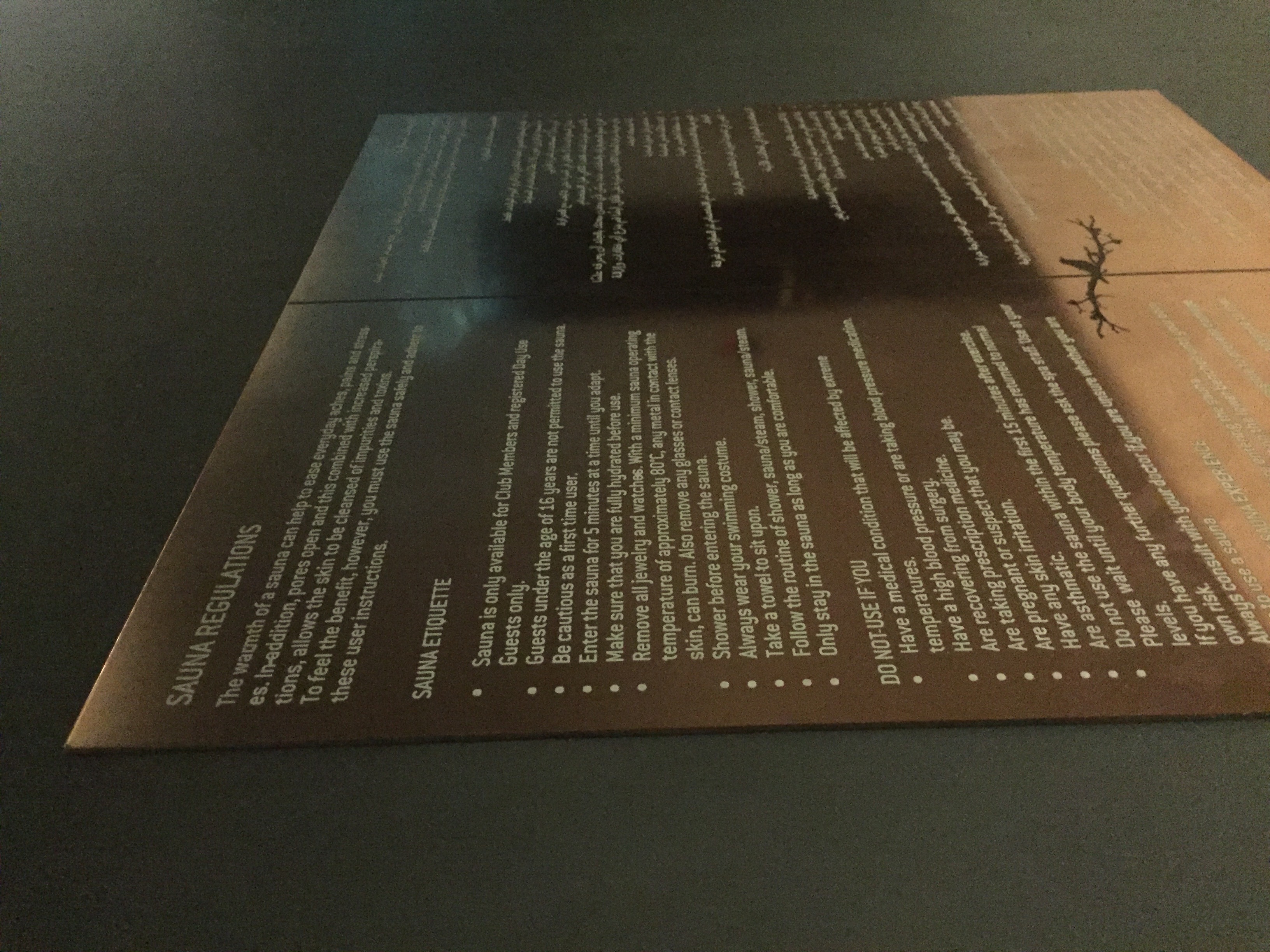
| Information | Building histories, instructions, notices | Etched metal, which suits long text. |
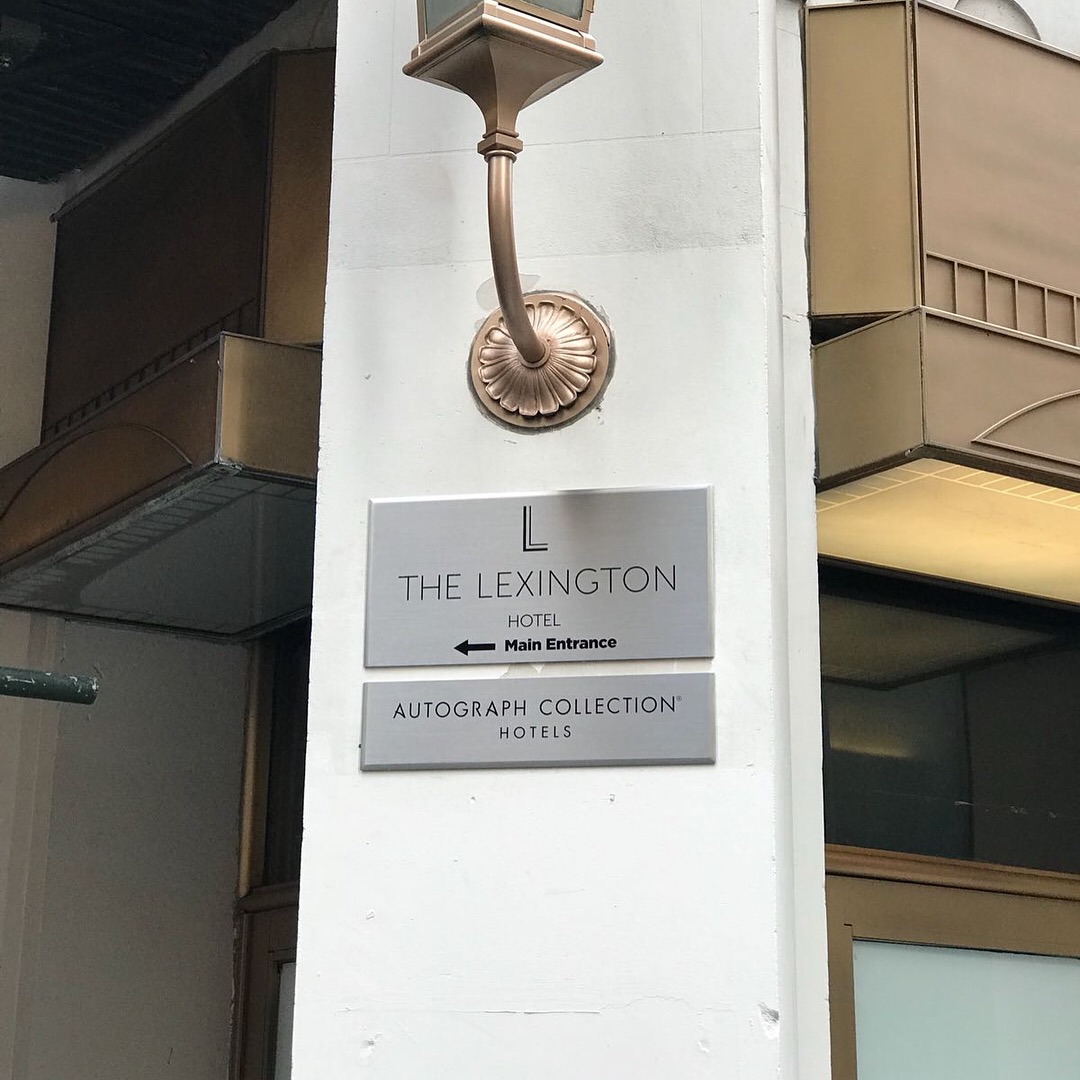
| Exterior | Entrance signs, building identification, tenant panels | Etched stainless steel or bronze. |
Interior and exterior
- Indoors, most materials work. Brass, aluminum, stainless, glass and acrylic all suit interiors. The choice is about the look.
- Outdoors, choose the metal carefully. Stainless steel and bronze are the safest choices outside. Brass needs a protective lacquer and some maintenance.
- Fill colors outside. Color fills are durable, but strong sun can soften colors over many years. Darker fills tend to hold up best.
- Not for tactile signs. Etching recesses the design, so it does not create the raised characters that ADA room signs need. Tactile signs are made another way, and they can be designed to match etched signs nearby.
Large-format and architectural etched panels
Etching is not only for small signs. Large etched metal and glass panels can carry patterns, maps, histories, donor lists or brand graphics across a whole wall.
- Panels that line up. Where a design runs across several panels, the joints are placed so the pattern or text continues cleanly.
- Consistent finish. Brushed direction, color fill and sheen are matched from panel to panel.
- Weight and fixing. Large metal and glass panels are heavy. Concealed fixings and wall blocking are planned early.
- Coordinated with the design team. Architectural signage is worked out with the architect, interior designer or millwork contractor, so it fits the finishes and schedule.
Part of a sign family
Etched signs often form part of a larger system: the same material and finish on suite signs, directional signs and directories across a building. Designed together, the signs read as one family. For the full system, see our wayfinding signs page.
Drawing to installed sign
- Send us the drawings or artwork. Architect’s drawings, a floor plan or your logo files, plus photos of where the signs will go.
- Material and method. We recommend metal, glass or acrylic, standard or reverse etching, and the finish.
- Full-size proof. Every sign laid out at actual size, with colors, finishes and fixings specified.
- Sample. A finish sample showing the etch, fill color and metal finish.
- Etching and finishing. Etched, filled, finished and sealed.
- Installation. Mounted with concealed or visible fixings suited to the wall, glass or panel.
Custom etched metal signs, built into the finish
| Capability | What it means for your signs |
|---|---|
| We choose the material for the place | Metal, glass or acrylic, and the metal chosen for indoors or out. |
| We keep detail sharp | Small text and fine logos reproduced cleanly. |
| We sample the finish | You approve the real etch, fill and metal before production. |
| We match across panels | Large and multi-panel signs line up and finish consistently. |
| We work with your design team | Architectural signage coordinated with architects and millwork. |
| We build sign families | Etched identification, directional and branding signs that match. |
Frequently Asked Questions About Etched Signs
What is an etched metal sign?
An etched metal sign has its design chemically etched into the metal and then filled with color. The lettering is set into the surface rather than printed or applied on top, so it does not peel or wear off with cleaning.
How is an etched sign different from a printed sign?
A printed sign carries ink on its surface, which can scratch or fade with handling. An etched sign has the design cut into the material. Etched signs cost more, but they last longer and look more like part of the building.
What is a reverse etched sign?
On a reverse etched sign, the background is etched and color-filled, and the lettering stays bare metal. It gives bright metal letters on a dark or colored background.
Is etched glass better than frosted window film?
They do different jobs. Etched glass is permanent and cannot peel, which suits long-term fit-outs. Frosted film is less expensive and can be removed, which suits leased spaces and designs that may change.
Can etched signs be lit?
Etched acrylic and glass can be edge-lit, so the etched lettering glows. Etched metal signs are usually lit from outside, by spotlights or wall washers.
Can etched signs go outdoors?
Yes. Etched stainless steel and bronze are the best choices outdoors. Brass can be used with a protective lacquer and some maintenance.
Can etched signs meet ADA requirements?
Etching recesses the design, so it does not create the raised characters that tactile room signs need. Etched signs work well for directional and branding signs, and tactile room signs can be designed to match them.
What do you need to get started?
Your logo or artwork as vector files, the wording, photos or drawings of the location, and whether the signs are indoor or outdoor.
View Our Projects