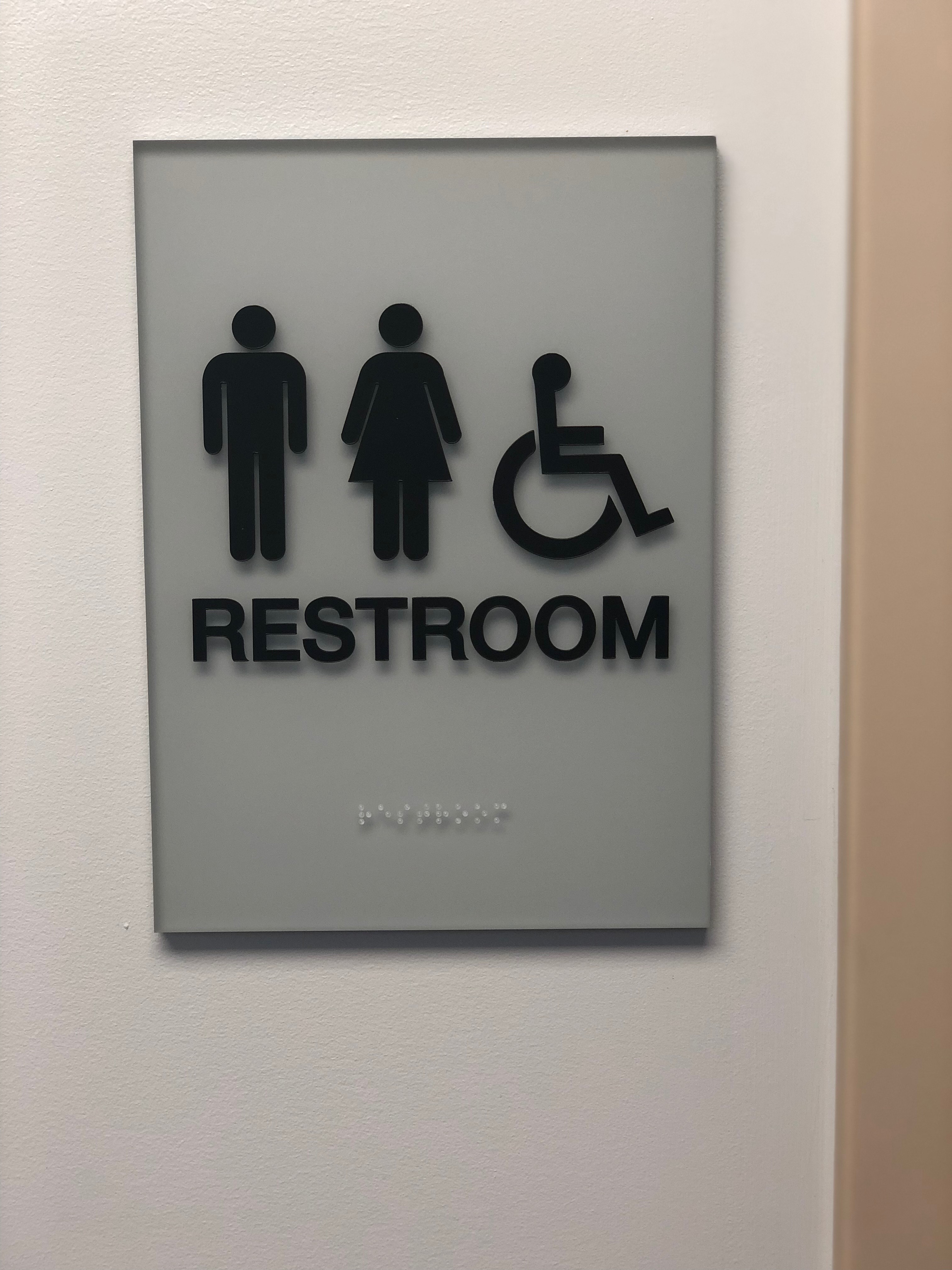
ADA Restroom Signs in NYC
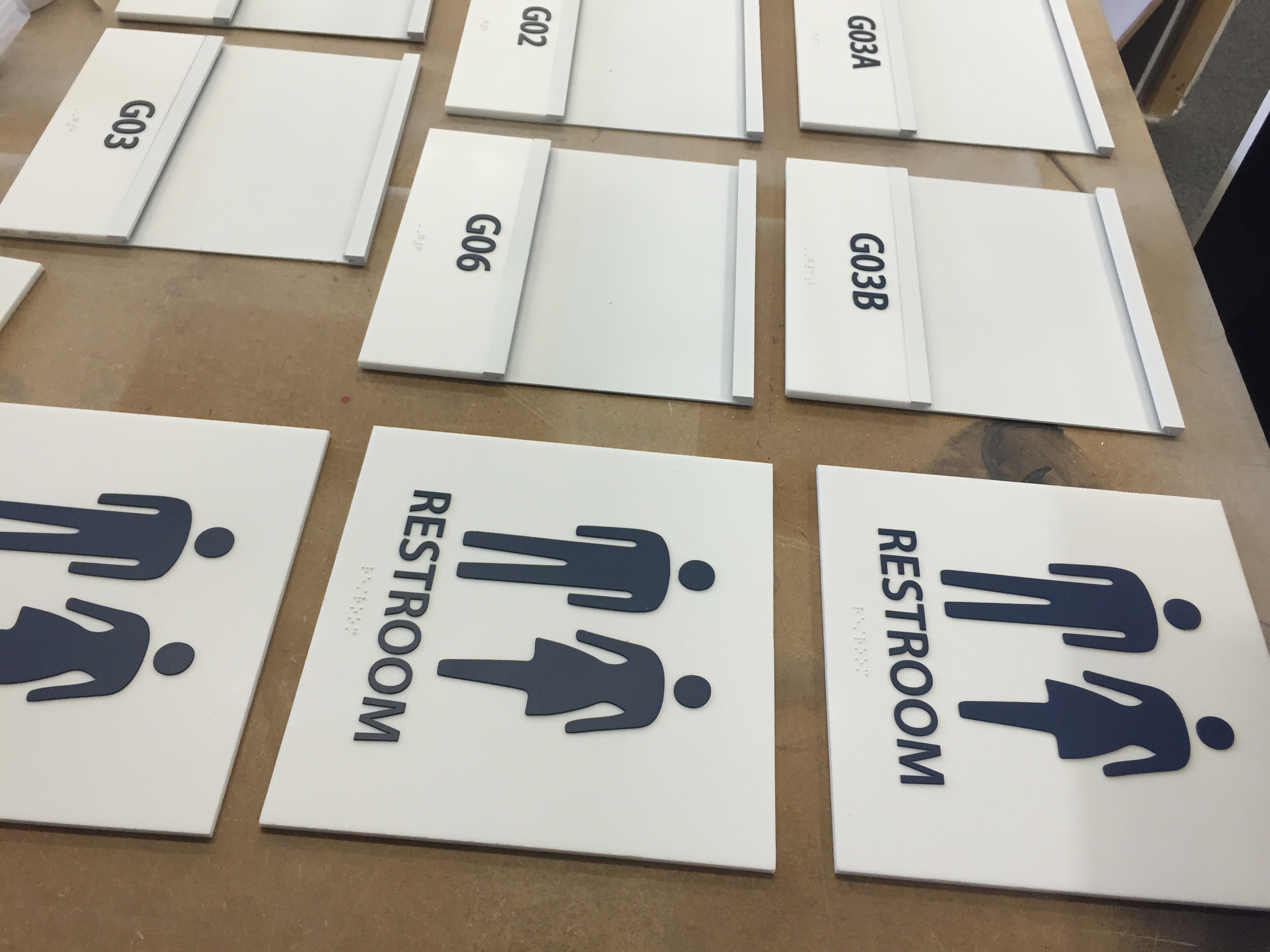
Velement makes and installs ADA restroom signs across New York. Tactile text, Grade 2 Braille and pictograms, produced in our own facility and fitted at the mounting height and latch-side position that make them compliant.
ADA compliant restroom signs for offices, restaurants, retail, healthcare, education and multifamily buildings in NYC and the tri-state area.
The Most Regulated Sign in Your Building
A restroom sign is a small, cheap object with more rules attached to it than anything else on the wall. It is also the sign most often bought from a catalogue in five minutes, which is why it is the sign most often wrong. Two or three hundred dollars of signage becomes a failed inspection, and then it becomes a re-order plus an installer plus a delay on a certificate of occupancy.
The three things that go wrong are always the same. The sign is fixed to the door instead of the wall beside it. It carries a symbol it does not need, or is missing one it does. Or it is mounted at whatever height looked right rather than the height the Standards set.
Velement brings 30 years of architectural signage experience to ADA restroom signs in NYC. We make them here, we confirm what each door actually requires before producing anything, and our own teams install them. On restroom signage the installation is part of the specification, so we do not hand that step to anyone else.
What Makes a Restroom Sign ADA Compliant
| Requirement | What applies to a restroom sign |
|---|---|
| Raised characters | 5/8 inch to 2 inches high, raised at least 1/32 inch, upper case sans serif |
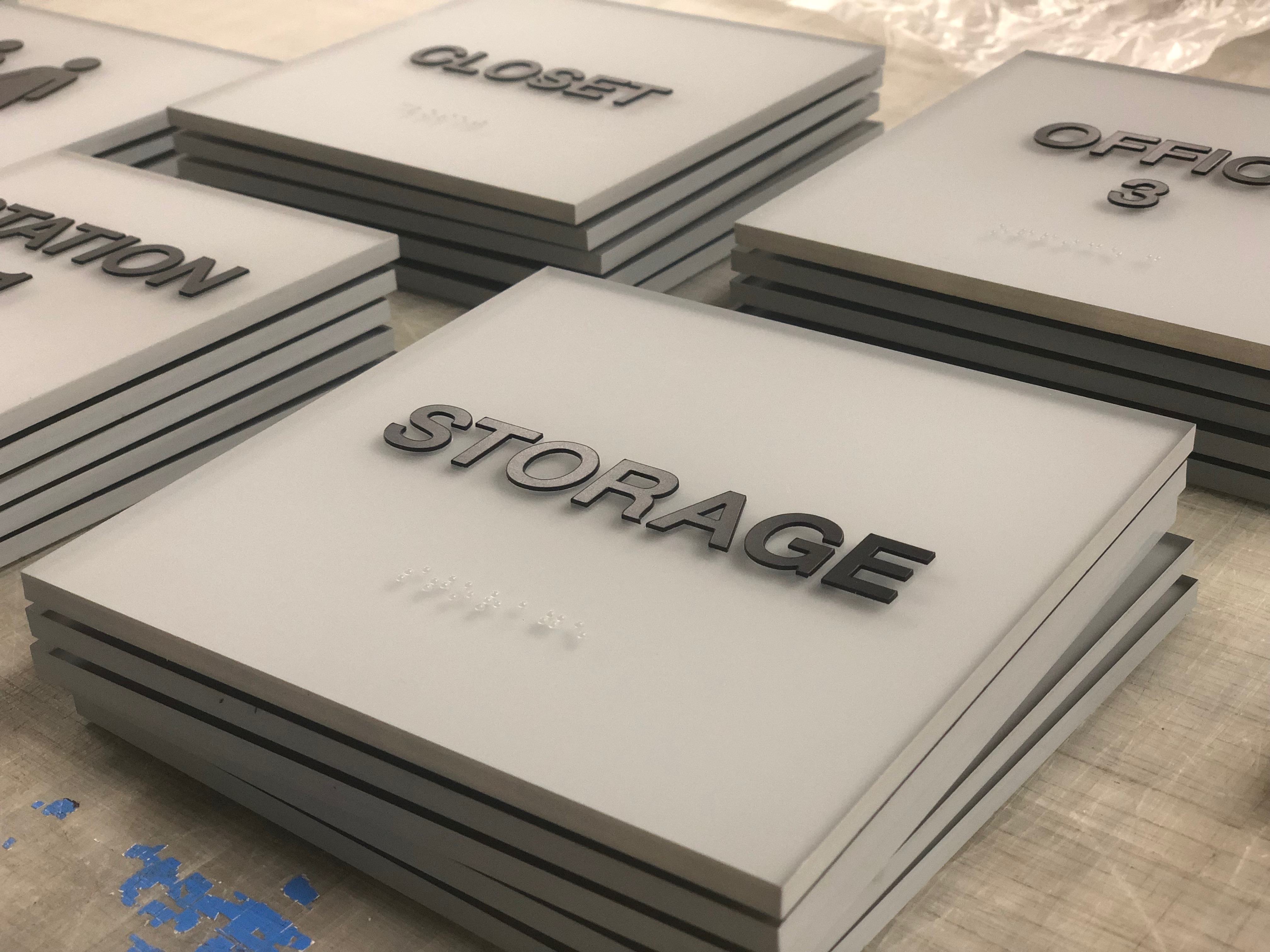
| Braille | Grade 2, domed or rounded dots, positioned below the raised characters |
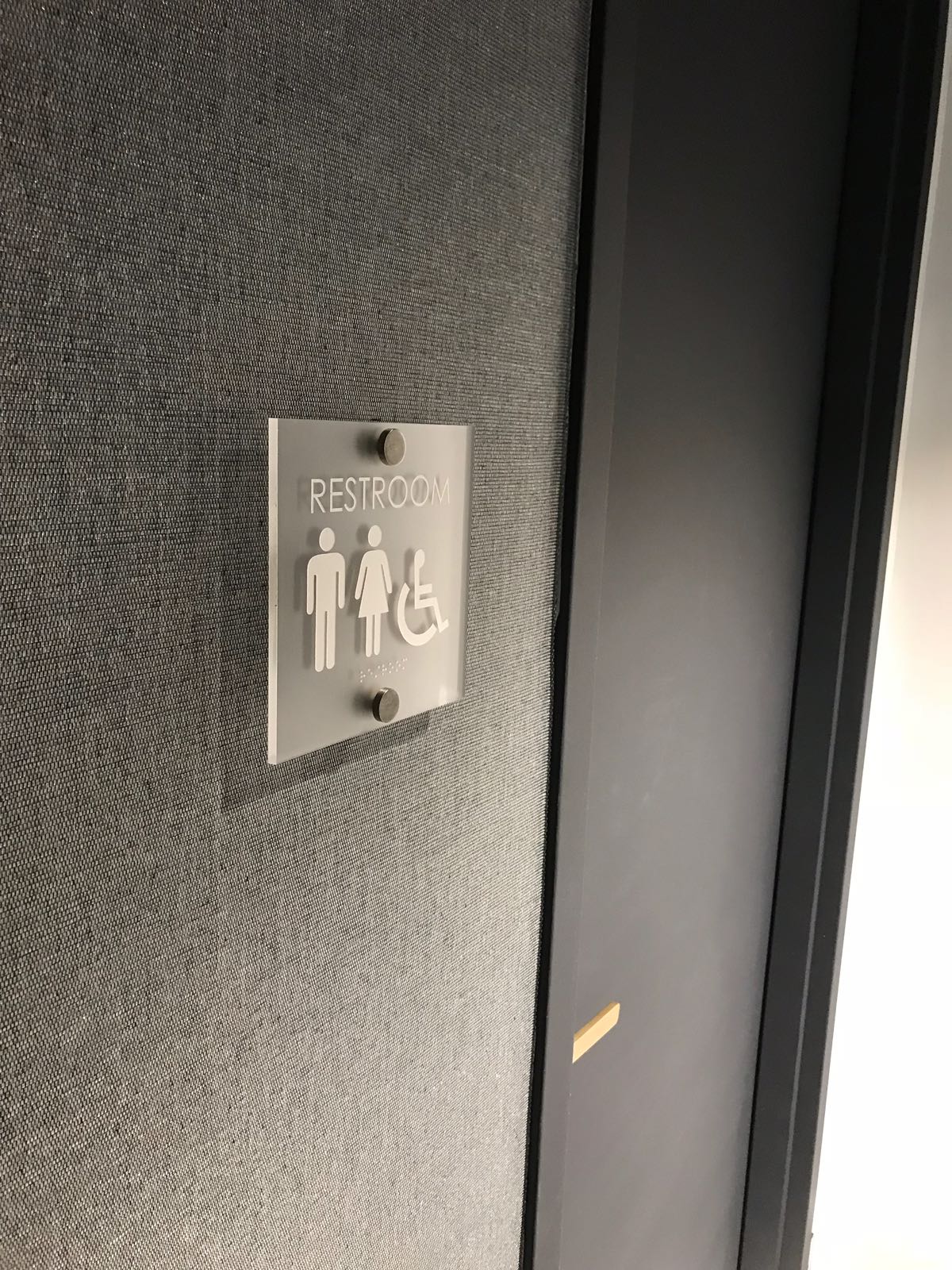
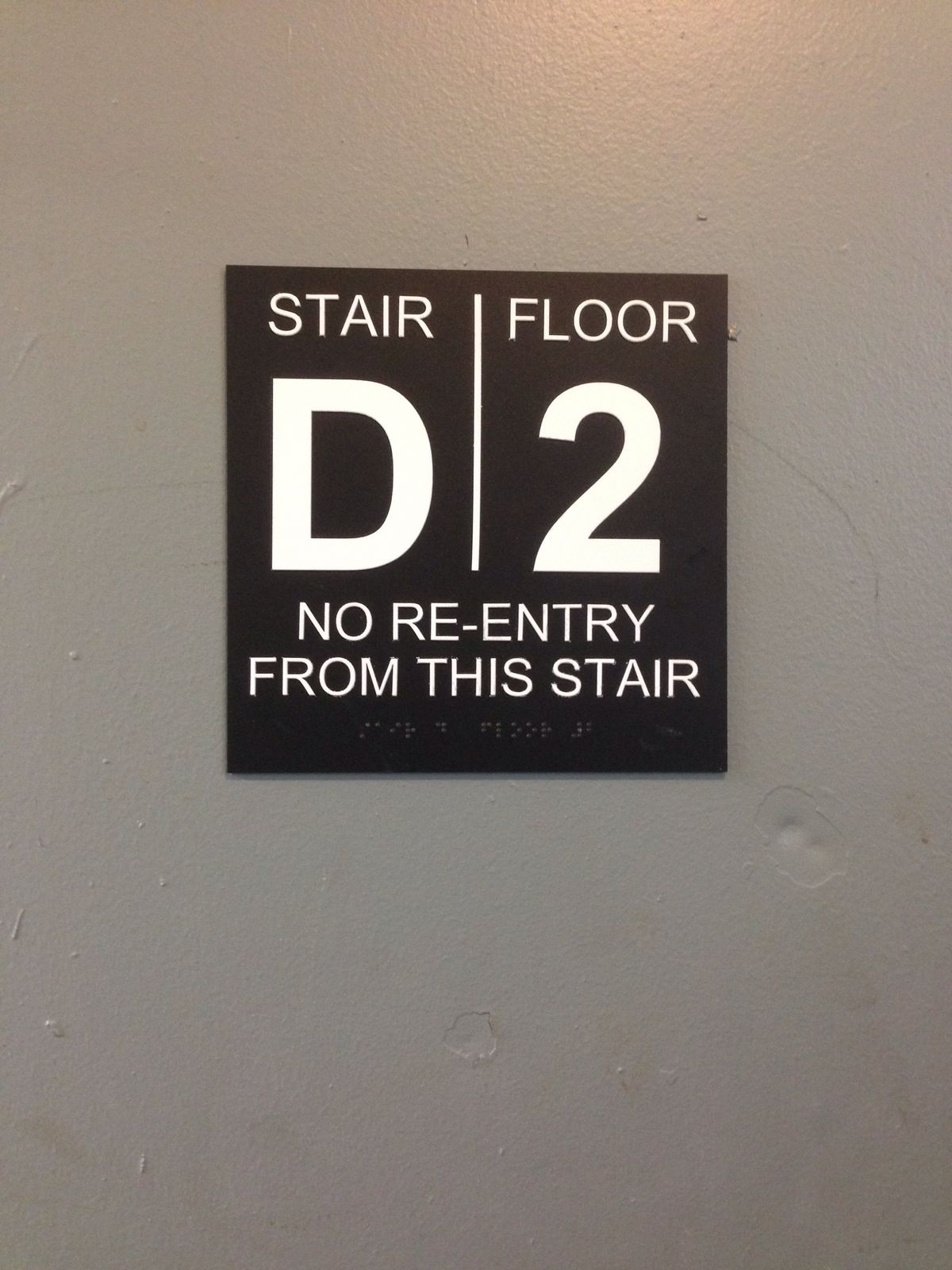
| Pictogram, where used | Field at least 6 inches high, with tactile text and Braille below it, not inside the field |
| Finish and contrast | Non-glare finish, characters contrasting light-on-dark or dark-on-light |
| Mounting height | 48 inches minimum to the baseline of the lowest tactile character, 60 inches maximum to the highest |
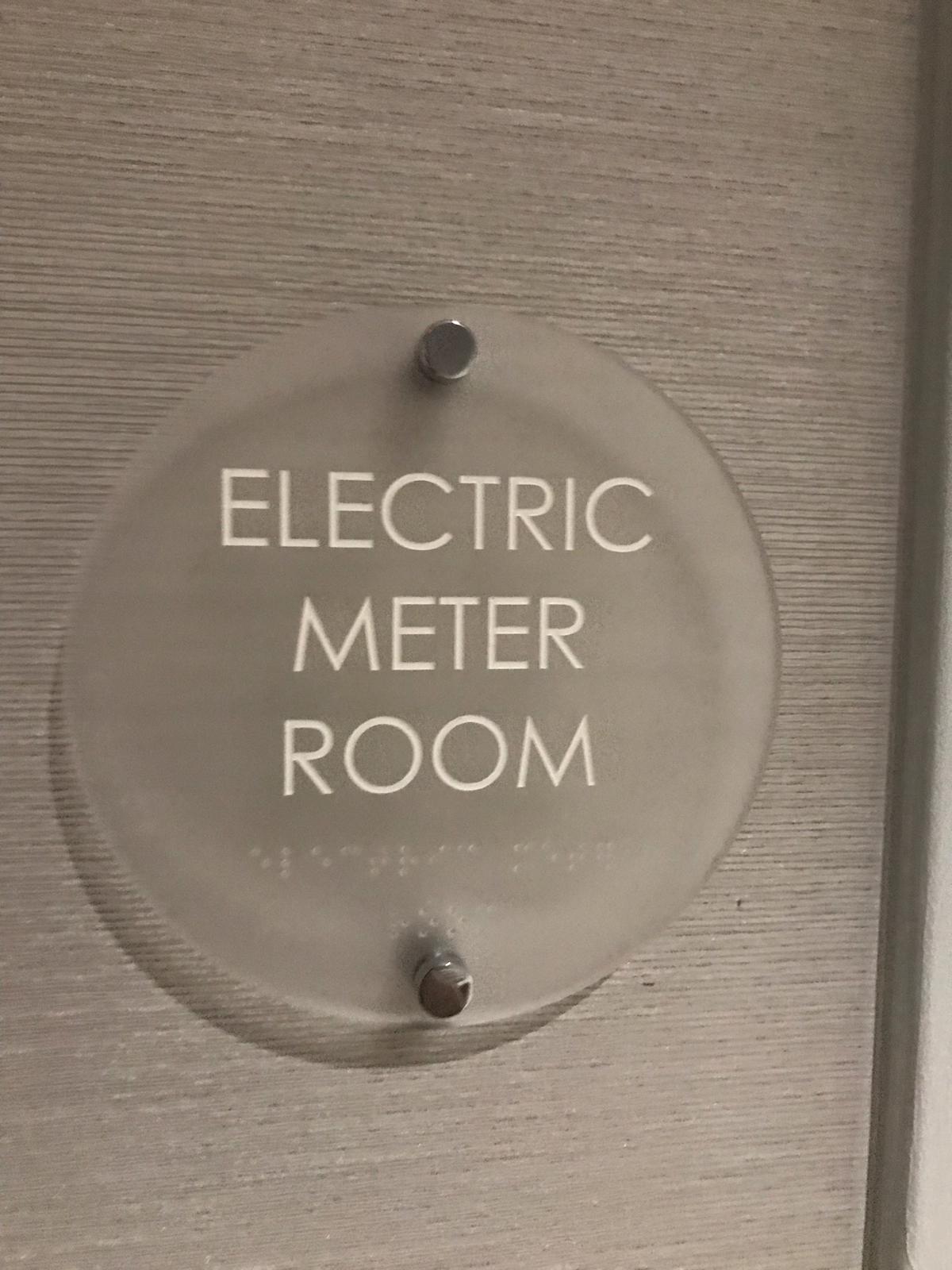
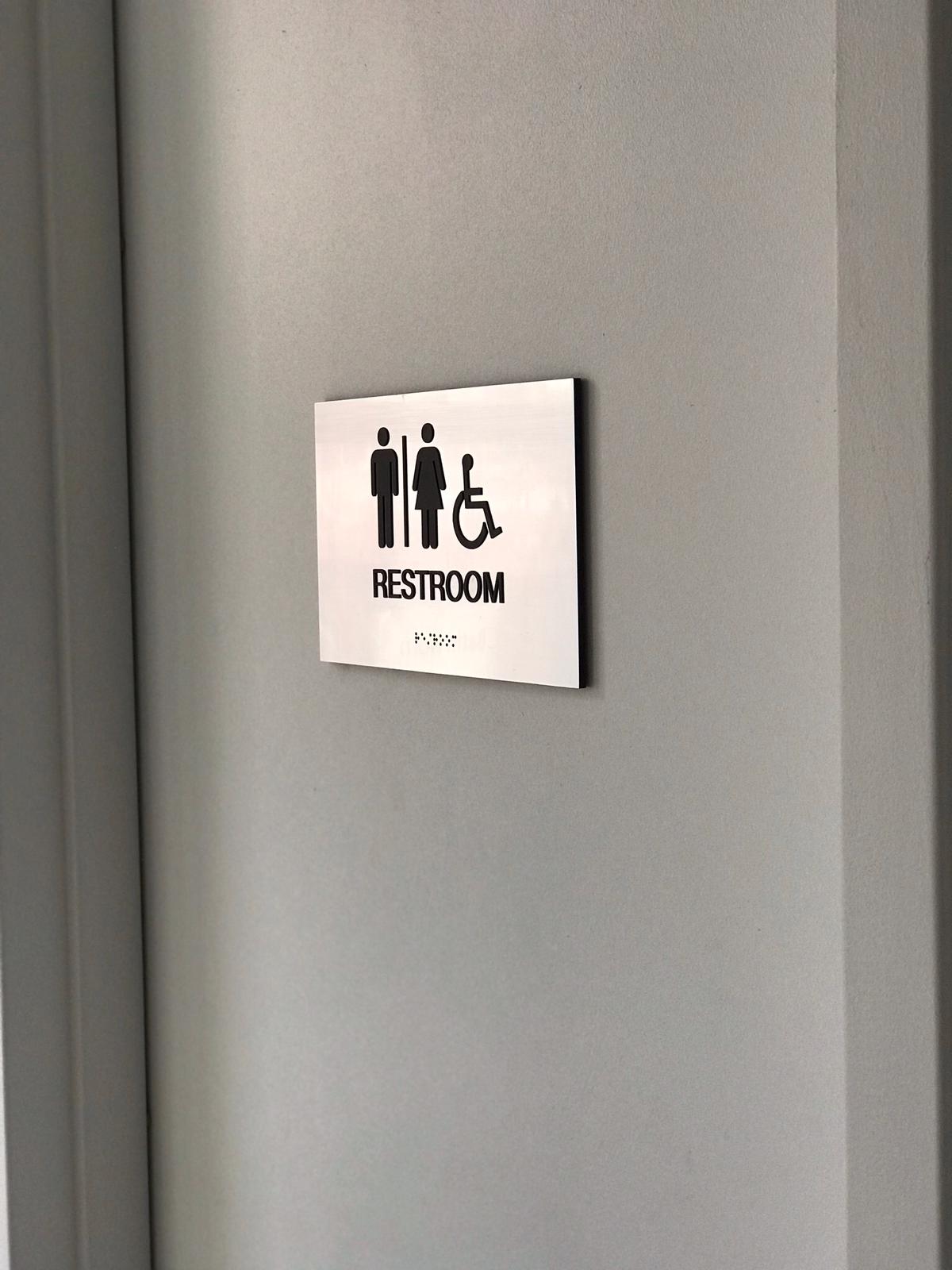
| Mounting position | On the wall on the latch side of the door. Not on the door itself |
| Clear floor space | 18 by 18 inches minimum centered on the tactile characters, clear of the door swing |
Two Things Most Restroom Signs Get Wrong
You may not need the wheelchair symbol at all
The International Symbol of Accessibility, the wheelchair pictogram, is required to identify accessible restrooms only where not all of the restrooms in the facility are accessible. Where every toilet room is accessible, which is usually the case in new construction, the Standards do not require the symbol at all. Putting it on every door is not a compliance failure, but it is not the requirement either, and it confuses a building where it is meant to be distinguishing one restroom from another.
The corollary matters more. Where some restrooms are not accessible, the accessible ones must be identified with the symbol, and directional signage must be provided at the inaccessible ones pointing to the nearest compliant restroom. That second sign is the one buildings forget, and it is the one an inspector looks for.
Triangles and circles are not a federal requirement
A large share of the “ADA restroom signs” sold online carry a geometric symbol on the door: an equilateral triangle for men, a circle for women, a circle with a superimposed triangle for unisex. Those come from the California Building Code, not from the federal ADA Standards, which do not require geometric shapes. If you are buying from a national catalogue, you may well be buying California signage for a New York building.
It is not wrong to use them, and some clients like the visual system. But it is worth knowing what you are paying for and why, rather than assuming the triangle is what makes the sign compliant. What makes it compliant is the tactile text, the Braille, the finish and where it is fixed.
All-Gender and Single-Occupancy Restrooms in New York City
This section is the local layer and it is the reason a New York buyer should use a New York supplier rather than order from a catalogue in another state.
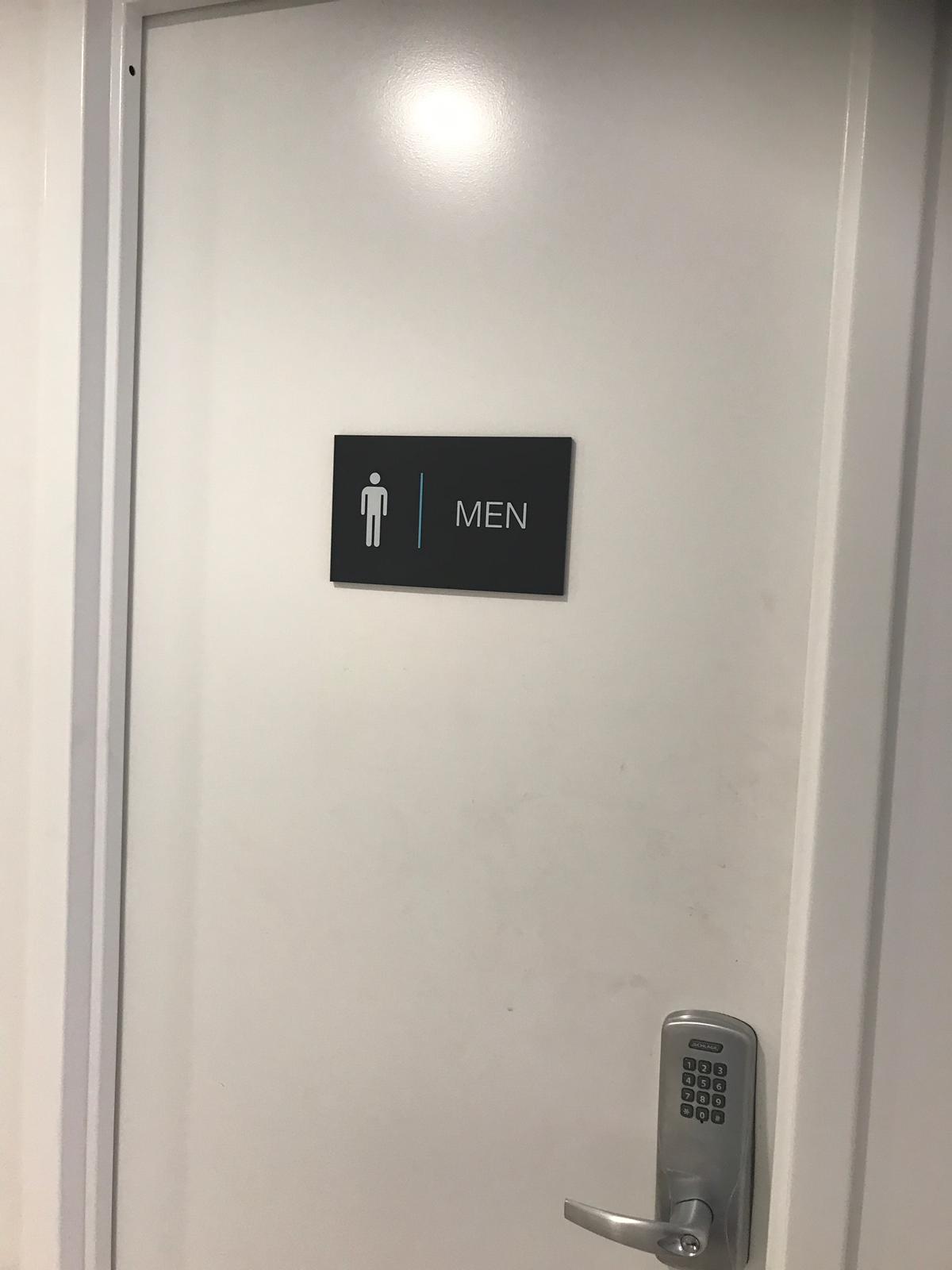
New York City requires single-occupancy public restrooms to be designated for use by all genders rather than as men’s or women’s. For a restaurant, bar, salon, small office or retail unit with two single-occupancy restrooms, that changes what the signs say, and it is a requirement that did not exist when a lot of existing signage was installed.
It is also an accessibility question at the same time as a designation question. An all-gender restroom sign still has to carry tactile text and Grade 2 Braille, still has to be mounted on the latch side at the right height, and still has to meet the contrast and finish requirements. Changing the wording does not exempt the sign from anything.
- What we supply: all-gender and gender-neutral restroom signs with tactile text, Grade 2 Braille and pictograms where wanted, in the same finishes as the rest of your sign package.
- Replacement programs: existing men’s and women’s signs swapped out across a portfolio, matched to the finishes already in the building.
- Whole-building consistency: single-occupancy restrooms designated correctly while multi-stall restrooms keep their own identification, drawn as one family.
Our ADA Restroom Signs
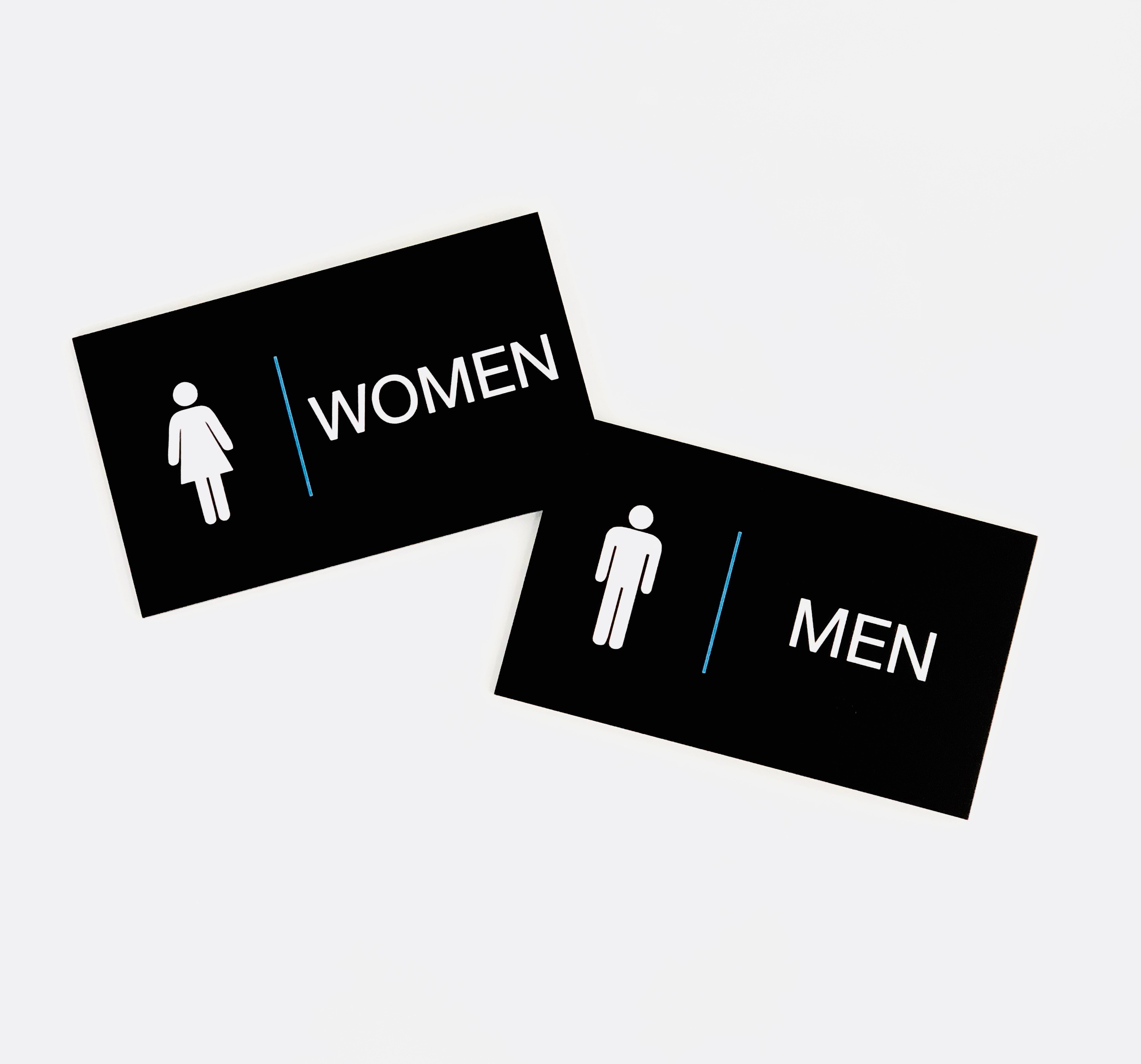
Men’s and Women’s Restroom Signs
Tactile text, Grade 2 Braille and pictograms, for multi-stall restrooms where gendered designation still applies.
All-Gender and Gender-Neutral Signs
For single-occupancy restrooms, with the same tactile and Braille requirements as any other restroom sign. See Section 5.
Accessible Restroom Signs
Carrying the International Symbol of Accessibility, for buildings where not all restrooms are accessible.
Directional Restroom Signs
Visual directional signs pointing to the nearest accessible restroom, required where some restrooms are not accessible and routinely forgotten.
Family and Companion Care Signs
Family restroom, baby change and companion care identification, produced to the same tactile standard.
Restroom Signs with Room Numbers
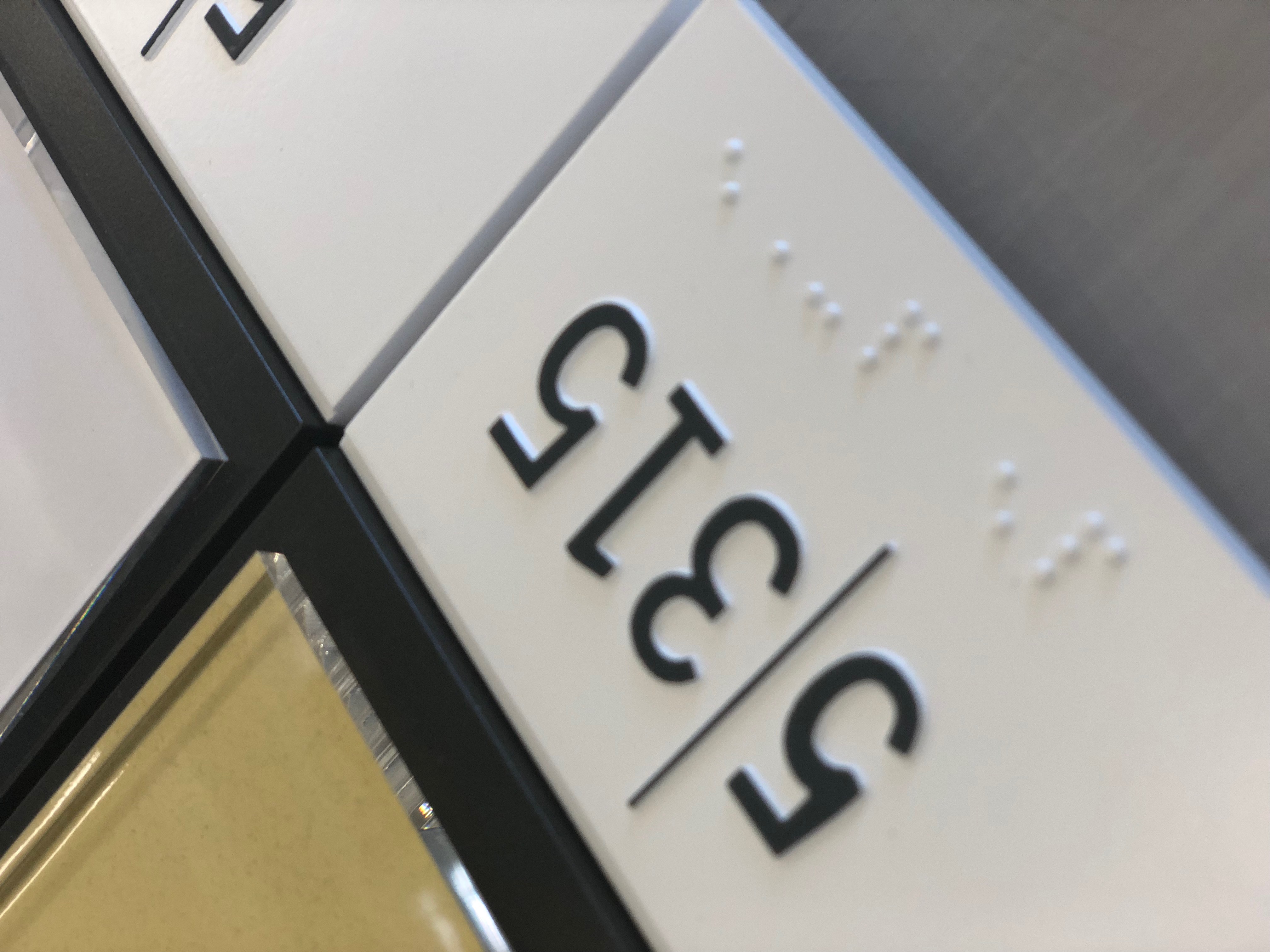
Where the restroom also carries a room or suite number as part of a wider building numbering scheme.
Architectural and Custom Restroom Signs
Compliant signage in brushed metal, painted aluminum, wood-effect and premium finishes, matched to the interior scheme rather than fighting it.
Whole-Building Restroom Packages
Every restroom door across a floor, a building or a portfolio, drawn as one consistent set and installed in one visit.
Replacement and Retrofit Signs
Non-compliant or damaged signs replaced, and existing gendered signage updated, matched to what is already in the building.
Restroom Sign Materials
Non-glare finish is a requirement rather than a preference, which rules out a lot of what looks good in a sample book. Within that constraint there is more choice than most buyers realize, and a restroom sign sits at eye level in a corridor people walk past all day, so the finish is worth thinking about.
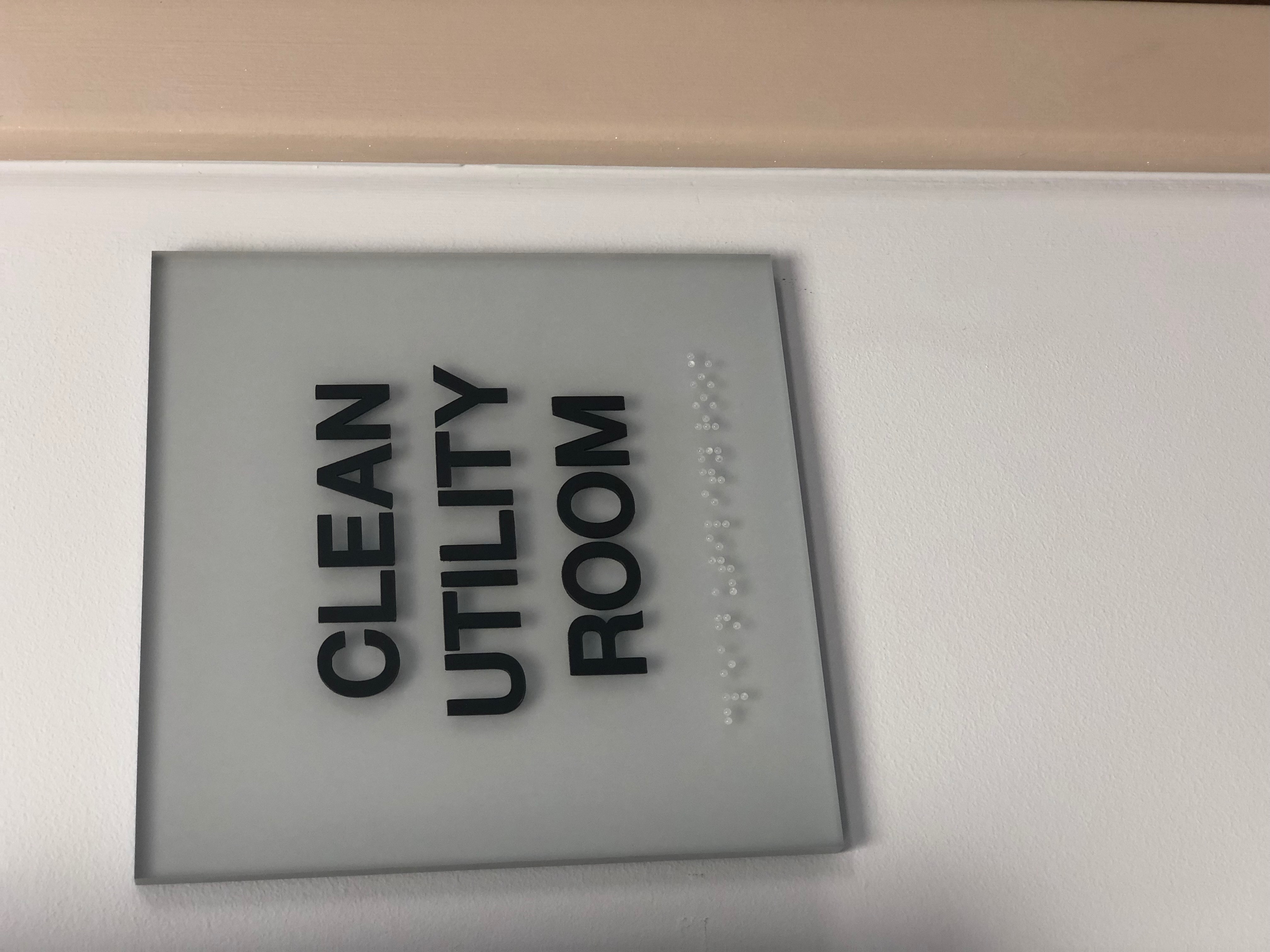
- Photopolymer: the standard for tactile signage. Characters, Braille and pictogram formed as one piece, so nothing can be picked off a wall in a public restroom corridor.
- Applied acrylic: raised acrylic characters on an acrylic or metal panel, where the sign needs to carry a specific look.
- Brushed and painted metal: aluminum and stainless panels for higher-specification interiors, with tactile elements on a non-glare finish.
- Wood and specialty substrates: for hospitality and premium schemes, with the ADA elements built in rather than stuck on.
- Color and contrast: character and background combinations checked against the contrast requirement and matched to your brand palette where the two can be reconciled.
- Cleaning durability: restroom corridors get cleaned more often than anywhere else in a building, so finishes are specified to survive it.
From Door Count to Installed Signs
- Door count and requirements. How many restrooms, which are accessible, which are single-occupancy, and whether directional signs are needed at any of them.
- Wording confirmed in writing. Exactly what each sign will say, agreed before production. This is the step that prevents a set of signs arriving with the wrong designation.
- Design and compliance check. Characters, Braille, pictograms, contrast and mounting details set against the Standards and against the interior scheme.
- Sample approval. A physical sample of each sign type signed off before the run.
- Manufacture. Produced in our own facility and checked against the approved schedule.
- Installation. Fitted by our own teams to the required mounting height and latch-side position, with clear floor space checked on site.
- Handover. A record of what was installed where, for inspections and for future changes.
Why Businesses Choose Velement for ADA Restroom Signs
We confirm what each door needs
Accessible or not, single-occupancy or multi-stall, directional sign required or not. The answer differs door to door and it changes the sign.
Wording agreed in writing first
The most expensive mistake on a restroom package is a perfect sign that says the wrong thing.
We install to the mounting rules
Latch side, correct height, clear floor space checked. A compliant sign fixed to the door is a non-compliant sign.
Compliant and still designed
Brushed metal, painted and premium finishes that meet the non-glare and contrast requirements and still suit the interior.
One sign or every door in a portfolio
The same specification discipline either way, drawn as one consistent family.
30 years in architectural signage
A New York manufacturer, not a catalogue reseller shipping California signage to a New York building.
Frequently Asked Questions About ADA Restroom Signs:
What makes a restroom sign ADA compliant?
Raised characters between 5/8 inch and 2 inches high in upper case sans serif, raised at least 1/32 inch, Grade 2 Braille below the text, a non-glare finish with contrasting characters, and mounting between 48 and 60 inches on the wall on the latch side of the door with clear floor space in front of it. A pictogram, where used, needs a field at least 6 inches high with the tactile text and Braille below it.
Does every restroom sign need the wheelchair symbol?
No. The International Symbol of Accessibility is required to identify accessible restrooms only where not all of the restrooms are accessible. Where every toilet room in the building is accessible, which is common in new construction, the symbol is not required. Where some are not accessible, the accessible ones must carry it and directional signs must point to the nearest compliant restroom.
Do ADA restroom signs need a triangle or a circle?
Not under the federal ADA Standards, which do not require geometric shapes. Those symbols come from the California Building Code. If you are ordering from a national catalogue you may be buying California signage for a New York building. You can use them if you like the system, but they are not what makes the sign compliant.
Can the sign go on the restroom door?
No. It goes on the wall on the latch side of the door. This is the most common reason an otherwise perfect restroom sign fails an inspection, and it is a fixing decision rather than a manufacturing one, which is why we install what we make.
What do New York City rules say about all-gender restrooms?
New York City requires single-occupancy public restrooms to be designated for use by all genders rather than as men’s or women’s. The sign still has to meet every tactile, Braille, contrast and mounting requirement. Check what applies to your specific premises, and we can supply and install the designation you need.
Can ADA restroom signs match our interior design?
Yes, within the constraints. Non-glare finish and character contrast are not negotiable, but material, panel shape, color and mounting detail all are. We design the compliance in rather than bolting it on.
Do you supply signs for a whole building?
Yes, and that is most of what we do. Every restroom door across a floor, a building or a portfolio, drawn as one family, produced together and installed in one visit.
How quickly can you replace non-compliant restroom signs?
It depends on quantity, material and finish. Failed inspections and re-designation work are usually urgent, so tell us the deadline when you enquire and we will confirm whether it is achievable before you commit.
Which areas do you cover?
All five boroughs of New York City, plus Long Island, Westchester, northern New Jersey and Connecticut, from our facility in Hicksville, NY.
View Our Projects