
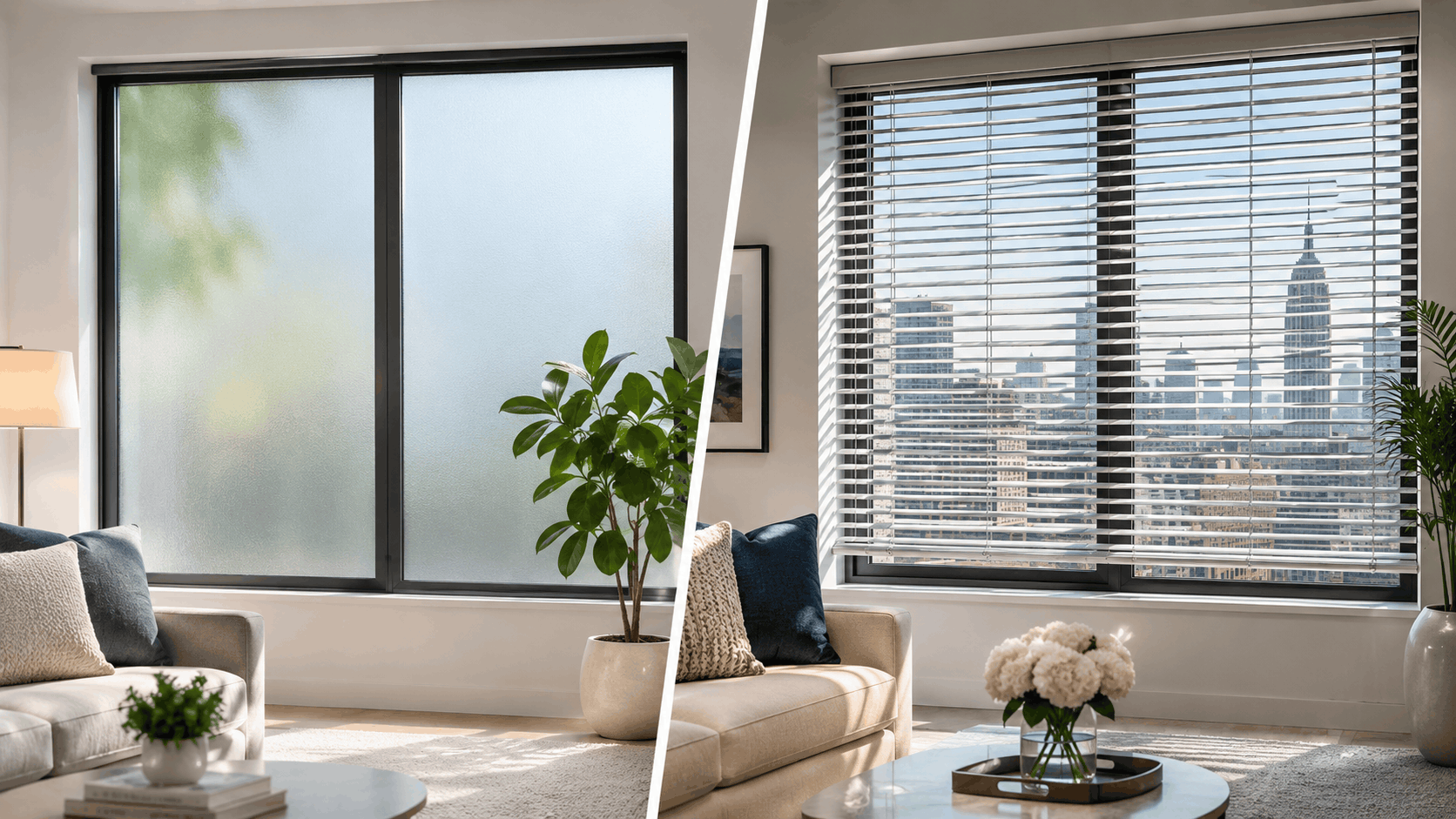
Privacy is important in New York, where homes, offices and retail spaces are often close to neighbouring buildings and busy streets. Large windows bring in natural light but can also expose private areas to outside view. Two common solutions are frosted window film and traditional blinds. Both offer privacy, but they differ in appearance, maintenance, light control and everyday convenience. Understanding these differences can help you choose the right option for your space without compromising natural light or interior design.
1. Understanding Frosted Window Film and Blinds
Before comparing the two options, it helps to understand how each solution works and what it offers.
What Is a Frosted Window Film?
Frosted window film is a thin, translucent material applied directly to glass. It creates a blurred or etched-glass appearance that blocks clear views from either side while allowing natural light to pass through.
It is particularly useful in New York spaces where privacy is needed without making rooms feel enclosed.
Common applications include:
Office Partitions: Frosted film can cover glass meeting rooms and private offices, preventing people outside from seeing screens or confidential discussions.
Bathroom Windows: It provides privacy without requiring curtains or blinds that take up additional space.
Street-Facing Windows: Homes and businesses can maintain privacy while allowing daylight into their interiors.
Retail Spaces: Decorative patterns and branded designs can add visual interest to storefronts and glass partitions.
What Are Traditional Blinds?
Blinds are window coverings made from materials such as wood, aluminium, vinyl or fabric. They are fitted inside or around window frames and can be adjusted to control incoming light and visibility.
Unlike window film, blinds offer flexible coverage. You can open them fully, close them or adjust their position depending on your requirements.
Popular options include Venetian blinds, vertical blinds, roller blinds and Roman blinds. Each offers a different appearance and level of light control.
2. Frosted Window Film vs. Blinds: A Side-By-Side Comparison
Both solutions can improve privacy, but their practical benefits differ depending on how you use your space.
| Comparison Factor
|
Frosted Window Film | Traditional Blinds |
| Privacy | Provides consistent privacy while allowing diffused light.
|
Privacy depends on how far the blinds are closed or tilted. |
| Natural Light | Allows daylight to enter without clear outside visibility.
|
Reduces daylight when closed, depending on the material and design. |
| Light Control | Offers limited control over brightness.
|
Allows adjustable light levels throughout the day. |
| Maintenance | Requires occasional cleaning of the glass surface.
|
Needs regular dusting and cleaning of slats or fabric. |
| Appearance | Creates a clean, modern and minimal finish. | Offers different colours, textures and decorative styles.
|
| Space | Sits directly on the glass without occupying window space. | Requires additional room around the window frame. |
The main distinction is flexibility. Blinds allow you to change light levels throughout the day, while film provides a consistent privacy solution.
3. Which Option Is Better for New York Homes?
Your choice depends on the room, window position and level of privacy you need.
When Frosted Film Makes More Sense
For New York apartments, especially those facing neighbouring buildings or busy streets, film can be a practical choice.
Consider it for:
Bathrooms: You can maintain privacy without dealing with fabric coverings in a humid environment.
Ground-Floor Windows: Frosted glass helps prevent direct views from pedestrians while keeping interiors naturally lit.
Home Offices: It can provide privacy for glass partitions without making the workspace feel closed off.
When Blinds Are More Suitable
Blinds are a better option when you need greater control over sunlight and visibility.
For example, west-facing living room windows may receive strong afternoon sunlight. Adjustable blinds can help reduce glare while watching television or working on a laptop. Blackout blinds are also useful in bedrooms where you want to limit outside light at night.
4. Which Option Works Better for New York Businesses?
Commercial spaces often have different requirements from residential properties. Privacy, presentation and practical maintenance can all influence the decision.
Where Window Film Offers an Advantage
Offices in Manhattan, Brooklyn and other busy business districts often use glass partitions to create open layouts. However, transparent meeting rooms can expose confidential conversations and computer screens.
Frosted film can address this without requiring permanent partitions. Businesses can also incorporate logos, room names and decorative patterns into the design.
Retail stores and clinics can use it to create private sections while maintaining a consistent appearance across their interiors.
Where Blinds Are a Better Fit
Blinds work well in spaces where employees need to adjust light levels throughout the day.
They are particularly useful in:
Conference Rooms: Adjustable blinds help manage screen glare during presentations.
Customer Service Areas: They allow staff to control sunlight and visibility as required.
Private Offices: Employees can adjust coverage according to their working preferences.
5. What Should You Consider Before Choosing?
Before installing either option, assess how your windows are used and what problems you want to solve.
Keep these factors in mind:
- Privacy Requirements: Decide whether you need permanent visual privacy or adjustable coverage. Film is suitable for consistent privacy, while blinds offer more flexibility.
- Natural Light: If your room depends on daylight, frosted film can help maintain brightness without completely exposing the interior.
- Window Size and Layout: Large glass partitions and full-height windows may benefit from film because it does not require additional fittings.
- Maintenance: Consider how much time you can dedicate to cleaning. Blinds have slats, cords or fabric surfaces that may collect dust.
- Design Preferences: Film can be customised with patterns and branding, while blinds offer a wider choice of materials and textures.
Remember that standard frosted film is not designed to provide complete darkness or significant heat control. If glare and solar heat are major concerns, consider specialist solar-control film or adjustable window coverings.
6. Can You Combine Frosted Film and Blinds?
Yes. Using both can provide a practical balance between privacy and light control.
For example, a New York office could install frosted film across the lower section of glass partitions to maintain everyday privacy while using blinds to control direct sunlight. Similarly, homeowners can use film on bathroom windows and blinds in bedrooms where adjustable darkness is important.
This approach allows you to address different window requirements without relying on one solution throughout the property.
Frequently Asked Questions (FAQ’S):
1. Does Frosted Window Film Provide Privacy at Night?
Yes, standard frosted film obscures clear views in both daylight and darkness. However, silhouettes and shadows may still be visible when interior lights are switched on.
2. Can Frosted Film Be Removed From Windows?
Most standard adhesive window films can be removed, although the process depends on the product and adhesive used. This can be useful for tenants in rented New York apartments or commercial spaces.
3. Do Blinds Provide Better Light Control Than Window Film?
Yes. Blinds can be opened, closed or adjusted to control incoming sunlight. Frosted film provides consistent light diffusion but does not offer the same level of adjustment.
4. Is Frosted Film Suitable for Office Glass Partitions?
Yes. It is commonly used on meeting room partitions, office doors and reception areas. Custom patterns and branding can also be incorporated into the design.
5. Which Option Requires Less Maintenance?
Frosted film generally requires less maintenance because it has no moving parts or fabric surfaces. It can usually be cleaned along with the glass using suitable cleaning products.
Conclusion
Frosted window film and blinds serve different purposes. Film is a practical choice when you want consistent privacy, natural light and a clean appearance. Blinds are more suitable when adjustable light control and flexible coverage are priorities. Your decision should depend on the room, window placement and daily requirements.
For New York homes and commercial properties, the right solution can improve both functionality and appearance. Velement offers window film solutions, including frosted, decorative and branded options, helping property owners create glass spaces that balance privacy with design.