
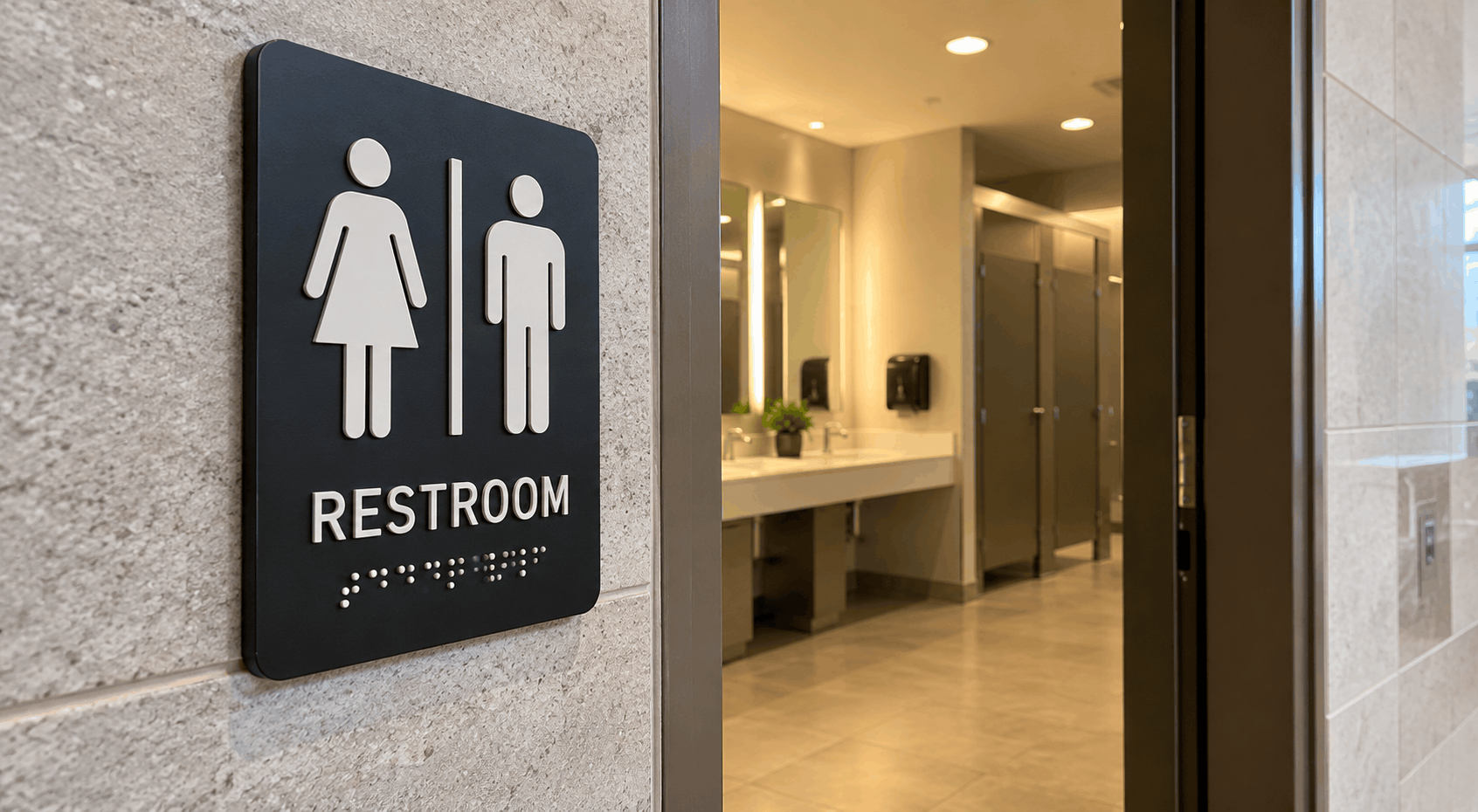
Public restrooms should be easy to locate and use, regardless of a visitor’s level of vision. For people who are blind or have low vision, signs that rely only on colour or printed text can make finding the correct facility difficult. Braille and tactile signage provide essential information through touch, helping visitors navigate commercial buildings with greater independence. If you manage an office, shopping centre, hotel or restaurant in the United States, understanding accessible restroom signage can help you meet applicable Americans with Disabilities Act (ADA) requirements and create a more inclusive environment.
What Are Braille And Tactile Restroom Signs?
Braille and tactile signs communicate information through touch, allowing people with visual impairments to identify facilities without relying on sight alone.
Although the terms are often used together, they serve different purposes:
Braille: This uses raised dots arranged in specific patterns to represent letters, numbers and words. People who read Braille can use these patterns to identify a restroom or understand other sign information.
Tactile lettering: This uses raised letters that can be felt with the fingertips. The lettering helps people who may not read Braille but can recognise raised text.
Visual information: Printed words, symbols and suitable colour contrast help people with low vision read signs more easily.
Combining these features makes restroom signs more accessible to a wider range of visitors.
What Does The ADA Require For Restroom Signs?
The ADA Standards for Accessible Design establish requirements for permanent room identification signs in many public and commercial facilities. Before ordering signage, you should understand which provisions apply to your building and the type of restroom.
Braille And Raised Characters
Under the 2010 ADA Standards, permanent room identification signs generally require raised characters and Grade 2 Braille. Raised characters must meet specific requirements for height, case, style and spacing. Braille must follow the prescribed format and positioning rules.
For example, a sign identifying a permanent, single-user accessible toilet room will generally need tactile lettering and Braille, subject to the applicable standards.
Placement And Mounting Height
Correct placement is just as important as the sign’s content. Under the ADA Standards, tactile signs are generally installed on the latch side of the door. Where this is not possible, alternative placement provisions apply.
The standards also specify the height of tactile characters above the finished floor and the required clear floor space for approaching and reading the sign. You should check the exact measurements in the applicable ADA provisions rather than relying on visual judgement alone.
Symbols, Contrast And Finish
Restroom signs should be easy to distinguish from their surroundings. The ADA Standards require visual characters to contrast with their background, either through light characters on a dark background or the reverse.
A non-glare finish can also improve readability. Where pictograms are used to identify a facility, the applicable requirements for pictogram fields and accompanying text must be followed.
How To Choose The Right Restroom Signage
Selecting accessible signage involves more than choosing a design that matches your interior. You need to consider the facility, the information visitors require and the relevant compliance standards.
Identify The Facility Type: Determine whether the sign is for a men’s, women’s or unisex restroom, or another type of toilet facility. Use the appropriate wording and recognised symbols.
Check Permanent Identification Needs: Establish whether the sign falls under the ADA requirements for permanent room identification. Directional signs and temporary notices may be subject to different provisions.
Select Durable Materials: Choose materials suited to the building’s cleaning routine and level of use. Engraved or fabricated signs can offer durable lettering when produced to the required specifications.
Prioritise Readability: Ensure that printed characters, raised text and Braille are correctly produced and positioned. A visually attractive sign is not sufficient if people cannot read or feel its information clearly.
Common Mistakes To Avoid
Even well-designed signage can fail to meet accessibility needs if important details are overlooked.
Watch out for these common mistakes when planning restroom signs:
Using Printed Text Alone: Standard lettering without the required tactile features may not satisfy permanent room identification requirements.
Incorrect Braille Placement: Braille positioned too close to raised lettering or produced with the wrong spacing can make the sign difficult to read by touch.
Mounting Signs In The Wrong Location: A sign placed behind an open door or outside the required mounting zone may be difficult to locate and may not comply with applicable provisions.
Treating Every Sign As Identical: Different facilities and sign functions can have different requirements. Check the relevant standards before finalising a signage schedule.
Frequently Asked Questions (FAQ’s):
1. Are Braille Signs Required In Public Restrooms In The USA?
Many permanent restroom identification signs in facilities covered by the ADA must include raised characters and Grade 2 Braille. The exact requirements depend on the sign’s purpose and the applicable standards.
2. What Is The Difference Between Braille And Tactile Lettering?
Braille uses raised dots that people read through touch, while tactile lettering uses raised letters and numerals. Both features can appear on the same sign to improve accessibility.
3. Where Should Accessible Restroom Signs Be Installed?
Under the ADA Standards, permanent tactile room identification signs are generally mounted on the latch side of the door. Specific mounting heights and alternative placement rules also apply.
4. Can Restroom Signs Match A Building’s Interior Design?
Yes. You can choose colours, materials and finishes that complement your interior, provided the finished signs meet the applicable requirements for tactile characters, Braille, contrast, placement and other relevant features.
5. Who Can Help With Accessible Restroom Signage?
A professional signage provider can help with design, material selection, fabrication and installation. However, you should confirm compliance with the applicable ADA standards and local building requirements before installation.
Conclusion
Braille and tactile restroom signs help people with visual impairments navigate public and commercial buildings more independently. For property owners and facility managers in the United States, understanding the ADA’s requirements for lettering, Braille, contrast and placement is an important step towards accessible facilities.
When planning ada restroom signs, review the relevant standards before selecting materials or approving installation. An experienced signage partner such as Velement can assist with signage design, fabrication and installation planning, helping you create clear, durable signs that support accessibility while fitting your building’s interior.