
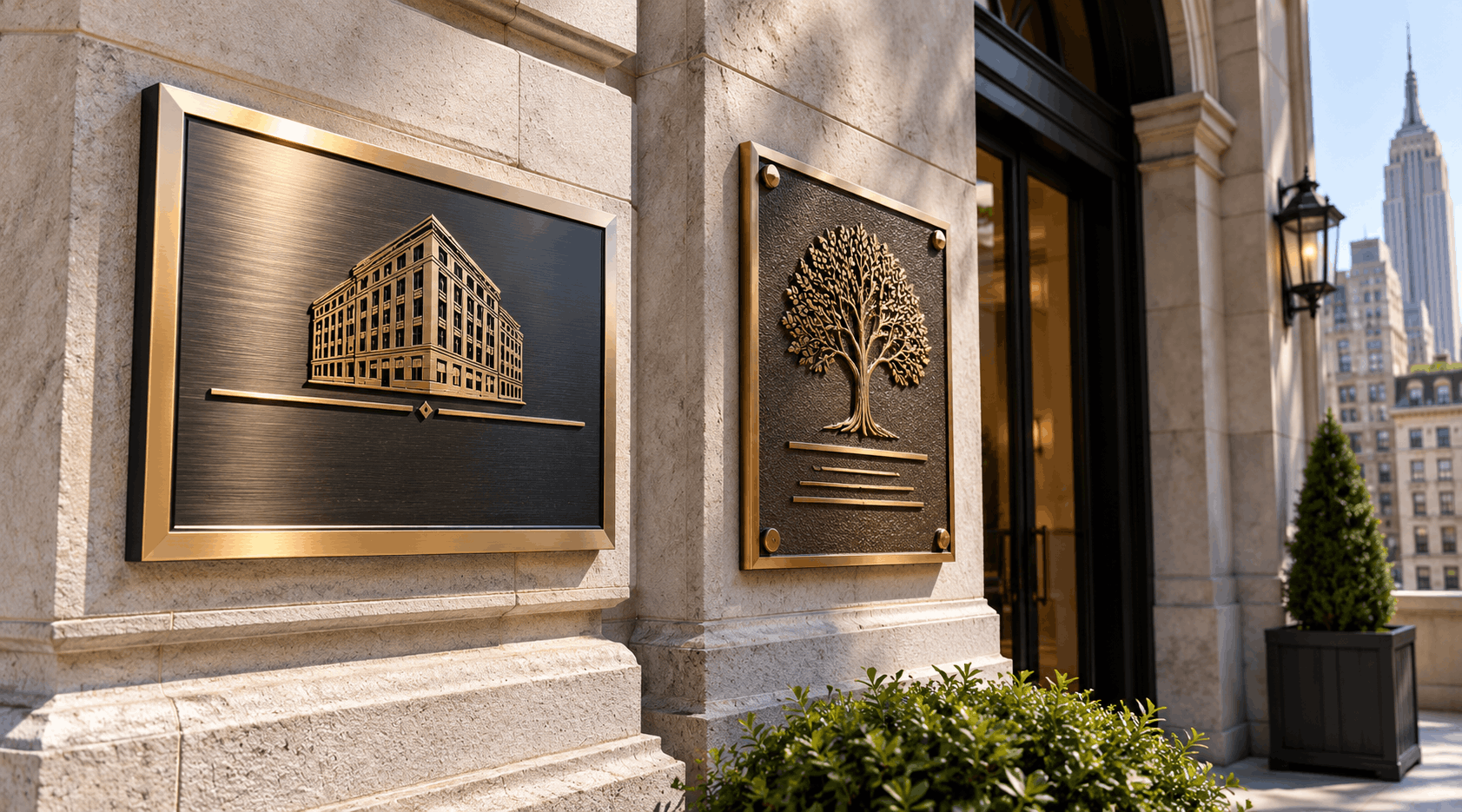
Walk down almost any block in New York and you’ll spot them. A bronze plaque beside a lobby door. A small marker honoring someone who lived on the street a century ago. A dedication plate in a school hallway. We barely notice them most days, but when you need one, the decision suddenly feels huge.
That’s fair. Building and Memorial Plaques are small objects carrying big responsibilities. They tell visitors what a place is, who built it, or who deserves to be remembered. In a city with harsh winters, humid summers, and strict building rules, getting one wrong can be an expensive headache.
Here’s how to choose well, without the guesswork.
Start With the Purpose, Not the Material
Most people open a catalog and start comparing metals right away. I’d slow down first and ask one question: what is this plaque supposed to do?
A building plaque is usually informational or commemorative. It might mark a construction year, name an architect, note a historic designation, or identify a business. A memorial plaque is personal. It honors a person, a group, or an event, and it tends to sit in places where people pause: a garden bench, a hospital courtyard, a church wall, a park.
The tone is different, so the design should be too. A law firm’s building plaque can be crisp and formal. A memorial for a beloved teacher might need softer wording and a quieter finish. Settle the purpose first and everything else gets easier.
Pick a Material That Can Handle New York
New York weather is not gentle. Freeze-thaw cycles, road salt spray, summer humidity, and city pollution all wear on metal and stone. Here’s how the common options compare:
Cast bronze is the classic choice, and for good reason. It’s durable, has a rich look, and ages gracefully. Raised lettering catches light beautifully, which is why you see it on historic buildings and public memorials. It costs more, but it can last for generations.
Brass gives a brighter, golden look and works well for indoor lobbies and interior dedications. Outdoors, it needs more upkeep to stay polished.
Aluminum is lighter and more budget-friendly. Cast or etched aluminum with a quality finish holds up surprisingly well, and it suits large commercial installations where weight and cost matter.
Stainless steel has a modern, clean feel. It resists corrosion and fits contemporary architecture nicely.
Granite and stone feel permanent and dignified. They’re often chosen for cemetery markers and memorial gardens, though they’re heavier and need proper mounting.
If the plaque will live outdoors in New York, I’d lean toward bronze or high-quality aluminum. For indoors, you have more freedom to choose based on looks.
Think About Size, Placement, and Readability
A plaque nobody can read is just decoration. Before you order, stand where the plaque will go and picture a visitor approaching it. How far away will they be? Is the light good? Will it be at eye level?
A few practical rules of thumb:
- Keep text short. Dense paragraphs rarely get read on a wall plaque.
- Choose clear, readable fonts. Fancy script looks lovely in a mockup and terrible from six feet away.
- Make sure there’s strong contrast between the letters and the background.
- Leave some breathing room around the text. Crowded layouts feel cheap.
For memorials especially, resist the urge to say everything. A name, dates, and one meaningful line often hit harder than a long tribute.
Check the Rules Before You Fall in Love With a Design
This is the step people skip, then regret. New York has layers of regulation, and requirements can change depending on where and what you’re installing.
If your building is a designated landmark or sits inside a historic district, you may need approval from the NYC Landmarks Preservation Commission before attaching anything to the facade. Public property, parks, and schools have their own approval processes. Co-ops and condos often need board sign-off too. And if the plaque is meant to provide accessible signage, you’ll want to look at accessibility standards for raised characters and braille.
I’m not a lawyer or a code expert, so confirm the specifics with your building manager, local authority, or an experienced plaque manufacturer. A short phone call now can save you from removing a freshly installed plaque later.
Get the Wording Right (and Proofread Twice)
Typos on a plaque are painful because they’re literally set in metal. Have at least two people check names, dates, spellings, and punctuation. For memorial plaques, confirm details with family members, because it’s easy to get a middle initial or a date wrong.
Read the final text aloud, too. If it sounds stiff or awkward, it probably is.
Choose a Supplier You Can Actually Talk To
The best plaque makers act like partners. They’ll show proofs, explain finish options, and tell you honestly if your idea won’t work. Ask about turnaround times, mounting hardware, and what kind of warranty or weather guarantee they offer. If you’re in New York, working with a supplier familiar with local conditions and installation requirements is a real advantage.
Ask to see samples if you can. A photo on a website never fully captures the weight, color, and texture of the real thing.
Plan for Long-Term Care
Even the toughest plaque benefits from a little attention. Bronze can be cleaned gently and waxed to slow oxidation. Aluminum and stainless steel usually just need a wipe-down. Avoid harsh chemicals unless your supplier says they’re safe for your finish.
Final Thoughts
Choosing Building and Memorial Plaques isn’t about finding the fanciest option. It’s about matching purpose, material, wording, and location so the plaque does its job quietly for decades. Take your time, check the local rules, and keep the message simple. The best plaques are the ones people stop to read.
Frequently Asked Questions (FAQ’s):
What is the best material for outdoor plaques in New York?
Cast bronze is the most popular for outdoor use because it handles temperature swings, moisture, and salt well. Quality aluminum with a protective finish is a solid, more affordable alternative.
How long does it take to make a custom plaque?
It varies by material and complexity. Simple etched or engraved plaques can take a couple of weeks, while cast bronze often takes longer. Ask your supplier for a firm timeline, especially if you have an unveiling date.
Do I need permission to install a plaque on a building in New York?
Often, yes. Landmarked buildings, historic districts, public property, and co-ops or condos may require approval. Check with your building owner, board, or the relevant city agency before installing.
How much text should go on a memorial plaque?
Less is usually better. A name, dates, and a short heartfelt line are typically enough. Shorter text is easier to read and looks more elegant.
How do I keep a plaque looking good over the years?
Clean it gently with mild soap and water, and avoid abrasive cleaners. Bronze may benefit from occasional waxing. Your supplier can recommend a care routine for your specific finish.