
Take a walk down Steinway Street in Astoria or Court Street in Brooklyn, then think about which shops you remember afterward. Odds are a lot of them have a canopy. That strip of fabric or metal out front shows people where the door is, keeps them dry while they wait, and tells them something about the place before they step inside.
Picking one takes more thought than most owners expect, though. The city has permit rules. The weather swings from sticky July afternoons to February slush. And cheap fabric fades fast once it’s been hanging over a bus stop for a couple of years. Whether you’re opening your first location or finally replacing that tired awning, these are the things to weigh before you sign off on commercial canopies for your New York business.
First, Figure Out the Job It Has to Do
Forget colors for a minute. What do you actually need this thing for?
For a corner coffee shop, the answer might be keeping the 8 a.m. line dry and shading two café tables. A dental office in Midtown probably just wants an entrance patients can spot from the curb. A restaurant in the West Village? Likely both, with lights built in so it still looks inviting at 10 p.m.
Then get practical. Which way does your entrance face? A south-facing storefront gets cooked every summer afternoon. Do people wait outside? Do deliveries come in the front? Write it down, even roughly. Any decent installer is going to ask you all of this anyway.
Talk About Permits Early, Not Later
Plenty of owners find this out the expensive way. In New York City, a canopy or awning that’s attached to the building or hangs over the sidewalk usually needs Department of Buildings approval. Put your name or logo on it and signage rules kick in too, and those depend on your zoning district.
Is your building in a historic district, or a landmark itself? Then the Landmarks Preservation Commission may want a say in the color, the size, the materials, even how the frame is anchored to the facade.
Fire safety is the other piece. Canopy fabric for commercial use in the city generally has to be flame-resistant, and an inspector can ask to see the certificate. Get that paperwork from your supplier before install day.
Rules change, and none of this is legal advice. Honestly, your best bet is an installer who files NYC permits all the time. They’ll know what your job needs, and they can keep you clear of fines for an unpermitted install.
Choose Materials for the Weather You Actually Get
Anything that lives outside in this city takes a beating. Humid summers, sideways rain, the odd nor’easter, snow that hangs around for a week, plus salt spray off the street all winter. Your canopy sits through every bit of it, year after year.
Here’s how the usual options stack up:
| Material | Best for | Things to know |
| Solution-dyed acrylic | Most storefronts | Holds color well, breathes, resists mildew; less waterproof than vinyl |
| Vinyl-coated polyester | Restaurants, high-traffic entrances | Waterproof and easy to wipe clean; can look a bit glossy |
| Metal or aluminum | Modern or corporate buildings | Very durable and low maintenance; higher upfront cost |
| Glass or polycarbonate | Upscale entrances | Lets light through and looks sleek; needs a strong frame |
Don’t overlook the frame. Powder-coated aluminum or galvanized steel resists rust far better than bare steel. And ask about snow load. A canopy that looks sharp in June isn’t much use if it’s sagging by February.
Match the Style to the Building
There are more styles of commercial canopies than most people realize. The standard slanted awning shows up everywhere because it suits almost any storefront and sheds rain well. Dome and barrel shapes are softer, and they look right on boutiques and older brick buildings. Box or flat-front canopies feel sharper and more modern, with a wide, flat valance that’s great for lettering.
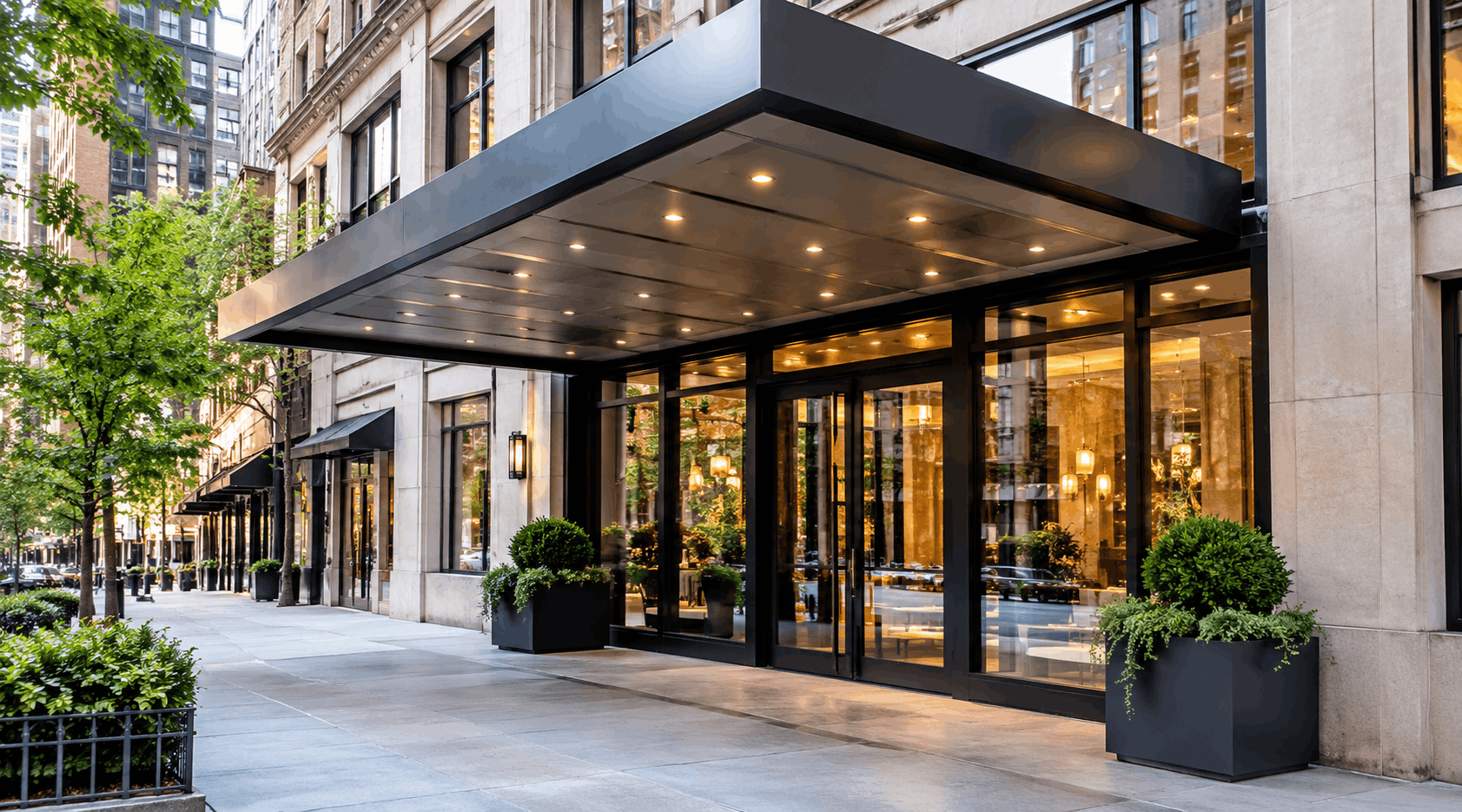
Then there’s the long entrance canopy that runs out toward the curb, the kind you see at hotels, co-ops, and restaurants with a doorman. It’s about as New York as it gets. Because it reaches so far over public space, though, expect extra approvals.
Got outdoor seating? A retractable canopy rolls out when it’s sunny and tucks back in when you want light or a storm’s on the way. Someone has to operate it, and the moving parts need care, so skip it if nobody will be around to manage it.
Before you decide, cross the street and look at your whole facade. The canopy should look like it was always part of the building.
Make It Work for Your Brand
Think about how many people will see your canopy. Folks across the street, anyone snapping a photo of your block, everyone who checks Street View before they visit. For a lot of small businesses, it’s the biggest sign they’ll ever own.
Keep the words short. Your name plus maybe one line, like “Coffee & Bakery” or “Open Late,” reads fine from down the block. Add a phone number, a URL, and five services, and nobody can read any of it.
On color: dark shades hide city grime, while bright ones get noticed but need cleaning more often. Stay close to your brand colors, and ask for a physical sample you can hold up outside in daylight. What you see on a screen rarely matches what you’ll see on the street.
Lighting is worth a thought too. A backlit or downlit canopy keeps you visible after dark and makes the entrance feel safer. Just check whether illuminated signs need their own permit where you are.
Hire Someone Who Knows the City
A great design can still be ruined by a sloppy install. When you talk to canopy companies, ask them straight out:
- Do you design, build, and install it yourselves, or farm parts of the job out?
- Have you pulled DOB permits in my borough? What about landmark approvals?
- Is there a job near me I can go see in person?
- What does the warranty cover: the fabric, the frame, the labor?
- Can you clean, repair, or re-cover it later on?
Get a few quotes, but price alone is a bad way to choose. Spend a bit more on a canopy that lasts ten years and you’ll come out ahead of the cheap one you replace in three. A company that knows the permit process can also stop your project from stalling the week before you open.
Before You Sign Off
If you only remember one part of this, make it the order. Work out the job first, deal with permits early, buy materials that can take a New York winter, and hire people who’ve done this plenty of times. Style and color get a lot easier once those are settled.
Done well, your canopy ends up being how regulars describe you to friends: “the place with the green awning on the corner.” That’s worth the extra effort.
Planning commercial canopies for your storefront? Get in touch for a free consultation and we’ll help you work out what suits your building and your budget.