
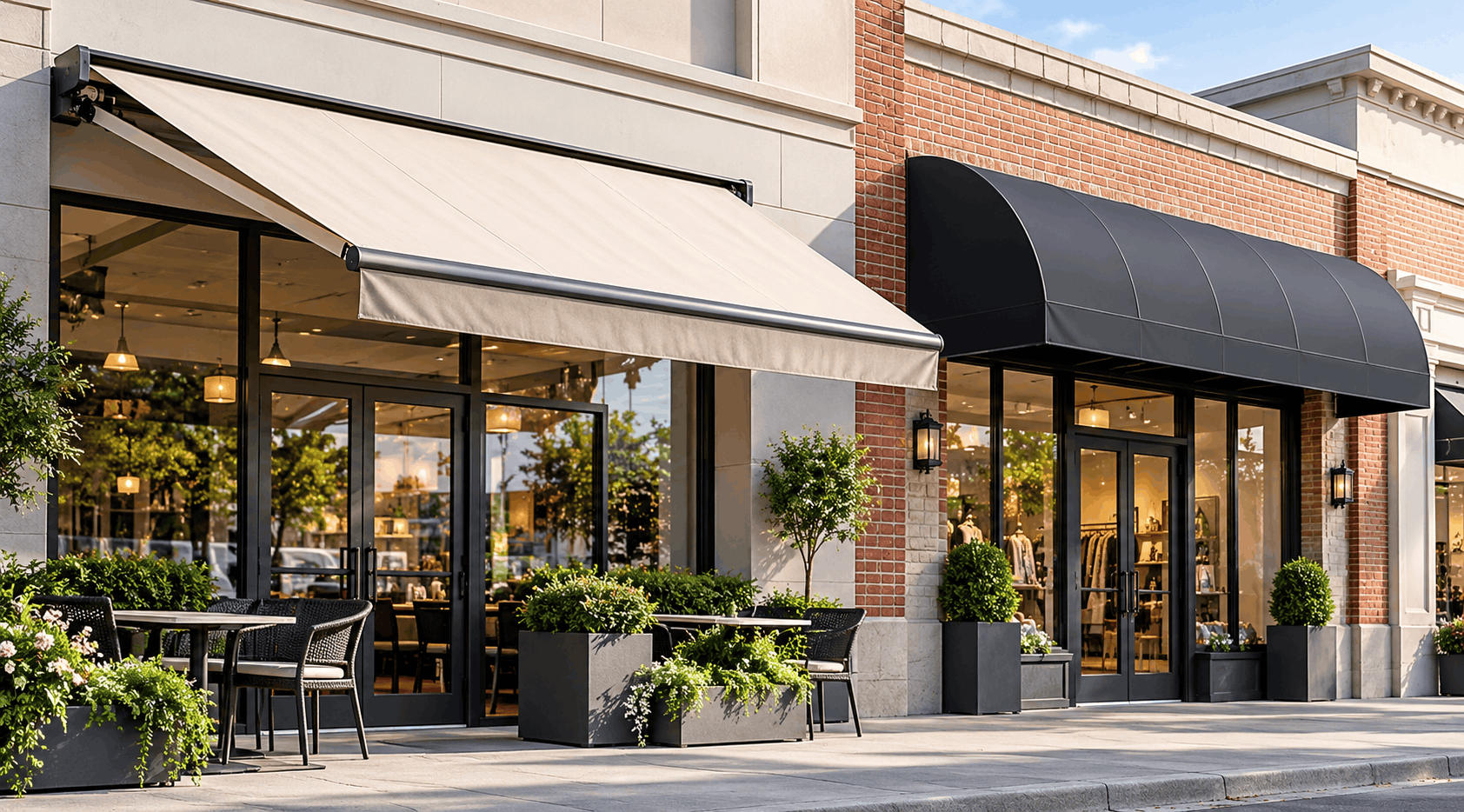
Awnings can help businesses manage sunlight, provide shelter and make outdoor areas more comfortable for customers. However, choosing the wrong design can lead to unnecessary maintenance, limited usability or higher operating costs. For a restaurant in Florida, a retractable awning may offer flexibility during changing weather, while a retail shop in Arizona might benefit from a permanent shaded entrance. Understanding the differences between retractable and fixed designs helps you choose an option that suits your building, climate and daily operations.
What Is The Difference Between Retractable And Fixed Awnings?
Both options provide shade and weather protection, but they differ in how they operate and the level of flexibility they offer.
Retractable Awnings
These awnings extend when you need shade and retract when you want more sunlight or clear space. Depending on the model, you can operate them manually or with a motor. They suit businesses that need adaptable outdoor areas.
Fixed Awnings
These structures remain in place throughout the year. Their permanent frames provide consistent coverage over entrances, windows and outdoor seating areas. They suit businesses that require dependable shade in the same location every day.
Key Factors To Consider Before Choosing
The right option depends on how your premises are used, the local weather and the level of upkeep you can manage.
Weather Conditions And Durability
Climate should be a major factor in your decision, particularly if your business operates outdoors.
Retractable Awnings: You can retract them when strong winds or severe weather are forecast, provided you follow the manufacturer’s operating instructions. This can reduce exposure, but it does not make the awning storm-proof.
Fixed Awnings: These offer permanent coverage, but their frames, fixings and fabric must withstand local conditions. Snow loads, heavy rain and wind can affect the design requirements.
For example, a café in coastal Florida needs to account for tropical storms, while a shop in Minnesota may need to consider snow accumulation. Neither design is automatically suitable without proper assessment.
Installation Costs And Maintenance
Your initial budget should include more than the purchase price. Installation complexity, materials and long-term servicing can influence the overall cost.
Retractable models may cost more when they include motors, sensors or specialised mechanisms. These components also require maintenance. Fixed designs can have simpler operating systems, although their structural supports and weather-exposed materials still need periodic inspection.
Ask suppliers for a breakdown of installation, maintenance and expected replacement costs before making a decision.
Appearance And Brand Visibility
An awning contributes to the appearance of your premises as well as its practical use.
A retractable design can create an open, unobstructed storefront when retracted. A fixed awning offers a consistent architectural feature and can provide a permanent surface for displaying your business name or logo. Both can be customised with suitable colours, materials and branding.
Check visibility from the pavement and road before finalising the design. An attractive awning will have limited value if it obscures existing signs or makes the entrance harder to identify.
Which Awning Works Best For Your Business?
Your business activities should guide your choice more than appearance alone. Consider how customers use the space and how often you need to adjust the coverage.
| Business Type | Suitable Option | Main Reason |
Restaurants And Cafés |
Retractable |
Allows outdoor seating to adapt to changing sunlight and operating needs. |
Retail Storefronts |
Fixed |
Provides consistent shelter at entrances and windows. |
Hotels And Hospitality Venues |
Either |
The choice depends on whether the space needs flexible coverage or a permanent feature. |
Offices And Commercial Buildings |
Fixed |
Offers consistent shade for selected windows or entrances. |
Businesses With Seasonal Outdoor Areas |
Retractable |
Allows the covered area to be opened up when shade is unnecessary. |
These are starting points rather than strict rules. A restaurant with a permanently covered terrace may prefer a fixed structure, while a retail business with a sunny display window may benefit from a retractable option.
Check Local Building Requirements Before Installation
Before approving a design, check the rules that apply to your building and location. Requirements can vary between US cities and may cover structural safety, permits, fire performance and projections over public pavements. The International Building Code addresses wind and snow loads for awnings and canopies, while local authorities may impose additional conditions.
Confirm the following before placing an order:
Permits And Approvals: Ask your local building department whether you need a permit or design approval. Check additional requirements if your property is in a historic district or the awning extends over a public walkway.
Materials And Structural Support: Ensure the proposed frame, fixings and covering suit the building and local weather conditions. Professional assessment is especially important for large installations.
Clearance And Accessibility: Make sure the awning does not obstruct pedestrian movement, entrances or existing signs.
Planning these details early can help prevent costly changes during installation.
Frequently Asked Questions (FAQ’s):
1. Are Retractable Awnings Better Than Fixed Awnings?
Neither option is universally better. Retractable awnings provide flexibility, while fixed awnings offer permanent coverage. Your local climate, budget and intended use should determine the most suitable choice.
2. Do Retractable Awnings Require More Maintenance?
They can require additional servicing because motors, moving arms and retracting mechanisms have more components than a simple fixed structure. Regular inspections and following the manufacturer’s care instructions help keep the system working properly.
3. Can Fixed Awnings Withstand Heavy Wind And Snow?
They can be designed for specified environmental loads, but their performance depends on engineering, materials and installation. Check local building requirements and do not assume that a permanent awning can withstand every weather condition.
4. Can Awnings Display My Business Logo?
Yes. Both fixed and retractable designs can incorporate branding, depending on the material and configuration. Consider how clearly your logo will appear when the awning is extended or retracted.
5. Do Commercial Awnings Need A Permit In The USA?
Permit requirements vary by city, state and installation type. Contact your local building department before starting work, particularly if the structure projects over a pavement or public right-of-way.
Conclusion
The choice between retractable and fixed designs comes down to flexibility, durability, maintenance and how your business uses its outdoor space. Compare the full installation costs, assess local weather conditions and confirm building requirements before committing to a design.
When planning Commercial Awnings, consider how the structure will work with your storefront, signage and overall brand presentation. Velement’s experience in architectural signage, custom displays and visual branding can help businesses coordinate these physical elements into a consistent commercial environment.