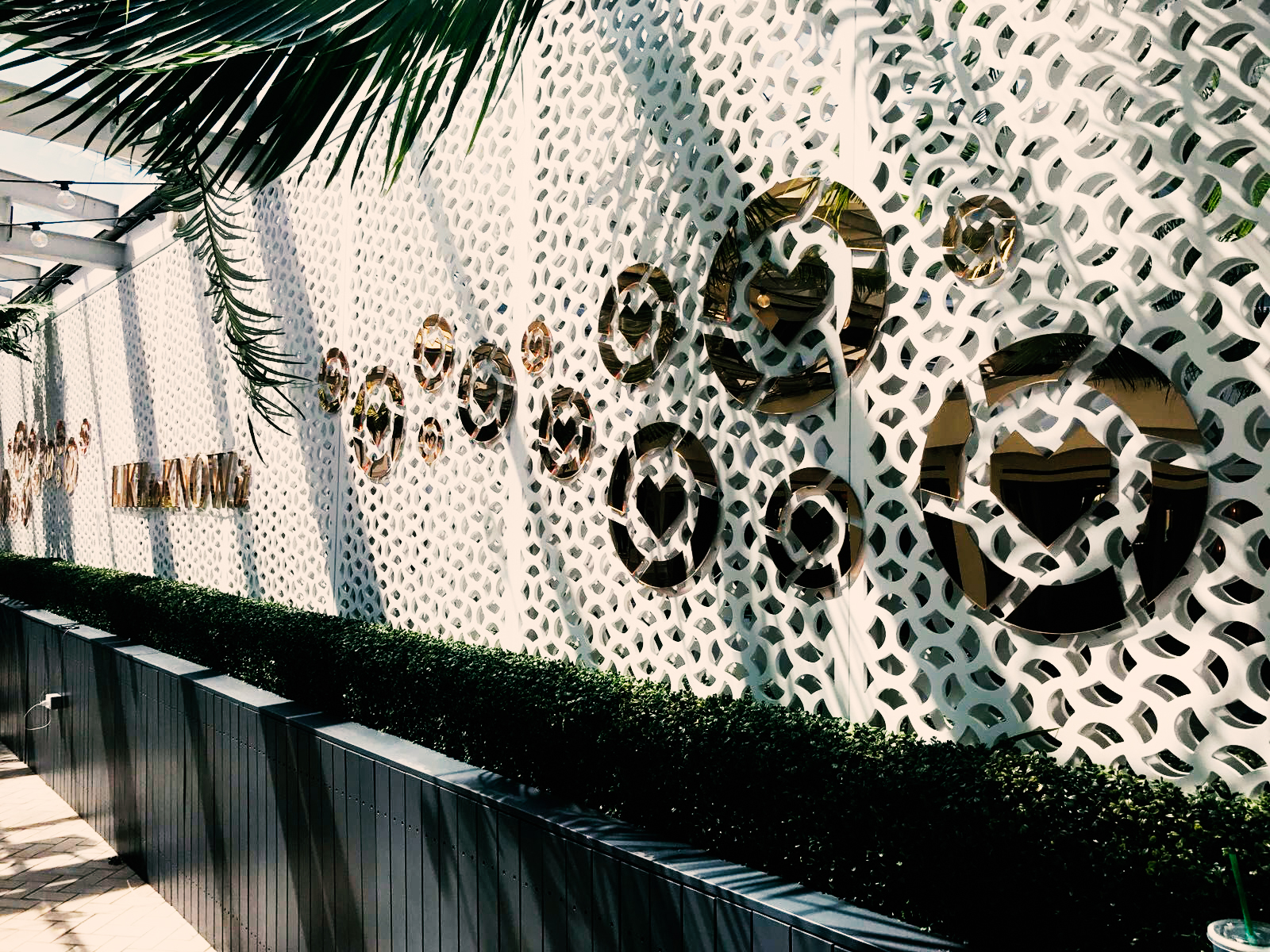
Event Signage in New York
Velement designs, prints, builds and installs signage for conferences, launches, galas and trade shows. Made in our own New York workshop, which is why we can still help you at six o’clock the evening before.
Entrance and arrival, registration, wayfinding, sponsor recognition, step-and-repeats, stage and backdrop. Delivered, installed and struck to your schedule.
Nobody notices event signage except when it is wrong
A guest who finds registration, gets to the right room and knows which session is where does not think about signage at all. A guest who ends up in the wrong corridor thinks about it constantly, and so does the person who organized the event, who will be asked about it by name.
That asymmetry is the whole category. Event signage is invisible when it works and it is the first thing blamed when it does not, which means the job is not really attractive. The job is to be complete, correct, in position before the doors open, and taken away afterwards by someone who is not you at eleven at night.
We make event signage in our own workshop in New York. That means the artwork that changes on Thursday can be printed on Thursday, and the sponsor who confirms late still gets a panel.
The signage checklist, moment by moment
Most event signage gets specified as a list of items. It is more reliable to work through the guest’s journey, because that is how gaps get found.
| Moment | What it needs | Usually made from |
|---|---|---|
| Finding the venue | Street-level identification, entrance banners, A-frames, directional signs from the transport drop-off. | Printed banners, rigid board, free-standing frames. |
| Arrival and registration | Welcome and event identification, registration desk graphics, queue management, schedule boards. | Fabric or printed panels, desk wraps, rigid board on frames. |
| The photo moment | Step-and-repeat or media wall, sponsor lock-ups, branded backdrop. | Printed fabric or vinyl on a tension frame. Fabric photographs better than vinyl because it does not flare under a flash. |
| Getting around | Wayfinding and directional signs, floor graphics, room and session identification, floor plans. | Rigid board, free-standing units, floor vinyl rated for foot traffic. |
| Inside the room | Stage backdrop, lectern graphics, screen surrounds, session titles. | Tension fabric, printed panels, dimensional letters for flagship events. |
| Sponsors and partners | Recognition walls, individual sponsor panels, table and booth identification. | Modular panels, so a late addition does not mean reprinting the whole wall. |
| Hospitality and detail | Bar, buffet and table signage, menus, seating plans, restroom and cloakroom direction. | Small format print, acrylic, foam board. |
| Afterwards | Somebody removed all of it. | Not a material. See Section 8, because this is the part that gets forgotten. |
The rules that decide what is possible
This is the step that catches people out, and it is almost never discussed before the design. Every venue has rules, and they are not negotiable in the load-in window.
| What venues control | Why it matters |
|---|---|
| Attaching anything to walls, columns, glass or floors | Many venues prohibit adhesive entirely, or permit only specified products on specified surfaces. If nothing can be attached, everything has to be free-standing, and that changes the design. |
| Anything suspended from the ceiling | Rigging is usually controlled by the venue and often has to be carried out by their own or their designated crew, booked in advance and charged separately. |
| Who is allowed to install | Larger venues, and convention facilities in particular, commonly have labor arrangements that govern who can carry out installation work on site. This has to be established before the schedule is built, not on the day. |
| Load-in and load-out windows | Dock times, elevator access, and how long you actually have in the room. Frequently much shorter than people assume. |
| Fire ratings on materials | Fabrics and some substrates need to meet flame-resistance requirements, and venues can ask for documentation. |
| Removal and disposal | Everything must be out by a stated time, and leaving material behind usually attracts a charge. |
Tell us the venue at the first conversation. We will establish the rules before anything is designed, so what gets drawn is what can actually go up.
Assume you cannot attach anything, and design from there
Because so many venues prohibit fixings and adhesive, the default assumption for event signage should be that nothing can touch the building. That is a constraint, and it is also a design discipline: free-standing signage travels better, installs faster and leaves no damage to argue about.
| Approach | What it is | Best for |
|---|---|---|
| Free-standing frames | Tension fabric or panel systems on their own feet or a weighted base. | Almost everything. The default, and what most venues expect. |
| A-frames and sidewalk signs | Self-supporting, moveable, no fixing at all. | Street level, queue direction, anything that needs to move during the event. |
| Retractable and portable units | Roll-up banners and pop-up stands that travel in a case. | Registration, sponsor positions, anything repeated across multiple events. |
| Weighted and ballasted units | Free-standing with a base heavy enough to stay put. | Outdoor entrances and anywhere doors and crowds create wind. |
| Suspended | Hung from ceiling points or rigging. | Large halls where nothing at floor level reads from a distance. Always a venue conversation first. |
| Applied to surfaces | Vinyl and film on glass, walls or floors. | Only where the venue permits it, and only with a removable product that leaves nothing behind. |
If the event repeats, build for the second one
An annual conference, a touring roadshow or a brand that does six activations a year should not be buying disposable signage six times.
| Consideration | Single use | Reusable system |
|---|---|---|
| What you buy | Signage made for this event and disposed of after it. | Hardware that stays, with printed graphics that change. |
| Cost this time | Lower. | Higher. |
| Cost next time | The same again. | The graphic only, which is a fraction of the total. |
| What changes between events | Everything. | Dates, sponsors, titles. The frames, bases and cases stay. |
| Storage | None needed. | Cases, and somewhere to keep them. Worth asking who is storing them before you commit. |
| Best for | One-off launches, galas, anything genuinely unrepeatable. | Annual events, roadshows, recurring trade show presence. |
We will tell you which one your event is. If it is happening once, a reusable system is a waste of money and we will say so.
When things actually have to happen
Working back from door time rather than forward from today is the only way to schedule event signage, and the stage that slips is almost always content rather than production.
| Stage | What decides it | Where it usually slips |
|---|---|---|
| Signage plan | The venue, the floor plan and the guest journey. | Rarely. This one is usually done early or not at all. |
| Venue approvals | The venue, and rigging or labor bookings if either is needed. | Frequently. Booking a rigging crew late can cost more than the signage. |
| Content and artwork | Sponsor confirmations, speaker line-up, session titles. | Almost always. This is the stage that eats the schedule. |
| Production | Materials, print and fabrication. | Only when content has already eaten the buffer. |
| Delivery and install | The venue load-in window. | Fixed. This is the one date nobody controls. |
And when something changes at the last minute
It will. A sponsor confirms two days out, a speaker drops, a room moves. The useful question is not whether it happens but what your supplier can do about it, and that depends entirely on where the signage is being made.
- We design for it. Modular sponsor walls, so one panel can be replaced without reprinting the wall.
- We are close enough to fix it. Printing and fabrication are in our own building in New York, not in another state.
- We plan for it. Tell us what is still unconfirmed when you brief us, and we will hold that part of the artwork open rather than pretending the schedule does not have a hole in it.
Getting it up, and getting it out again
Two parts of an event signage job get underestimated, and the second one gets forgotten entirely.
- Install. Usually into a short load-in window, often overnight or early morning, alongside every other supplier doing the same thing. We work to the venue’s schedule and its access rules, and we bring everything needed to install without borrowing from anybody.
- Strike. Everything has to come out, usually the same night, usually by a stated time. Left behind, it is a charge. This is nobody’s favorite part of the job and it is the part most often left off a quote, so ask whether it is included. Ours says so explicitly.
If you have a crew and would rather install it yourself, we pack and label accordingly.
From date to strike
- Brief. The date, the venue, the floor plan, the guest numbers and what is still unconfirmed. Everything else follows from these.
- Venue check. We establish what the venue permits, what has to be booked through them, and what the load-in window actually is.
- Signage plan. A plan of what goes where, walked through the guest journey so the gaps show up now rather than on the night.
- Design and specification. Materials, sizes and formats, with the artwork stages that are still flagged as open.
- Production. Printed and fabricated in our workshop, checked as a set against the plan.
- Install and strike. Delivered, installed to the venue schedule, and removed afterwards.
Made here, which is why we can still help on the day
| Capability | What it means for the event |
|---|---|
| We are in New York | Printing and fabrication in this city, not shipped in. A change on the day before is a problem we can solve rather than a problem we explain. |
| We print and we fabricate | Printed graphics, rigid signage and dimensional pieces from the same building, so everything at the event matches. |
| We check the venue first | What is permitted, what has to be booked, and how long the load-in actually is, established before the design. |
| We install and we strike | Both, stated in the quote, so nobody is looking for a crew at eleven at night. |
| We design for the change | Modular sponsor walls and open artwork stages, because something always changes. |
Frequently Asked Questions About Event Signage
What is event signage?
Event signage is the complete set of signs an event needs: entrance and arrival identification, registration graphics, wayfinding and directional signs, room and session identification, sponsor recognition, step-and-repeats and stage backdrops, and hospitality signage. It is temporary, it is made to a fixed date, and it usually has to be free-standing because most venues do not allow anything to be attached to the building.
How long do you need to produce event signage?
It depends far more on when the content is confirmed than on how long production takes. Sponsor lists, speaker names and session titles are the stages that move, and production is usually the shortest part of the schedule. Tell us the date and what is still unconfirmed and we will build the timeline backwards from your load-in window.
Can you do something at the last minute?
Often, yes, and this is the reason to use a supplier with a workshop in the city rather than one shipping from elsewhere. Reprinting a sponsor panel the evening before is possible when the printer is twenty minutes away. There is a limit and we will tell you plainly what it is rather than agreeing and hoping.
What will the venue let us put up?
That varies and it should be established before anything is designed. Most venues restrict or prohibit attaching anything to walls, glass and floors, control anything suspended from the ceiling, set load-in and load-out windows, and may have requirements about who carries out installation work. Tell us the venue and we will find out before the design rather than after.
Do you install and take it away?
Both, and both are stated in the quote. Strike is the part most often left out of a quote and the part that becomes somebody’s problem at the end of a long night, so it is worth checking with any supplier you are comparing.
Can we reuse signage for next year’s event?
Where the event repeats, yes, and it is usually worth it. The frames, bases and cases stay and only the printed graphics change, which makes the second event considerably cheaper than the first. If your event is genuinely one-off, a reusable system is money wasted and we will say so.
What is a step-and-repeat?
A branded backdrop with a logo pattern repeated across it, placed where guests are photographed. Printed fabric on a tension frame usually works better than vinyl, because fabric does not flare under a camera flash and photographs more evenly. The frame is free-standing, so it needs no fixing to the venue.
Can you match signage to our event branding?
Yes. Printed graphics, rigid signage and dimensional pieces are produced in the same building, which is how the colors actually match across different materials rather than nearly matching.
View Our Projects