
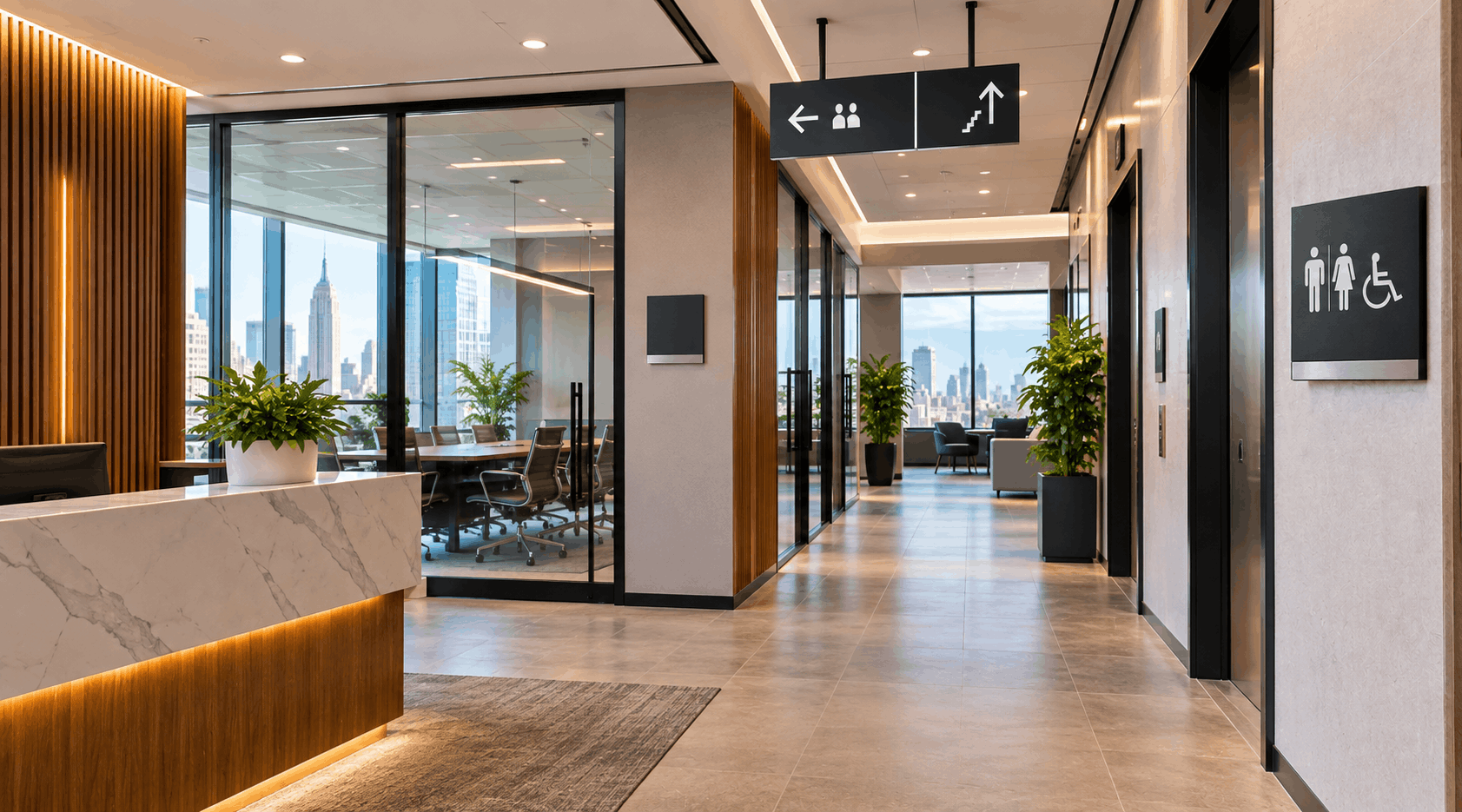
Office signs are easy to ignore until you need one. Picture a client stepping off the elevator on the 14th floor, staring at three identical hallways, and guessing which one leads to reception. Or a new hire spending their first morning opening the wrong conference room door. None of it is a disaster. It still makes a first impression, and not the one you want.
New York offices make this harder than most. Space is tight, suites are often shared, and older buildings come with odd layouts and long corridors that all look the same. Here’s a rundown of the interior office signs worth planning for, whether you’re moving into a new space in Midtown or fixing up the suite you’ve been in for years.
1. Lobby and Reception Signs
Visitors see this before anything else, so it’s usually where the budget goes. A logo on the wall behind the front desk tells people they’ve found the right office and sets the mood before anyone says a word.
Dimensional letters in brushed aluminum or acrylic give a clean, corporate look. Backlit logos stand out more and make sense in rooms with little daylight, which covers a lot of New York offices. Wood or painted signs feel warmer and tend to suit creative studios and smaller firms.
Before you settle on a material, look closely at the wall it’s going on. Glass, exposed brick, and drywall each need different mounting hardware, and some landlords limit drilling. Ask first, order second.
2. Wayfinding and Directional Signs
If your office covers more than a handful of rooms, people need help getting around. Directional signs point the way to reception, restrooms, meeting rooms, the kitchen, and individual departments. Floor directories near the elevators do the same job on a bigger scale, which is handy if you occupy several floors.
Good wayfinding doesn’t need to be clever. Clear arrows, plain fonts, and signs placed exactly where people slow down, like a fork in the hallway or the landing outside the elevator. Try walking your floor as if it’s your first visit. Anywhere you hesitate is a spot that needs a sign.
3. Room ID and ADA-Compliant Door Signs
Every permanent room, from offices and conference rooms to restrooms and stairwells, should be labeled. These signs seem simple, but they come with rules. Under the Americans with Disabilities Act, signs that identify permanent rooms generally need raised lettering, Grade 2 Braille, non-glare finishes, and strong contrast. Placement matters too. They usually go on the wall beside the latch side of the door, at a set height range, so someone can find them by touch.
A common mistake is ordering nice-looking door plates that don’t meet the standard. That can come back on you during an inspection or if someone files a complaint. A sign shop that works with ADA requirements regularly can make signs that comply and still match your look.
For rooms that change often, like hot desks or shared meeting spaces, slide-in name plates or small write-on panels keep things flexible.
4. Safety and Compliance Signs
These won’t win any design awards, but you need them. Exit signs, fire extinguisher markers, evacuation maps, stair identification, and the “in case of fire, use stairs” notices by the elevators all belong here. Office buildings in New York City also have to follow FDNY fire safety and emergency action plan rules, and posted signage is often part of that.
Your building management may handle some of these in common areas. Inside your own suite, though, it’s often on you. Check with your landlord and your fire safety director so you know exactly who’s responsible for what. Requirements change, so confirm the current rules rather than going off what the last tenant had up.
5. Wall Graphics, Murals, and Window Film
Here’s where signage starts to overlap with interior design. A big wall graphic with your company values, a timeline of how the business grew, or a skyline mural in the break room can turn a plain white office into a space people connect with you.
Frosted or printed window film is especially useful in New York, where so many offices rely on glass-walled conference rooms. It adds privacy without blocking light, and you can work your logo or a pattern into it. It’s also removable, which is a big plus if you’re on a lease and don’t want to lose your security deposit.
Vinyl graphics are generally cheaper than painted murals and easier to update when your branding changes.
6. Digital Signs and Room Booking Screens
More offices are adding screens. A lobby display can greet visitors by name, share company news, or loop through recent projects. Small tablets mounted outside meeting rooms show whether a room is free and let people book it right there, so nobody has to poke their head in mid-meeting.
Screens cost more upfront, and somebody has to keep them updated. A lobby display still announcing last quarter’s holiday party sends the wrong message. If you want digital signs, pick the person in charge of them before you buy the hardware.
A Few Things to Sort Out Before You Order
Read your lease first. Many New York office buildings have rules about what tenants can mount, where, and how. Some want sign drawings submitted for approval, especially for anything visible from a shared corridor.
Keep everything consistent. Pick one or two fonts, a short color palette, and a single material family, then stick to it across the whole office. Signs ordered piecemeal from three different vendors over five years almost always look like it.
Plan for change, too. Teams grow, people move desks, departments get renamed. Modular systems with swappable inserts cost a little more at the start but save you from reordering whole signs every time someone gets promoted.
If you can, work with one sign company that handles design, fabrication, and installation and knows the ADA rules. Having a single contact makes the whole job much easier to manage.
Where to Start
You don’t have to buy everything on this list at once. Get the basics in first: a reception sign, compliant room and safety signs, and enough directional signage that nobody wanders. Wall graphics, window film, and screens can come later as the budget allows.
Well-planned interior office signs make your space easier to get around and easier to remember. Setting up a new office or rethinking your current one? Reach out to our team for a free consultation, and we’ll walk the space with you to figure out what you need.